
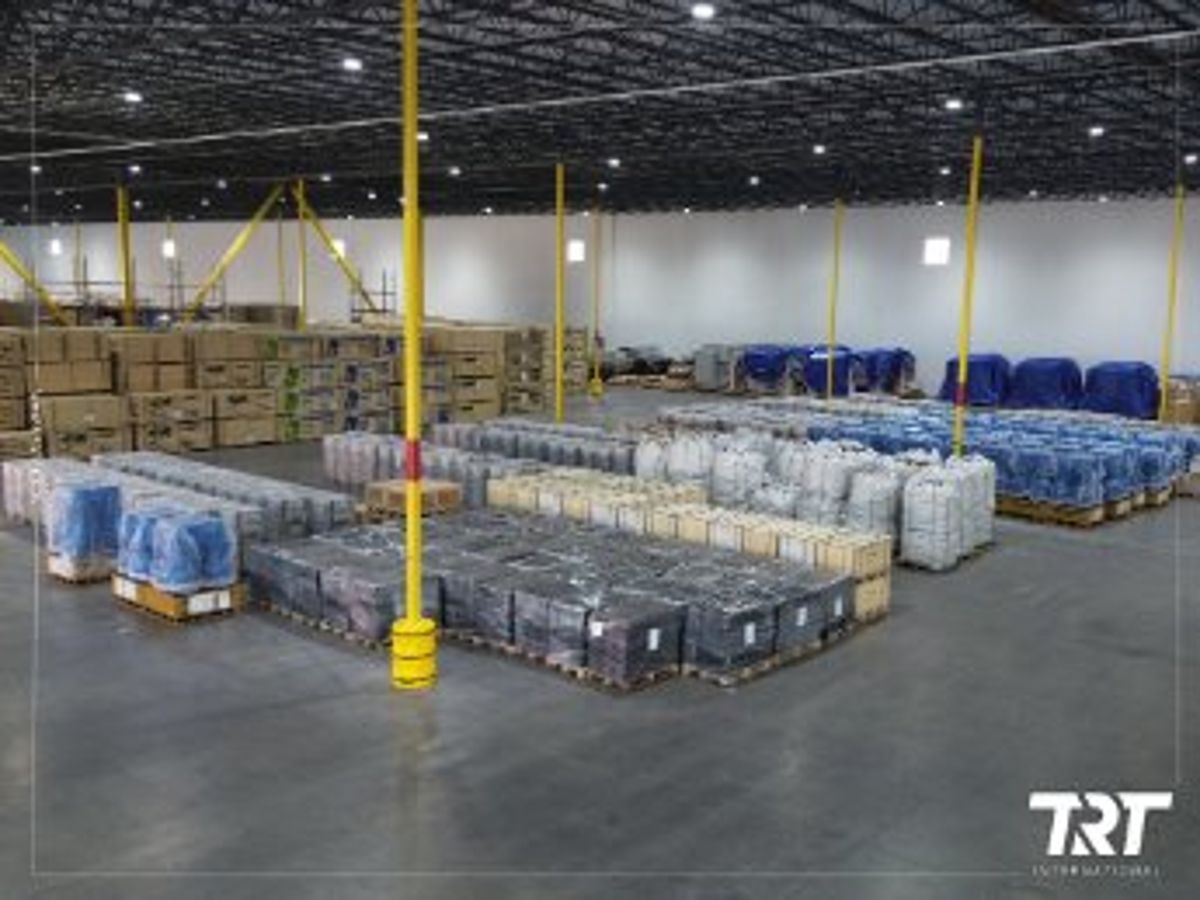
Port warehousing is storage and cargo handling that happens in the port itself, where a shipment is received off a vessel or a drayage truck, held safely for days or months, and then prepared for its next move. We provide port warehousing in Port Newark-Elizabeth and in the Port of Savannah, and it is built for the freight we know best: heavy, oversized, and project cargo that does not behave like ordinary pallet freight. Our main warehouses total 150,000 square feet in Newark and 316,800 square feet in Savannah, and the warehouse team, the drayage team, and the over-the-road team are the same company, so cargo does not change hands between the terminal, the warehouse floor, and the outbound truck.
Why Warehousing in the Port Changes the Move
Where a warehouse sits decides how a shipment actually flows. When warehousing is in the port, a container comes off the terminal and goes straight into storage on a short drayage leg, instead of starting a long highway trip before anyone has even opened it. That matters most when the plan is still coming together: the vessel has arrived, but the final delivery site is not ready, the cargo needs to be split between several destinations, or an oversized piece needs crating, wrapping, or a permit before it can travel. Holding the freight in the port keeps every option open. It can be entered and released, moved into bonded storage, transloaded onto domestic trailers, consolidated with other project pieces, or loaded for a long haul — all from the place it landed. Our warehousing service is set up around that decision point, not around simply renting floor space.
Port Warehousing in Newark: 150,000 Square Feet in Port Newark-Elizabeth
In Newark, our warehousing totals 150,000 square feet inside Port Newark-Elizabeth: a 120,000-square-foot warehouse plus a 30,000-square-foot site whose feature is its loading docks. Between the two, we can receive container freight at the dock, stage heavy pieces on open floor, and hold cargo that needs room to be worked on rather than just stacked. Because the warehouses are in the port, our own drayage operation feeds them directly: company drivers in Freightliner day-cab trucks pull containers from the terminal on our own fleet of more than 300 company chassis, including tri-axles for heavy boxes. Our headquarters is at 250 Port St, Newark, NJ 07114, in the same port complex, so dispatch, warehousing, and customer service are working from the same yard picture. You can see how the Newark operation fits together on our Port Newark, NJ location page.
Port Warehousing in Savannah: A Brand-New 316,800-Square-Foot Warehouse
In Savannah, warehousing means a brand-new 316,800-square-foot warehouse on a 30-acre site in the Port of Savannah. Scale changes what a warehouse can promise. With that much floor and that much land around it, project cargo can be received, sorted, and staged in sequence instead of competing for the same few bays, and trailers and chassis have room to be positioned around the building rather than queued away from it. The Savannah warehouse handles the same mix as Newark — container freight, heavy and oversized pieces, and staged project inventory — and it is served by the same drayage and over-the-road operation. Our Savannah public address is 117 A Parkway Dr, Rincon, GA 31326, and the Savannah, GA location page shows the operation there. TRT has many warehouses across its network; Newark and Savannah are the main ones, and they anchor the two port markets where most of our customers’ cargo enters and leaves the country.
Warehousing Built for Heavy and Oversized Cargo
Standard warehousing assumes freight arrives on pallets, fits in racking, and leaves in the same box it came in. Heavy and oversized cargo breaks every one of those assumptions. A machine may arrive crated, on a flat rack, or loose; it may be too tall for racking, too heavy for a standard dock position, or too valuable to sit outside unprotected. Our warehouse crews handle that freight every day. Electric forklifts and other lower-emission equipment move cargo inside the buildings, heavy pieces are staged on open floor where they can be inspected and worked on, and cargo that is better held outdoors goes to secure outdoor storage rather than taking up indoor floor it does not need. When a piece needs protection before its next leg, it can be wrapped, crated, or lashed by the same team that received it, so the warehouse stay becomes part of the transport plan instead of a pause in it.
What Happens to Your Cargo, Step by Step
A typical port warehousing move with TRT runs in a straight line. First, our drayage team collects the container or breakbulk piece at the terminal and brings it into the warehouse, under bond when the cargo’s customs status requires it. Second, the warehouse crew receives it: seals and piece counts are checked against the paperwork, condition is noted, and the freight is placed — floor, rack, or outdoor yard — according to what it is and what happens next. Third, the cargo is held under our state-of-the-art tracking, so you know what is in storage and where it sits while it is with us. Fourth, when the next leg is called, the freight is prepared: it can be deconsolidated and split, transloaded onto domestic trailers, cross-docked straight through, crated or wrapped for export, or consolidated with other pieces into one project move. Finally, our over-the-road operation loads it out for delivery throughout the United States, Canada, and Mexico, on equipment that includes flatbeds, step decks, RGNs, and perimeter trailers for tall and heavy loads. One team owns every hand-off, which is where warehousing usually goes wrong when several companies are involved.
Bonded Warehousing and Customs-Controlled Cargo
Some cargo should not be entered for consumption the moment it lands. In a bonded warehouse, imported goods stay under U.S. Customs control while they are stored, and duties are settled when the goods leave for domestic use or move onward. That makes bonded warehousing the right holding point for cargo whose entry will be filed later, whose final destination is still being decided, or that arrived in bond from the terminal. Bonded and regular warehousing sit side by side in our operation: a container can arrive under bond on our own drayage, be held under customs control, and then — once your broker completes the entry — move into regular storage, a transload, or an outbound truck without the freight ever leaving our hands. Your customs broker confirms the cargo’s status and the paperwork; our job is to keep the physical move exactly matched to it.
Short-Term Staging or Long-Term Storage
Port warehousing covers two very different needs. The first is staging: a few days or weeks between a vessel arrival and a delivery appointment, a job site opening, or a permit coming through. The second is long-term storage: project inventory, machinery, or seasonal freight that needs a secure port home for months. We offer both short- and long-term terms in Newark and Savannah, and the right answer usually follows the cargo’s schedule rather than a standard package. What we ask customers to think about is the exit, not just the entry: a warehouse stay works best when we know, even roughly, whether the freight leaves as it arrived, gets split, gets crated, or rolls out as one oversized load — because that decides where we place it on day one.
A Shipper’s Checklist for Booking Port Warehousing
These details let us quote and receive a warehousing move without delays:
- Cargo description, weight, and dimensions for each piece, including anything out of gauge.
- How the freight arrives: container, flat rack, breakbulk, or domestic trailer, with container and bill of lading numbers when you have them.
- Customs status: entered and released, or moving and storing under bond, as confirmed by your broker.
- Expected arrival and storage term: the vessel or delivery date, and whether this is short-term staging or long-term storage.
- Handling needed in storage: deconsolidation, transloading, cross-docking, crating, wrapping, or lashing.
- The outbound plan: final destination, delivery timing, and whether TRT handles the onward trucking.
None of this needs to be perfect on the first call. It gives our warehouse and dispatch teams the same picture your broker is working from, which is what keeps a container from arriving before anyone knows where it goes.
Talk to TRT About Warehousing
If you have cargo arriving in Port Newark-Elizabeth or the Port of Savannah that needs a warehouse before its next move, call us at +1 973 344 7100 ext 221. Tell us what the freight is, how it arrives, and where it goes next, and we will place it in Newark or Savannah accordingly. TRT International – Delivering Excellence since 1994.
Frequently Asked Questions
What is port warehousing?
Port warehousing is storage and handling in the port itself, where imported or exported cargo is received, held, and prepared for its next move. At TRT, port warehousing in Port Newark-Elizabeth and in the Port of Savannah covers container receiving, heavy and oversized cargo handling, short- and long-term storage, transloading, and outbound trucking under one team.
How much warehouse space does TRT have in Newark and Savannah?
TRT’s main warehouses total 150,000 square feet in Newark — a 120,000-square-foot warehouse plus a 30,000-square-foot site with loading docks — and 316,800 square feet in Savannah, where the brand-new warehouse sits on 30 acres in the Port of Savannah. TRT has many warehouses, and Newark and Savannah are the main ones.
Can port warehousing handle heavy and oversized cargo?
Yes. Port warehousing for project cargo is built around freight that does not fit standard racking: machinery, crated equipment, and out-of-gauge pieces. At TRT, electric forklifts and heavy handling equipment move that freight indoors, and secure outdoor storage is available for oversized cargo that is better held outside.
What is the difference between bonded warehousing and regular warehousing?
In a bonded warehouse, imported cargo stays under U.S. Customs control and duties are not settled until the goods leave for domestic use or move onward. In regular warehousing, cargo has already been entered and released, so it can be stored, transloaded, and delivered without that customs status. TRT offers both, and your customs broker confirms which status your cargo carries.
How long can cargo stay in port warehousing?
Cargo can stay for a few days between a vessel arrival and an outbound truck, or for months as staged project inventory. TRT offers short-term and long-term storage in Newark and Savannah, so the term follows your shipping schedule rather than a fixed package.
How does warehousing connect to drayage and final delivery?
The same team that runs the warehouse also runs the trucks. TRT’s company drivers handle local drayage from the terminal into the warehouse on TRT’s own chassis, and after storage the cargo can be transloaded, cross-docked, or loaded for over-the-road delivery throughout the United States, Canada, and Mexico, with state-of-the-art tracking across the move.
How do I book warehousing with TRT?
Call TRT at +1 973 344 7100 ext 221 with your cargo description, weight and dimensions, shipment details, expected arrival, and how long you expect to store the freight. Our headquarters is at 250 Port St, Newark, NJ 07114, and our Savannah public address is 117 A Parkway Dr, Rincon, GA 31326.