
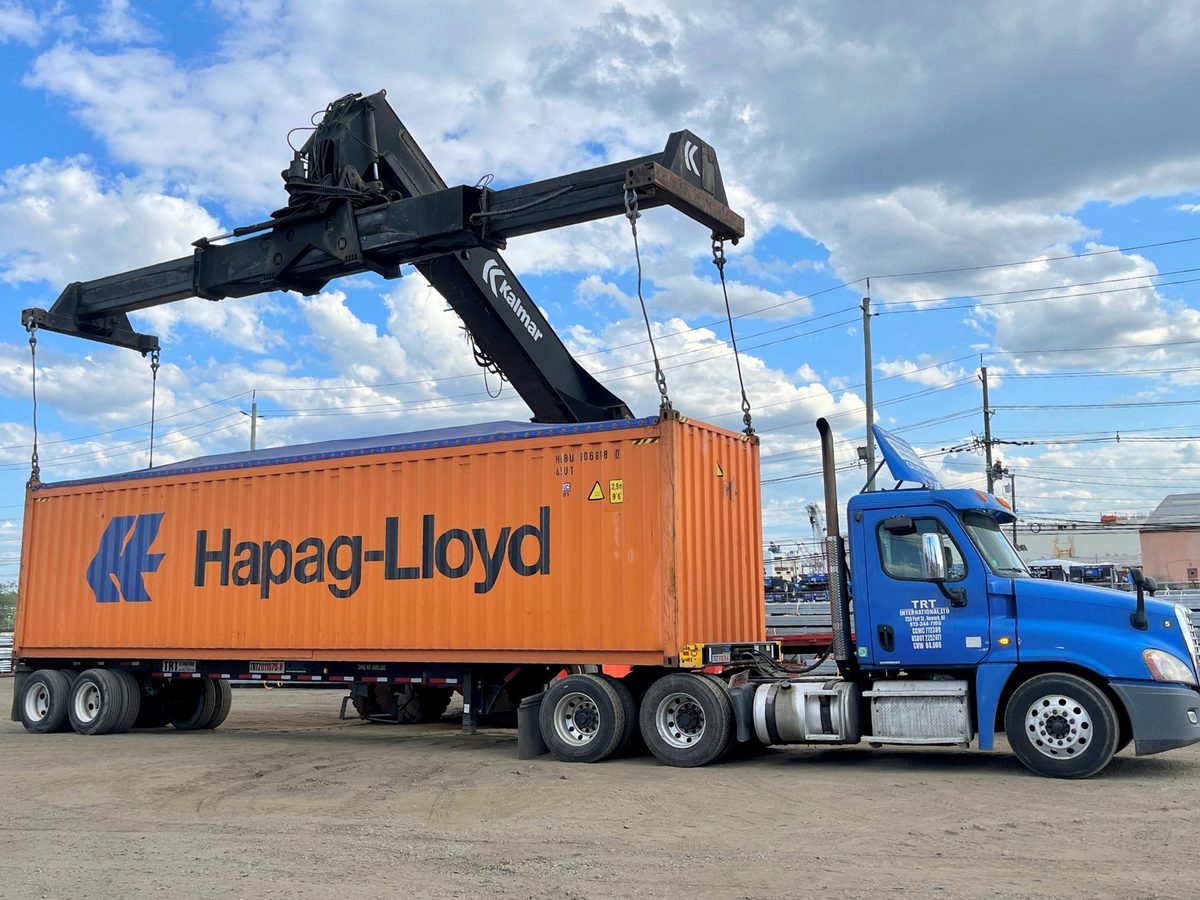
Overweight and distressed loads are two different problems with the same starting point: a move planned without a complete picture of the weight, the equipment, and the route. An overweight load exceeds the legal weight for the road, axle, or bridge it will cross unless a state-issued permit authorizes it. A distressed load is a load that can no longer travel safely or be accepted as it stands, because it has shifted, its securement has failed, it has been damaged, or its paperwork and its actual weight do not match. I work with both kinds of freight every week at TRT International, and the pattern is consistent: the loads that run smoothly are the ones that were checked hardest before dispatch. The loads that stop, get rejected, or need re-work are usually the ones where a weight was estimated, a route was assumed, or a permit was left until the last day. This guide explains how overweight permits work, how a normal load becomes distressed, and the pre-dispatch checks we use to prevent both.
That prevention-first approach is the point of this article. Our earlier guide covered rescue and recovery after a load has already become distressed. This one stays earlier in the timeline, before the truck leaves, when a scale ticket, a photograph, and a route check still cost far less in time and disruption than a stopped truck, a second handling, or a missed delivery. If you ship heavy freight through Port Newark-Elizabeth or the Port of Savannah, the checks below are the ones I would ask you to run on every load, not only on the ones that look difficult. Prevention is not extra paperwork. It is the work that keeps a heavy move legal, safe, and on schedule.
What Overweight Actually Means
Overweight does not mean only that a load is heavy. It means that the load, on the vehicle and route planned for it, exceeds a legal weight limit that applies to that move. Three measurements matter, and a load can fail any one of them while passing the other two. The first is gross weight: the total weight of the truck, trailer or chassis, and cargo together. The second is axle weight: how much weight rests on each axle or axle group. The third is the bridge limit: how much weight a bridge or structure on the route can carry, which depends on the spacing between axles as well as the total weight. Spreading weight over more axles, for example by using a tri-axle chassis, changes how the load bears on the road and on a bridge, but it does not remove the need to check each limit.
That is why a single total weight is never enough information. A load can be within its gross weight and still be overweight on one axle group because the piece sits too far forward or too far back. It can be legal on the highway and still be unable to use the most direct bridge on the route. It can be legal on the equipment booked for it and overweight the moment it is transferred to different equipment with a different axle layout. I ask shippers to think in those three terms – gross, axle, and bridge – before they ask whether a permit is needed, because the answer changes with the equipment and the route, not only with the cargo.
Estimates are the usual weak point. A weight taken from a booking, a packing list, or a similar shipment from last year is a starting point, not a verified weight. Packing, crating, dunnage, blocking, and bracing add weight. A piece can weigh more than its catalog figure once it is crated for export. A load can also be heavier on one side than the other, which matters for axle weights even when the total looks right. The only weight I trust before dispatch is a verified weight: a scale ticket for the loaded vehicle, axle weights where they are needed, and dimensions measured on the piece as packed, not as drawn. When those figures are missing, the permit application, the equipment choice, and the route plan are all built on a guess.
At TRT, that check sits inside a fleet built for this work: 85-plus Freightliner day-cab trucks, more than 300 company chassis including tri-axles, and trailers that include flatbeds, step decks, RGNs, and perimeter trailers, with lowboy, extendable, and multi-axle equipment available as equipment types for the right piece. The fleet matters only if the right unit is matched to the verified weight and dimensions, which is why the equipment decision comes after the weight check, never before it.
What an Overweight Permit Does and Does Not Cover
An overweight permit is a state-issued authorization to move a specific load, on a specific vehicle configuration, over a specific route, under stated conditions. It is not a general permission to run heavy, and it is not a substitute for safe loading. The permit names the move it covers. Change the load, the vehicle, the route, or the travel window, and the permit may no longer cover the move. That is the first misunderstanding I see in practice: a permit treated as if it belonged to the cargo, when it belongs to a particular move on a particular day and route.
A permit also does not make an unsafe load safe. It does not correct a load that is poorly secured, badly balanced, or loaded on equipment that cannot carry it. It does not authorize a driver to use a bridge or road that the permit route excludes, and it does not cover a dimension problem on its own. Weight and size are separate questions, and a load that is both heavy and oversized may need separate attention for each. Our Oversize Load Permits and Escorts service covers the size side of that work, and the two checks should run together when a piece is both heavy and large.
A permit may carry conditions, depending on the state and the load, such as a stated route, travel restrictions, or an escort requirement. Those conditions are part of the permit, not suggestions around it. The driver needs the permit and its conditions before departure, and the paperwork in the cab needs to match the load on the trailer. If the load changes after the permit is issued – a piece is added, a crate is swapped, or the weight moves – stop and re-check. A permit that no longer matches the load is worse than no permit at all, because it creates confidence that the move is covered when it is not.
Permits must be secured before the move. That sounds obvious, and it is the step most often squeezed by a tight schedule. A truck that leaves the yard while a permit is still pending is already in the wrong position: it cannot legally proceed on the overweight leg, it cannot be rerouted onto a different road without a new check, and every hour it waits is an hour the delivery window, the terminal appointment, or the sailing moves further away. Build the permit into the booking, not around it.
Divisible vs. Non-Divisible Loads
Whether a load is divisible or non-divisible changes the whole plan, so I ask the question early on every heavy move. A divisible load can be reduced, split, or rearranged to meet legal weight – for example by removing part of the cargo, shifting pieces between vehicles, or using another vehicle for part of the shipment. A non-divisible load cannot be reduced without taking the piece apart or changing what it is. A single machine, a generator, or a large fabricated piece is non-divisible in practice, even if it is shipped with crates and accessories around it.
For a divisible load, the first question is whether splitting it is the better answer. A second truck, a different trailer, or a re-stow that spreads the weight can sometimes remove the permit need altogether, and it can be the safer and simpler move. That decision needs real weights and a real equipment plan, not a hope that the load will probably be fine. For a non-divisible load, the permit, the equipment, and the route have to be built around the piece as it is. There is no lighter version of the piece to fall back on, so the axle layout, the trailer type, and the bridge route have to be right the first time.
Shippers sometimes ask whether a load can be made divisible by removing a part. The honest answer is that it depends on the piece, its manufacturer guidance, and whether the part can be removed, shipped, and refitted safely. I do not treat that as a dispatch decision. It is an engineering and handling decision, and it needs to be settled before the permit application, because the permit, the equipment, and the securement plan all depend on the answer.
Route and Timing Constraints
A permit route is not the shortest route on a map. It is the route the state has authorized for that weight, on that vehicle, on that day. Bridges, road works, weight-restricted roads, and local restrictions can all change which route is available, and a route that worked for a similar load last month may not work for this load on this equipment. I check the route against the verified weight and axle layout, not against the cargo description alone, and I check it again if anything about the move changes.
Timing is part of the same check. A permit is issued for a stated travel window, and the move has to fit inside it. Travel may be restricted at certain times, depending on the state and the load, and a delay at the terminal, at the warehouse, or on the first leg can push a move outside the window it was permitted for. That is why the dispatch plan needs slack built into it: time to load properly, time to re-weigh if the numbers do not match, and time to hold the load if the route or the permit conditions change. A schedule with no slack is a schedule that forces a choice between waiting and moving without cover, and that is not a choice a driver should be asked to make.
If a route closes or a condition changes after the permit is issued, do not improvise an alternate route on the road. Pull the move back to the plan: re-check the route, re-check the permit, and re-check the timing before the truck moves again. An unplanned detour on an overweight load is how a legal move becomes an illegal one, and how a load that was secure on a planned route becomes a load at risk on a road it was never checked for.
How a Normal Load Becomes Distressed
Most distressed loads did not start out distressed. They started as normal heavy freight, and something changed between loading and delivery. Understanding those changes is what makes prevention possible, because each one has a check that can catch it before dispatch.
Weight shift in transit
Heavy pieces move when they are not held firmly enough for the forces of the road: braking, turning, and uneven surfaces. A piece that shifts only a few inches can change axle weights, lean against a side, or put pressure on a crate or a fitting that was never meant to carry it. The shift often starts small and gets worse with every mile. The pre-dispatch answer is a securement plan matched to the piece, its weight, and its center of gravity, with blocking and bracing that hold the piece in place rather than relying on friction alone.
Failed or loosened securement
Chains, straps, and fittings can loosen as a load settles, as tires and suspension move, and as temperature and vibration work on the tension. A securement that was tight at the dock can be slack an hour later. That is why the check is not only was it tied down, but was it tied down with the right equipment, in the right places, and checked after loading? Lashing that looks neat in a photograph can still be wrong if it pulls against a weak point, crosses a sharp edge, or leaves the piece free to move in one direction.
Water, impact, and handling damage
Damage does not always happen on the road. It can happen during loading, during a transfer, or while a piece waits in storage. Water can reach a crate that was not protected for open travel. A forklift tine can catch a crate. A piece can be set down on uneven ground and take a load through a corner it was not built to carry. Each handling step is a chance for damage, so the number of handlings matters: the fewer times a heavy piece is lifted and set down, the fewer chances there are for something to go wrong. When a transfer is needed, it should be planned, with the right lifting equipment and the right crew, not improvised at the dock.
Rejection at the terminal or destination
A load can be perfectly secure and still be rejected. A terminal or destination may refuse a load because its weight does not match the paperwork, because its dimensions do not fit the receiving equipment, because its packing is damaged, or because the appointment or documentation is not in order. Rejection is not always about the cargo itself; it is about whether the load as presented matches what the receiver expected. That is why the destination check belongs in the pre-dispatch plan: the receiving hours, the unloading equipment, the appointment, and the documentation the receiver will ask for.
Paperwork and weight mismatch
This is the quietest cause of distress, and one of the most common. The bill of lading says one weight, the scale says another, and the permit was issued for a third figure. The load may be safe, the equipment may be right, and the route may be legal – and still the move cannot proceed, because no one can prove which figure is correct. The fix is simple and unglamorous: verified weights, paperwork that matches those weights, and a permit issued on the same figures. When the three match, the load can move. When they do not, the load stops until they do.
The Pre-Dispatch Prevention Checklist
The checklist below is the one we run before a heavy load leaves. It is not a form to file after the truck has gone. It is a sequence: each step gives the next step something reliable to work with. If a step fails, the move waits until it passes.
1. Verify the weight, then verify it again after loading
Get a scale ticket for the loaded vehicle, with axle weights where they are needed. Compare the gross weight, the axle weights, and the dimensions with the figures used for the permit and the equipment booking. If anything was added, removed, or moved after the first weighing, re-weigh. A weight that changes after the permit is issued is a weight that needs a new check, not a note in the file.
2. Photograph and document the cargo as packed
Take photographs of the piece, its packing, its lifting points, and its securement before departure, and keep them with the move file. Record the dimensions as packed, the center of gravity if you know it, and any part that cannot bear weight or must not be used as a lifting or lashing point. Photographs do more than record condition. They let the next person in the chain – the driver, the terminal, the receiver – see what was checked and how the load was built, without relying on memory.
3. Match the equipment to the verified load
Choose the trailer and chassis from the verified weight, dimensions, and center of gravity, not from what is available first. A tri-axle chassis, a step deck, an RGN, a flatbed, or a perimeter trailer each suits a different piece, and lowboy, extendable, and multi-axle equipment exists for pieces that need a lower deck or a longer spread. Check the deck height, the loading method, the securement points, and the axle layout for the route. The right equipment is the equipment that carries this piece, on this route, within its limits – not the equipment that carried a different piece last week.
4. Plan the securement before the piece is lifted
Decide how the piece will be blocked, braced, chained, and strapped before it is on the trailer, and decide who will check it after loading. The plan should name the lifting points, the securement points, and the parts of the piece that must not be loaded or lashed against. After loading, check the tension, check the blocking, and check that the piece cannot move forward, back, or sideways. A securement plan written after the load is on the trailer is a description of what happened, not a plan.
5. Check the route, the bridges, and the permits state by state
Confirm the route for the verified weight and axle layout, confirm the bridges on that route, and confirm that a permit is in hand for every state the move will cross. A permit for one state does not cover another, so a multi-state move needs a permit for each state, with the route and conditions checked state by state. Confirm the travel window and the conditions for each permit, and make sure the driver has the permits and the route before departure.
6. Confirm the destination and the terminal
Confirm the receiving hours, the appointment, the unloading equipment, and the documentation the receiver will ask for. Confirm that the destination can receive a load of this weight and size on the equipment planned for it, and that the piece can be unloaded safely on arrival. A destination that cannot receive the load as planned is a problem to solve before dispatch, not a surprise to discover at the gate.
7. Build a contingency plan, with warehouse capacity behind it
Plan for the move that does not go as booked. Name one contact who can approve a change – a different trailer, an extra day, a re-work – the same day, without a chain of calls. Know where the load can be brought in, re-weighed, re-secured, or transloaded if it has to stop. TRT has many warehouses, and our main ones are in Port Newark-Elizabeth and in the Port of Savannah: our warehouses in Port Newark-Elizabeth total 150,000 sq ft, made up of 120,000 sq ft and 30,000 sq ft, and the 30,000 sq ft site features loading docks; our brand-new Savannah warehouse is 316,800 SF on 30 acres. That in-port warehouse and re-work capacity, with electric forklifts and lower-emission equipment, is what turns a stop into a re-work instead of a return to the shipper. Our Transloading Oversized Cargo guide explains how that transfer and re-work runs when a piece has to change equipment. Our local bonded drayage and over-the-road service throughout the US, Canada, and Mexico, run by our own company drivers, means the same team that checks the load can move it, and can bring it back into the warehouse if the plan has to change.
What Prevention Saves
Prevention saves delays first. A load that is checked before dispatch does not stop at a scale, at a terminal gate, or at a state line while someone tries to find the right figure. It saves re-work, because a piece that is secured correctly the first time does not need to be unloaded, re-blocked, and re-secured on the roadside or in a yard. It saves storage, because a load that is accepted on arrival does not wait for a corrected permit, a new appointment, or a second truck. And it saves re-delivery, because a load that arrives as documented does not have to go back, be re-handled, and be sent out again.
It also saves something harder to measure and easier to lose: confidence. A shipper who can show a verified weight, a matching permit, and photographs of a secured load is in a different position from a shipper who can only say the load should be fine. A receiver who gets what was booked, on the equipment that was booked, is more likely to accept the next load without a second inspection. And a driver who leaves with a legal load, a clear route, and permits that match the cargo is safer than a driver who leaves hoping the numbers hold. None of that needs a dollar figure to be worth doing. The cost of a stopped heavy load is not only the handling; it is the missed sailing, the missed delivery window, and the extra handling that puts the cargo at risk a second time.
Shipper Checklist: Before You Dispatch a Heavy Load
- Verified weights: gross weight, axle weights, and dimensions measured as packed, with a scale ticket for the loaded vehicle.
- Photographs: the piece, its packing, lifting points, and securement, kept with the move file.
- Equipment match: trailer and chassis chosen for the verified weight, dimensions, and center of gravity, including tri-axle chassis, step deck, or RGN where the piece needs them.
- Securement plan: blocking, bracing, chains, and straps planned before loading and checked after loading.
- Permits: a state-issued permit for every state on the route, secured before the move, with the route, travel window, and conditions in the driver hands.
- Route check: bridges and restrictions confirmed for the verified weight and axle layout, with no unplanned detour.
- Destination confirmed: receiving hours, appointment, unloading equipment, and documentation agreed with the receiver.
- Contingency named: one contact who can approve a change, and a warehouse that can receive, re-weigh, and re-work the load if it has to stop.
If any item on that list is missing, the move is not ready. Waiting for a scale ticket or a permit is not a delay to the move. It is part of the move, and it is the cheapest time to find a problem.
Frequently Asked Questions
What is an overweight permit?
An overweight permit is a state-issued authorization to move a load that exceeds the legal weight for a road, axle, or bridge on a stated route. It sets the conditions for that move, including the route, the vehicle configuration, and the travel window, and it must be secured before the load leaves.
Does one overweight permit cover a trip through several states?
No. A permit issued by one state does not cover travel in another state. Each state on the route issues its own permit under its own rules, so a multi-state move needs a permit for every state it crosses, with the route and conditions checked state by state.
What is the difference between a divisible and a non-divisible load?
A divisible load can be reduced, split, or rearranged to meet legal weight, for example by removing part of the cargo or using another vehicle. A non-divisible load cannot be reduced without taking the piece apart or changing what it is, so it is more likely to need a permit and a specific equipment and route plan.
How do I know if my load is overweight before dispatch?
Start with verified weights, not estimates: the gross weight, the weight on each axle group, the dimensions, and the center of gravity if you know it. Compare those figures with the route and the equipment planned for the move, and check the permit requirement before the truck is booked, not after it is loaded.
What makes a load distressed?
A load becomes distressed when it can no longer travel safely or be accepted as it stands. Common causes are weight shifting in transit, failed or loosened securement, water or impact damage, a container or piece that is rejected at the terminal or destination, and a mismatch between the paperwork and the actual weight.
Can a distressed load be fixed without returning it to the shipper?
Often, yes, if the cargo can be brought into a warehouse with the right equipment. TRT can re-weigh, re-secure, re-work, and transload distressed freight in its warehouses in Port Newark-Elizabeth and in the Port of Savannah, and then dispatch it on suitable equipment once the load is safe and the paperwork matches.
How far in advance should overweight permits be arranged?
Arrange them before the move is scheduled, with enough time for each state on the route to review the application and for any route or equipment change to be made. Do not dispatch the load until the permits are in hand and the driver has the route and conditions for each state.
What should I send TRT before dispatch so a heavy load can be checked?
Send the piece list with verified dimensions and weights, photos of the cargo and its packing, lifting points and the center of gravity if you know them, the container or trailer type, the origin and destination, and the date the load must move. With that information, TRT can check the equipment, the route, and the permit need before dispatch.
Talk to TRT Before You Dispatch
If you have a heavy load moving through Port Newark-Elizabeth or the Port of Savannah, talk to us before you dispatch it. Send the piece list, the verified weights, and the photographs, and we will check the equipment, the route, and the permit need with you – before the truck leaves, while a change is still a plan and not a problem. Our Overweight and Distressed Loads team handles permitted heavy moves and distressed freight at both ports, with warehouse capacity to re-work a load if it has to stop.
TRT International is headquartered at 250 Port St, Newark, NJ 07114, and our Savannah public address is 117 A Parkway Dr, Rincon, GA 31326. Call us at +1 973 344 7100 ext 221 to discuss your next heavy move. TRT International – Delivering Excellence since 1994.