
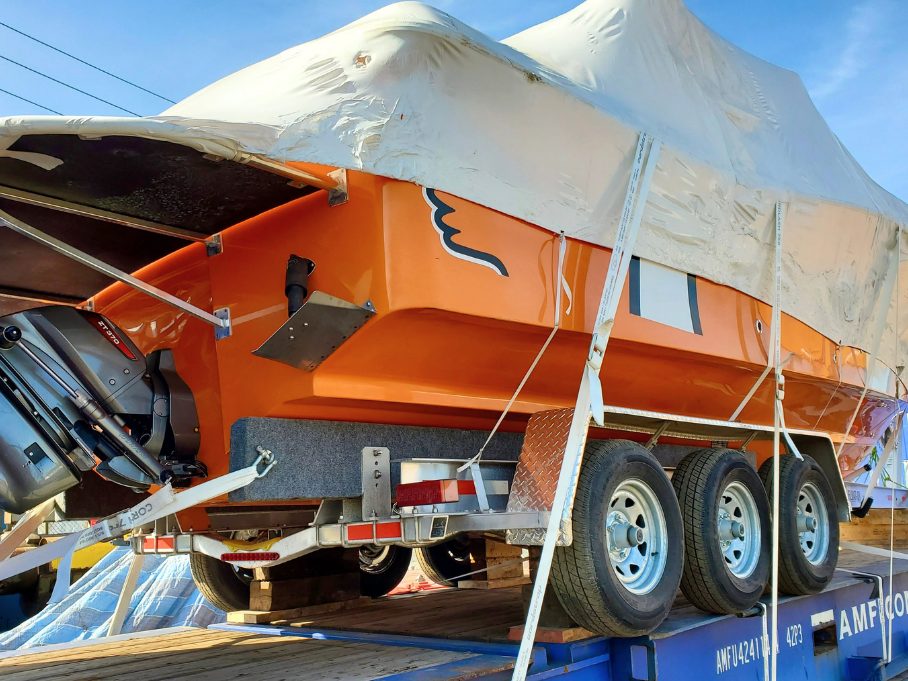
Flat rack lashing is the system of chains, straps, wire rope, blocking and bracing that locks out of gauge cargo to a flat rack container so it cannot shift, tip or slide during handling, road transport and the ocean voyage. When flat rack lashing fails an inspection, the load does not sail. It is held, re-worked or refused until the securing is corrected — and every delay costs time at the terminal.
We handle flat rack cargo in Port Newark-Elizabeth and in the Port of Savannah, and most rejections we see are not caused by exotic problems. They are caused by a short list of preventable securing mistakes, made before the cargo ever reaches the terminal gate. This guide explains why flat rack loads get rejected, what inspectors are actually checking, and how shippers can prepare cargo so it passes the first time.
Why a Rejection Matters More Than It Looks
A rejected flat rack is not just a paperwork problem. The container cannot be loaded as planned, so the booking may roll to a later sailing. The cargo has to be re-secured, which means labour, equipment and lashing materials have to be brought back to a load that was supposed to be finished. If the cargo is still on a chassis or trailer, detention and demurrage clocks can keep running while the fix is made.
For project cargo the knock-on effect is wider. One rejected piece can hold up a consolidated shipment, miss a vessel cut-off, or arrive out of sequence at destination. Prevention is almost always cheaper than re-work, and it starts with understanding the failure points.
Reason 1: Not Enough Lashing Points for the Weight and Shape
The most common failure is simply too little securing for the cargo being carried. A heavy, tall or uneven piece needs lashings that restrain it in every direction — forward, backward, sideways and upward — not just a few straps thrown over the top.
Inspectors look at whether the number, placement and angle of the lashings match the weight and centre of gravity of the piece. Lashings clustered in one area, or pulling at shallow angles that do little to stop sideways movement, are a frequent reason for a load to be sent back for additional securing.
Reason 2: The Wrong Lashing Materials for the Cargo
Chains, wire rope and synthetic webbing straps each have a place in flat rack work, and using the wrong one causes problems. Sharp steel edges can cut webbing. Smooth or painted surfaces can let straps slip. Heavy machinery usually needs the positive hold of chain and tensioners, while crated or finished surfaces may need softer contact to avoid damage.
Rejections happen when materials are damaged, frayed, mismatched, or used without edge protection where the lashing crosses a corner. A lashing that is technically present but visibly worn or badly fitted does not count as secure.
Reason 3: Blocking and Bracing That Does Not Stop Movement
Lashings hold cargo down; blocking and bracing stop it from sliding in the first place. Timber blocking at the base, chocks against wheels or skids, and bracing against the flat rack end frames are what keep a piece from starting to move under braking, lifting or vessel motion.
Loads get rejected when blocking is missing, loose, split, or placed where it cannot actually resist movement. If a piece can shift even a small distance before a lashing goes tight, that movement builds force — and inspectors know it.
Reason 4: Uneven Weight Distribution and a High Centre of Gravity
A flat rack load has to sit balanced. Cargo placed off-centre, overhanging unevenly, or stacked so its weight sits high above the deck is harder to secure and easier to tip. Even with strong lashings, a badly positioned piece can fail because the geometry works against the securing.
This is why positioning comes before lashing in a proper securing plan. At TRT, our teams position the piece on the rack first, confirm the balance and overhang, and only then build the lashing plan around where the weight actually sits. Cargo that needs a different approach — for example loading from above — may be better suited to open top loading.
Reason 5: Lashing to the Wrong Points
A flat rack has designated lashing points designed to take securing loads. Lashings attached to weak parts of the cargo itself, to packaging that can tear away, or to points on the rack that are not rated for the direction of pull will fail inspection.
The same applies on the cargo side: lashings should connect to the machine frame, lifting or lashing eyes, skid or cradle — something structural. Strapping over a crate panel, a pipe flange or a removable cover secures the cover, not the cargo.
Reason 6: Protruding and Out of Gauge Parts Left Unprotected
Out of gauge cargo by definition extends beyond the rack. Protruding parts still need support and protection. Unsupported overhangs that can flex, vibrate or strike handling equipment draw inspection attention, and loose components — panels, buckets, booms, accessories — that are not separately secured are a common rejection trigger.
Every separate piece on the rack needs its own securing decision. If it is on the load, it has to be lashed, blocked, crated or removed and shipped separately.
Reason 7: No Final Inspection Before the Gate
Many rejected loads would have passed with one honest walk-around before dispatch. Loose tensioners, a strap that has slipped off an edge, missing edge protection, or blocking that shifted during a short yard move are all quick fixes in the yard and expensive fixes at the terminal.
A final check means re-tensioning after the cargo settles, confirming every lashing is tight, photographing the finished load from all sides, and recording the dimensions and weight as secured — not as originally estimated.
What Good Prevention Looks Like, Step by Step
First, share exact information early: verified weight, dimensions, centre of gravity, lifting points and photographs of the actual piece. A lashing plan built on estimated weights is a plan built to be re-done.
Second, match the equipment to the cargo. TRT runs Freightliner day-cab trucks, a fleet of 85+ trucks and 300+ company chassis including tri-axles, with flatbeds, step decks, RGNs and perimeter trailers — so the road leg, the rack and the securing plan are handled by one operator instead of being split between carriers who never see each other’s work.
Third, prepare the cargo in place. In our warehouses in Port Newark-Elizabeth — 150,000 sq ft in total — and at our brand new 316,800 SF Savannah warehouse on 30 acres in the Port of Savannah, cargo can be received, positioned, blocked, lashed and inspected under one roof before it moves to the terminal. TRT has many warehouses, with Newark and Savannah as the main ones, so project pieces can be staged together rather than rushed at the gate.
Fourth, document the finished load. Photographs, a securing checklist and confirmed final dimensions give the terminal, the carrier and the destination team the same picture of the load — and give you evidence the work was done properly if a question is raised later.
Shipper Checklist: Before Your Flat Rack Load Moves
Use this checklist before any flat rack booking:
- Verified weight and dimensions supplied — measured, not estimated
- Centre of gravity and lifting/lashing points identified
- Lashing materials matched to the cargo surface and edges, with edge protection where needed
- Blocking and bracing planned for the base, not just straps over the top
- Every loose or protruding component given its own securing plan
- Final walk-around, re-tensioning and photographs scheduled after loading
- Terminal cut-off and inspection time built into the plan, with room for corrections
Talk to TRT International before your next flat rack shipment. Call +1 973 344 7100 ext 221 or visit our headquarters at 250 Port St, Newark, NJ 07114. Our Savannah team works from 117 A Parkway Dr, Rincon, GA 31326. TRT International – Delivering Excellence since 1994.
Frequently Asked Questions
Q1: Why do flat rack loads get rejected?
Flat rack loads are usually rejected for preventable securing problems: too few lashing points for the weight, damaged or wrong lashing materials, missing blocking and bracing, uneven weight distribution, lashings attached to weak points, or loose protruding parts that were never separately secured.
Q2: Who inspects flat rack lashing?
Flat rack lashing can be checked by the terminal, the carrier and surveyors acting for the shipping line or insurer. Any of them can require re-work if the securing does not adequately restrain the cargo for handling, road transport and the ocean voyage.
Q3: Can a rejected flat rack load be fixed at the port?
In many cases yes. A rejected load can often be re-secured with additional lashings, proper blocking and bracing, or repositioning — but the fix takes time and can mean a missed sailing, so prevention before dispatch is always the better plan.
Q4: What lashing materials are used on flat rack cargo?
Flat rack cargo is commonly secured with chains and tensioners, wire rope, and synthetic webbing straps, chosen to match the cargo weight, surface and edges. Sharp edges need protection so lashings are not cut, and heavy machinery usually needs the positive hold of chain.
Q5: How much extra time should I allow for flat rack inspection?
Build inspection and correction time into every flat rack plan rather than arriving at the terminal cut-off with no margin. Loads that are measured, lashed and photographed in advance move through checks fastest; a load that needs re-work can miss its sailing.
Q6: Does TRT lash flat rack cargo for other shippers?
Yes. TRT International provides flat rack lashing as a service in Port Newark-Elizabeth and in the Port of Savannah, including positioning, blocking, bracing and final inspection, for cargo we transport and for cargo handed to us ready to secure.
Q7: What information does TRT need to plan a lashing job?
TRT needs the verified weight and dimensions of each piece, its centre of gravity, lifting and lashing points, and photographs of the actual cargo. With that information the equipment, blocking and lashing plan can be built before the cargo arrives.