
Open Top Loading Services
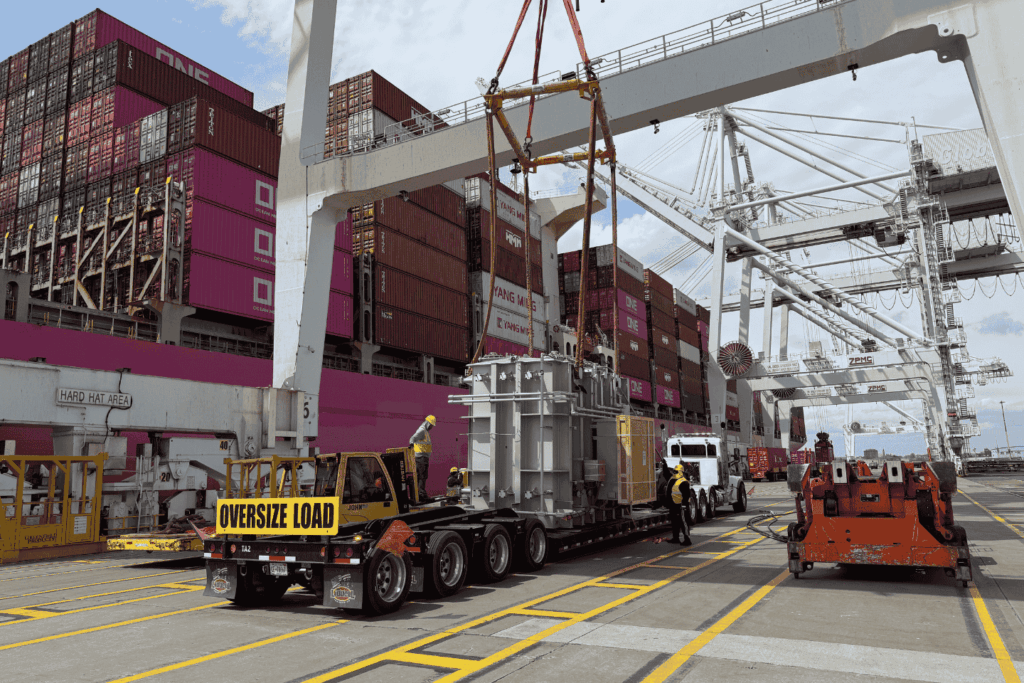
Open Top Loading Services
What Is Open Top Loading?
An open-top container is a standard shipping container without a fixed roof: the top opens, so cargo can be lowered in from above by crane instead of being pushed through the end doors. Open top loading is the service built around that equipment — craning tall, heavy, or awkward cargo down into the container, positioning it, and securing it for the voyage. It exists for freight that defeats a standard box in one specific way: height. Cargo that is too tall to pass through a container door, or that can only be loaded by lifting, travels in an open-top container — and TRT lists open top loading among its named solutions, alongside the flat racks and open-top containers our specialized team provides for out-of-gauge freight.
Open-Top Container or Flat Rack?
The two open platforms solve different problems. Choose an open-top container when the cargo is over-height but still fits within the container’s walls — the walls give the load structure and protection on three sides, and the cargo is craned in from above. Choose a flat rack when the cargo is over-width, over-height, or both, or too heavy for a walled box — it rides on an open platform and is professionally lashed to it by our Flat Rack Lashing team. Many project shipments use both. If you are not sure which your cargo needs, send us the dimensions — matching cargo to equipment is the first step of every job we plan.
How Open Top Loading Works at TRT
Step 1 — Cargo assessment
Every open top job starts with the cargo itself: its exact size, weight, and shape, and how it has to be lifted. A tall machine that lifts from above is planned differently from a crated piece that must not be tilted, and that assessment drives the container, the lifting plan, and the securing that follow.
Step 2 — Container and equipment matched
We match the cargo to the right open-top container and the specialized equipment the loading requires. Our logistics team works with carriers and port authorities where needed to select the most efficient and secure transport options for the full move, not just the load-in.
Step 3 — Preparation and protection
Before it is lifted, the cargo is prepared by our Wrapping & Craning team — custom crating where a piece needs structural support, protective wrapping where it needs a barrier against weather and handling — so it goes into the container protected, and comes out the same way.
Step 4 — Craning and top loading
The cargo is lifted and positioned with specialized equipment and lowered into the container from above. Craning is what makes open top loading possible at all: the heaviest and tallest pieces cannot be rolled or carried into place — they have to be lifted, precisely, by a team that manages the entire process from loading to delivery.
Step 5 — Securing and inspection
Inside the container, the cargo is secured with professional methods so it cannot shift in transit, and the loaded unit is inspected before it moves. Every shipment is inspected and secured to prevent movement or damage during transit.
Step 6 — Onward movement
From the container yard, the move continues under the same team: our drayage collects or delivers the container at Port Newark-Elizabeth or the Port of Savannah, our Ocean Freight team coordinates the vessel leg, and warehousing is available at both ends if the cargo needs to wait.
Cargo We Load Into Open-Top Containers
- Tall industrial machinery — plant and factory equipment too high for container doors
- Industrial components — massive pieces that must be lowered in, not pushed in
- Construction equipment — heavy site machinery that lifts from above
- Tanks and vessels — round or tall units that need top loading and careful positioning
- Crated project cargo — custom-crated pieces whose crates exceed standard door height
- Heavy or delicate pieces — cargo whose handling plan starts with a crane, not a forklift
Craning and Securing: The Two Halves of Open Top Loading
An open-top container only solves the geometry problem — the roof is gone, so the cargo fits. What makes the shipment safe is the work around it. Craning positions oversized and overweight pieces precisely: into the container, into the position where they are secured, and out again at the destination end. Professional securing then holds the piece against every movement of the voyage. Both halves are TRT services in their own right — our Wrapping & Craning team prepares, protects, lifts, and loads the cargo, and our Specialized Services team manages the OOG move end to end. Preparation done by the carrier is preparation done right, because the carrier knows exactly what the road and the sea will ask of it.
Open Top Loading at Our Port Facilities
Open top loading happens where the containers are — at TRT facilities inside the ports. Our main warehouses are in Newark, in Port Newark-Elizabeth, and in Savannah, at the Port of Savannah: 150,000 square feet of total warehouse space in Newark, including a 30,000-square-foot warehouse with loading docks built for specialized cargo handling, and our brand-new 316,800-square-foot warehouse on a 30-acre site in Savannah. Both locations offer secure storage, outdoor space for out-of-gauge cargo, and 24/7 security, so an open-top load can be received, prepared, loaded, and held — then shipped — without leaving the TRT system.
What Affects the Cost of Open Top Loading
Open top loading is priced per job, not off a flat rate. Your quote is built from the cargo’s size and weight, the container and lifting equipment the load requires, the securing it needs, any preparation such as wrapping or custom crating, and any storage or onward transport combined with the loading. Delicate and high-value pieces that need extra structure and care are quoted accordingly. Accurate dimensions and weights up front produce the most accurate quote. What you receive from TRT is a clear, detailed quote before any work is accepted, ensuring there are no hidden fees.
What to Send Us for an Open Top Loading Quote
To assess your cargo and price its loading accurately, send us:
- What the cargo is, with exact dimensions (length × width × height) and total weight
- How it has to be lifted, if you know — lifting points, slings, or restrictions on tilting
- Anything delicate, fragile, or high-value about it, and how it is currently packed or protected
- Where the cargo is now — at one of our facilities, a port, a plant, or a job site
- Where it is going, and your timing
- Whether the job also needs wrapping, crating, storage, or onward transport arranged
Send the details through our contact page, call us at +1 973 344 7100 ext 221, or email drayage@usatrt.com, and we will come back with a loading plan and a clear, detailed quote.
Open Top Loading FAQs
What is open top loading?
Open top loading is the loading of cargo into an open-top container — a shipping container without a fixed roof — by crane, from above. It is used for cargo that is too tall to pass through a standard container’s doors, or that can only be loaded by lifting. Once lowered in, the cargo is professionally secured for transport.
What is an open-top container?
An open-top container is a standard-length shipping container whose roof is open or removable instead of fixed steel. The walls and floor give the cargo structure and protection, while the open top lets a crane lower tall, heavy, or awkward pieces straight in — freight that no forklift or doorway could handle.
What types of cargo need open top loading?
Cargo that is over-height for standard container doors or must be lifted from above: tall industrial machinery, large industrial components, construction equipment, tanks, crated project cargo, and heavy or delicate pieces whose handling plan starts with a crane. If the cargo is over-width as well, a flat rack is usually the right platform instead.
How is cargo loaded into an open-top container?
The cargo is assessed first, then prepared — wrapped or custom-crated where it needs protection — and lifted with specialized equipment and craning. It is lowered into the container from above, positioned precisely, secured with professional methods, and inspected before the container moves.
How is cargo in an open-top container protected and secured?
Two ways. Before loading, our Wrapping & Craning team protects the piece itself with high-quality protective wrapping or a custom-built crate. During loading, the cargo is secured inside the container with professional securing methods, and every shipment is inspected and secured to prevent movement or damage during transit.
Should my cargo go in an open-top container or on a flat rack?
If the cargo is over-height but fits within a container’s walls, an open-top container gives it structure and protection on three sides. If it is over-width, over-height and over-width, or extremely heavy, a flat rack platform with professional lashing is usually right. Send us the dimensions and weight, and we will match the cargo to the equipment as the first step of the quote.
Can TRT load open-top cargo at the port and handle onward transport?
Yes. Open top loading is performed at our facilities in Newark, in Port Newark-Elizabeth, and in Savannah, at the Port of Savannah. The same company provides the drayage that moves the container, the warehousing that holds the cargo before or after, and the ocean freight or oversize transportation for the onward leg — one team, one point of contact.
How do I get a quote for open top loading?
Call us at +1 973 344 7100 ext 221, email drayage@usatrt.com, or reach us through our contact page. Tell us what the cargo is, its dimensions and weight, where it is, and where it is going, and we will provide a loading plan and a clear, detailed quote before any work is accepted.