
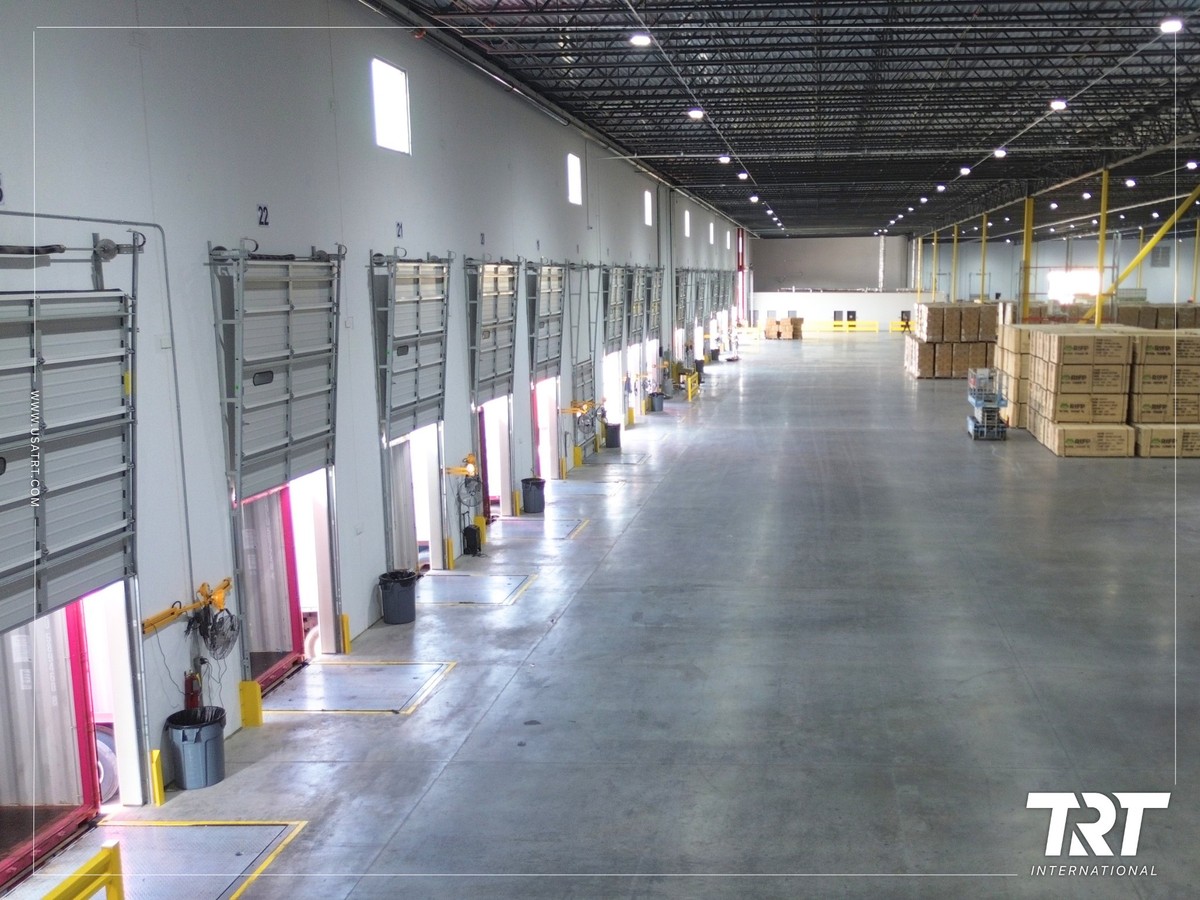
Cross-dock loadings are transfers in which freight is unloaded from an inbound container or truck, sorted on the dock, and loaded straight onto an outbound vehicle without being put into warehouse storage in between. The cargo crosses the dock instead of sitting in a rack. TRT International runs cross-dock loadings inside Port Newark-Elizabeth and inside the Port of Savannah through our cross-dock services, and this guide explains how a cross-dock loading actually works, when keeping freight moving is the right call, when storage is the better answer, and what a shipper should have ready before the inbound vehicle arrives.
Why Freight Should Sometimes Skip Storage Entirely
Storage is valuable when freight needs to wait. It is wasted money and wasted time when the freight does not. A container that arrives already sold, already allocated, or already expected at specific destinations gains nothing from being racked, recorded into storage, and then picked again days later for the outbound move that was known on the day it landed. Every extra handling and every extra day adds cost and adds risk, and for freight working to a delivery window, a job-site schedule, or a vessel cutoff, those days can break the plan outright. Cross-docking exists for that freight. The warehouse still does the skilled work — unloading, checking, sorting, securing, and reloading — but it does that work in one continuous flow, so the facility acts as a transfer point rather than a parking place. Done well, a cross-dock loading also frees the inbound container quickly, so the box goes back to the terminal instead of waiting on the cargo and running up time on the port side.
Step 1: Plan Both Legs Before the Freight Arrives
A cross-dock loading is won or lost before the first door opens. Because there is no storage buffer, the inbound and outbound legs have to be scheduled around each other from the start. We begin with your details: what is coming in, how it arrives, how it needs to be split or combined, and what it leaves on. If one inbound container is feeding three outbound trucks, we need the split plan — which pieces go to which destination — before the container is opened, not while freight is standing on the dock. If several inbound loads are being combined into one outbound load, we need to know the order they arrive in and what the combined load must look like. This planning step is also where heavy or awkward pieces are flagged, so the right forklifts, handling equipment, and crew are on the dock when they are needed rather than called for after the freight is already moving.
Step 2: Bring the Inbound Leg Into the Port Warehouse
Freight reaches our cross dock two ways. Import containers are collected inside Port Newark-Elizabeth or inside the Port of Savannah by our own drayage services team, or freight arrives by truck at our loading docks. Because our warehouses sit inside the ports, a container cross-dock can begin as soon as the box clears the terminal — there is no long haul to an off-port facility before the transfer can start. That in-port position matters more for cross-docking than for almost any other service we run. The whole point of the pattern is that freight keeps moving, and every mile and every handoff between the terminal and the dock works against that point. One team running the drayage on the inbound side and the transfer on the dock side is what keeps the schedule honest.
Step 3: Unload, Check, and Sort Across the Dock
Once the inbound vehicle is at the dock, the freight is unloaded and sorted against your instructions as it crosses the floor. Every piece is accounted for during the transfer. Split loads are separated by destination so each share is built as its own outbound load, and combined loads are brought together piece by piece until the outbound load is complete. This is the step where accuracy is everything. In a storage model, a sorting mistake can be found and fixed while the freight waits. In a cross-dock model, the outbound truck is waiting, so the check against the packing list and the split plan happens in real time, while the freight is on the dock and any discrepancy can still be corrected before the doors close. Our teams run unload, sort, and reload work every day for transloading and deconsolidation programs, and a cross-dock loading applies that same discipline with one rule added: nothing stops moving without a reason.
Step 4: Reload and Secure the Outbound Load
Sorted freight is loaded straight onto the outbound trucks or containers. Pieces that need it are secured or wrapped during the transfer — our transloading and wrapping crews work in the same facilities — so the outbound load leaves ready for the road, not just loaded. That distinction matters for the heavy and irregular cargo TRT handles every day. A machine component, a crated assembly, or a palletized share of a split container has to be positioned, balanced, and secured for the vehicle it is actually leaving on, which may be a very different vehicle from the one it arrived on. Reloading is not simply carrying freight from one door to another. It is building a new load, to road standard, on a schedule, and it is the step shippers should ask the most questions about when they choose a cross-dock partner.
Step 5: Send the Outbound Leg Out and Release the Container
The outbound vehicles leave under TRT coordination — local and regional delivery, or onward over-the-road transport through the United States, Canada, and Mexico with the same team that ran the transfer. Our fleet of Freightliner day-cab trucks, more than 85 trucks and more than 300 company chassis including tri-axles, with flatbeds, step decks, RGNs, and perimeter trailers, covers the port and regional legs, and you receive status updates along the way through our tracking operation. Just as important, the inbound container is freed up and returned instead of sitting loaded while the cargo waits on a schedule. For importers, that quick release is often where a cross-dock loading quietly pays for itself: the freight is already rolling to its destinations while the empty box is already back at the terminal.
Cross-Dock, Transload, or Warehouse: Choosing the Right Pattern
These three services sit side by side in our facilities, and choosing between them comes down to one question: is the next leg ready? If the outbound leg is ready and the freight is allocated, cross-dock it — the freight crosses the facility and leaves. If freight is changing vehicles or containers but the timing needs a buffer, a transload with a short storage stay absorbs the gap. If the freight has no confirmed next leg, needs to be held for a project phase, or needs work such as inspection, re-packing, or consolidation over time, warehousing is the right answer. There is no prize for forcing freight into the fastest pattern. A cross-dock loading with an outbound truck that is not actually booked becomes an unplanned storage problem on a dock floor, which is worse than a planned warehouse stay. We would rather help a shipper pick the honest pattern up front than rescue the wrong one later.
When Cross-Docking Is the Wrong Choice
Cross-docking fails when it is asked to do a warehouse job. Freight that arrives unallocated — nobody yet knows where it goes next — cannot be cross-docked, because there is no outbound leg to load it onto. Freight that needs inspection, testing, repair, or re-work before it can move should go through a re-work and storage flow, not a same-flow transfer. And freight whose outbound schedule is aspirational rather than confirmed will simply trade a rack in the warehouse for a corner of the dock, handled twice and stored nowhere properly. The pattern also demands good information. A split plan that changes while the container is being unloaded, or piece counts that do not match the freight, cost far more time in a cross-dock than in a storage model, because the outbound side is already committed. None of this makes cross-docking fragile. It makes it a planned service, and the planning is part of what you are buying.
Cross-Dock Loadings in Newark and Savannah
TRT runs cross-dock loadings at both of its main port warehouses. In Newark, we operate 150,000 square feet of warehouse space inside Port Newark-Elizabeth — 120,000 square feet plus a 30,000-square-foot site whose loading docks are built for this kind of transfer work — beside the terminals the containers come from. Read more about that operation on our Port Newark location page. In Savannah, cross-docking runs at our brand-new 316,800-square-foot warehouse on 30 acres inside the Port of Savannah, covered on our Savannah location page. TRT has many warehouses, and Newark and Savannah are the main ones. At both sites, modern inventory control keeps every piece accounted for during the transfer, electric forklifts and lower-emission equipment handle the dock work, and the same company that runs the cross dock also runs the drayage on both sides of it. TRT International — Delivering Excellence since 1994.
Shipper Checklist: Before You Book a Cross-Dock Loading
Send us the inbound container or truck details and the expected arrival window. Send a packing list or piece count that matches the freight, with dimensions and weight for any heavy or oversized pieces. Tell us the split or combination plan in writing — which pieces go where, or which inbound loads combine into which outbound load. Confirm the outbound vehicles, destinations, and delivery windows are actually booked, not just intended. Flag anything that needs securing, wrapping, or special handling during the transfer. Finally, give us one contact who can answer questions while the freight is on the dock, because in a no-storage flow, a question answered in ten minutes can be the difference between a clean transfer and a missed window. Headquarters is at 250 Port St, Newark, NJ 07114, and the Savannah public address is 117 A Parkway Dr, Rincon, GA 31326. Call +1 973 344 7100 ext 221 to plan a transfer.
Frequently Asked Questions
What is a cross-dock loading?
A cross-dock loading is a transfer in which freight is unloaded from an inbound container or truck, sorted on the dock, and loaded straight onto an outbound vehicle without being put into warehouse storage in between. The freight crosses the dock instead of sitting in a rack, so the inbound and outbound legs are planned as one continuous move.
How is cross-docking different from transloading?
Transloading is the broader transfer of freight from one vehicle or container to another, and the freight may go into short-term storage as part of that transfer. Cross-docking is the no-storage version of that transfer: the outbound leg is ready, the freight is sorted as it is unloaded, and it leaves on the outbound vehicle instead of waiting in the warehouse.
What freight is a good fit for cross-dock loadings?
Freight that is already allocated is a good fit for cross-dock loadings, including an import container split between several destinations, cargo changing vehicles on a fixed schedule, and freight working to a delivery window or a vessel cutoff. If the next leg is planned and the freight does not need inspection, repair, or consolidation, keeping it moving is usually the right pattern.
Can cross-docking handle heavy or oversized cargo?
Yes. TRT handles specialized and heavy cargo at its port warehouses, and pieces that need it are secured or wrapped during the transfer so the outbound load leaves ready for the road. The key is planning: dimensions, weight, and handling needs have to be shared before the freight arrives so the right equipment and crew are ready on the dock.
What information does TRT need before a cross-dock loading?
TRT needs to know what is coming in, how it arrives, how it needs to be split or combined, and what it leaves on. That means the inbound container or truck details, a packing list or piece count, dimensions and weight for heavy pieces, the split or consolidation plan, and the outbound schedule. The more complete that information is before arrival, the smoother the transfer runs.
Where does TRT offer cross-dock loadings?
TRT offers cross-dock loadings inside Port Newark-Elizabeth, where its warehousing totals 150,000 square feet, and inside the Port of Savannah, where its brand-new warehouse is 316,800 square feet on 30 acres. TRT has many warehouses, and Newark and Savannah are the main ones. Headquarters is at 250 Port St, Newark, NJ 07114, and the Savannah public address is 117 A Parkway Dr, Rincon, GA 31326.
How do I arrange a cross-dock loading with TRT?
Send TRT the inbound details, what the freight is, how it should be split or combined, and the outbound plan, or call +1 973 344 7100 ext 221. The team schedules the inbound and outbound legs around each other and confirms the transfer plan before the freight arrives, so the dock, the equipment, and the outbound vehicles are ready when it does.