
Cross-Dock Services
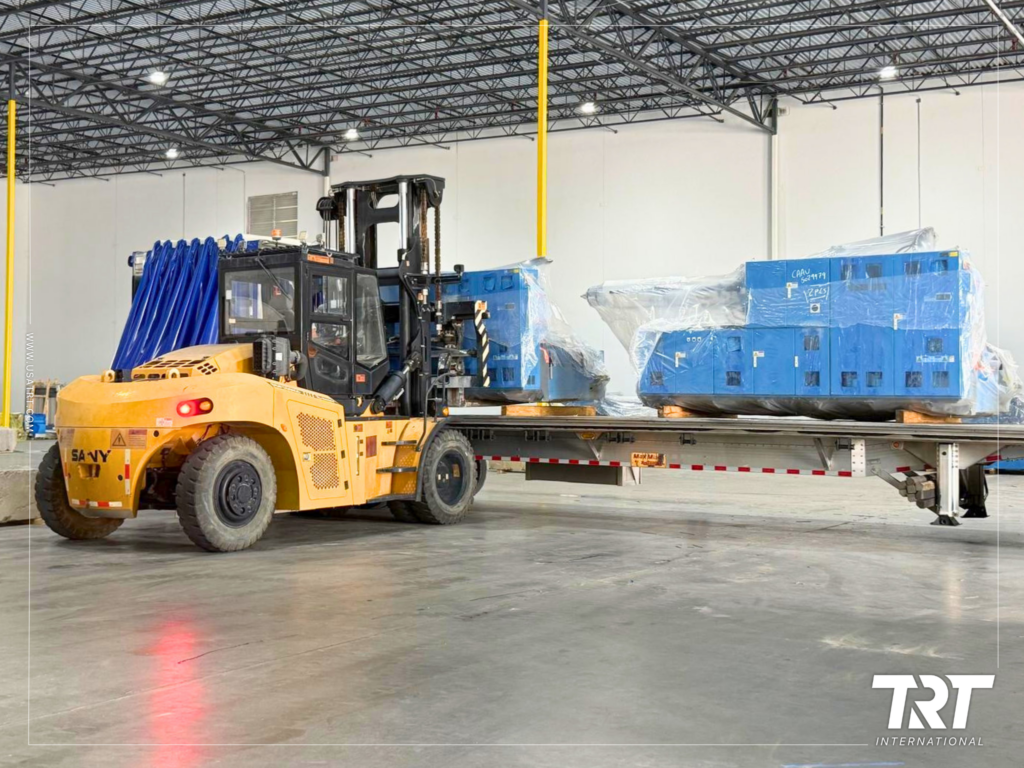
Cross-Dock Services
What Is Cross-Docking?
Cross-docking is a warehousing method where freight is unloaded from an inbound vehicle, sorted, and reloaded onto an outbound vehicle without going into storage in between — the cargo crosses the dock instead of sitting in a rack. It is built for freight whose next leg is already planned: an import container whose contents are split between several outbound trucks, or cargo changing vehicles on a tight schedule. TRT offers cross-dock services at its warehouses in Port Newark-Elizabeth and the Port of Savannah, built on the same unload-sort-reload operations our teams run every day for transloading and deconsolidation — with one discipline added: the freight keeps moving.
How Cross-Docking Works at TRT
Step 1 — Plan the transfer
A cross-dock only works when both sides are lined up before the freight arrives. We start from your details: what is coming in, how it arrives, how it needs to be split or combined, and what it leaves on. The inbound and outbound legs are scheduled around each other from the start.
Step 2 — Inbound arrival
Freight arrives at the warehouse two ways: in a container collected at Port Newark-Elizabeth or the Port of Savannah by our Drayage Services team, or by truck at our loading docks. Because our warehouses sit inside the ports, a container’s cross-dock can begin as soon as it clears the terminal.
Step 3 — Unload and sort
The freight is unloaded and sorted, and checked against your instructions as it crosses the dock. Every piece is accounted for in the transfer — split loads are separated by destination, and combined loads are brought together — so what leaves is exactly what the plan called for.
Step 4 — Reload for the outbound leg
Sorted freight is reloaded straight onto the outbound trucks or containers. Pieces that need it are secured or wrapped by our Wrapping & Craning team during the transfer, so the outbound load leaves ready for the road, not just loaded.
Step 5 — Outbound departure
The outbound vehicles leave under TRT coordination — local and regional delivery, or onward transport arranged with the same team. You get status updates along the way, and the inbound container is freed up and returned instead of waiting on the cargo’s schedule.
When Cross-Docking Makes Sense
- Import containers split between destinations — one container arrives, several consignees are waiting; the load is deconsolidated and each share crosses straight onto its own outbound truck
- Freight changing vehicles on a schedule — cargo that has to move from one truck or container to another without a storage stay in between
- Delivery windows and vessel cutoffs — freight whose next appointment is fixed, where days in storage would break the plan
- Programs where storage adds cost but no value — high-flow cargo that is already sold, allocated, or expected at the other end
Who Uses Cross-Docking?
Cross-docking suits any shipper whose freight has somewhere to be next. Importers whose containers arrive pre-allocated — sold, assigned, or expected at specific destinations — use it to turn one port arrival into several outbound deliveries in the same flow. Distributors splitting a container between stores, warehouses, or job sites get each share onto its own truck without paying for a storage stay in between. Freight forwarders use TRT’s cross docks as a port-side transfer point inside the same facilities that handle their consolidation and deconsolidation programs. And when a delivery sequence matters — site deliveries, installation schedules, vessel cutoffs — cross-docking is the pattern that keeps freight moving to its appointments instead of waiting in a rack.
Cross-Docking at TRT’s Port Warehouses
Cross docks are offered at TRT’s warehouses, and the locations do much of the work. In Newark, TRT operates 150,000 square feet of warehouse space inside the Port Newark–Elizabeth Marine Terminal, including a 30,000-square-foot warehouse with loading docks built for specialized cargo handling — freight moves between dock doors at a facility that sits in the port, beside the terminals the containers come from. In Savannah, cross-docking runs at our brand-new 316,800-square-foot warehouse in the Port of Savannah. Modern inventory control keeps every piece accounted for during the transfer, and because TRT also runs the drayage on both sides, one team schedules the container in and the trucks out.
Cross-Dock or Storage: Which Does Your Cargo Need?
If the outbound leg is ready, cross-dock: freight crosses the facility and leaves. If it is not, the same facility can simply hold the cargo — cargo can stay in short-term storage or our secure outdoor yard until its delivery window opens, and in-bond cargo can wait at our bonded Container Freight Station (CFS) in Newark under customs supervision. Plans change mid-shipment all the time; a load that was meant to cross the dock can be staged instead, and a stored load can be released the moment its truck is ready — without the cargo ever changing companies. Our Warehouse Services team will help you pick the right pattern for each shipment.
What Affects the Cost of Cross-Dock Services
Cross-dock pricing is built from the specifics of each transfer, not a flat rate. The main factors are the number of inbound containers or trucks, how many outbound vehicles the freight is split or combined into, the cargo’s size, weight, and handling requirements, any preparation work during the transfer — securing or wrapping — and how tightly the inbound and outbound legs have to be scheduled around each other. As with every TRT service, you receive a clear, detailed quote before any shipment is accepted, with no hidden fees.
What to Send Us for a Cross-Dock Quote
- What the freight is, and how it arrives — container at Port Newark-Elizabeth or the Port of Savannah, or by truck
- How it needs to be split or combined — one outbound load, or several destinations
- What it leaves on, and where each outbound load is going
- The schedule on both sides — when the inbound freight is available, and when the outbound legs must leave
- Anything the freight needs during the transfer — securing, wrapping, or crating
- Whether any of the cargo is in bond, or needs bonded handling
Send the details through our contact page, call us at +1 973 344 7100 ext 221, or email drayage@usatrt.com, and we will line up both legs and come back with a clear, detailed quote.
Cross-Dock FAQs
What is cross-docking?
Cross-docking is a warehousing method where freight is unloaded from an inbound vehicle, sorted, and reloaded onto an outbound vehicle without going into storage in between — the cargo crosses the dock instead of sitting in a rack. TRT offers cross-dock services at its warehouses in Port Newark-Elizabeth and the Port of Savannah.
How is cross-docking different from transloading?
Transloading changes the cargo’s mode of travel — out of a container and onto a different kind of transport for its next leg — and can include staging or short storage. Cross-docking is about speed through the facility: freight moves straight across the dock between inbound and outbound vehicles, with no storage stay in between. Many shipments use elements of both.
Does TRT offer cross-dock services?
Yes. Cross docks are offered at TRT’s warehouses, as part of the warehousing operation in Port Newark-Elizabeth and the Port of Savannah. The service runs on the same unload, sort, and reload operations our teams perform daily for transloading and deconsolidation, scheduled so freight keeps moving instead of being put away.
Which TRT facilities handle cross-docking?
Our warehouses inside the ports: in Newark, 150,000 square feet of warehouse space in the Port Newark–Elizabeth Marine Terminal, including a 30,000-square-foot warehouse with loading docks built for specialized cargo handling; in Savannah, our brand-new 316,800-square-foot warehouse in the Port of Savannah. TRT operates many warehouses — Newark and Savannah are the main ones.
What happens if the outbound vehicle is not ready when my freight arrives?
The cargo waits with us. Freight can be held in short-term storage — indoors, or in our secure outdoor yard for oversized pieces — until the outbound leg is ready, and in-bond cargo can wait at our bonded CFS in Newark. The plan switches from cross-dock to staging without the cargo changing facilities or companies.
Can one inbound container be split between several outbound destinations?
Yes. Splitting is one of the main uses of cross-docking. An arriving container is unloaded and deconsolidated, the freight is sorted and checked against your instructions, and each consignee’s share is loaded onto its own outbound vehicle — the same deconsolidation process our CFS runs for import cargo.
Can oversized cargo be cross-docked?
Oversized and out-of-gauge pieces are handled through our yards and specialized teams rather than standard dock doors: they are received, staged in secure outdoor storage when needed, prepared by our wrapping and craning teams, and loaded for their outbound leg with heavy equipment. Tell us the dimensions when you ask for a quote and we will plan the right pattern.
How do I get a cross-dock quote?
Call us at +1 973 344 7100 ext 221, email drayage@usatrt.com, or reach us through our contact page. Tell us what the freight is, how it arrives, how it needs to be split or combined, and the schedule on both sides, and we will provide a clear, detailed quote before any shipment is accepted.