
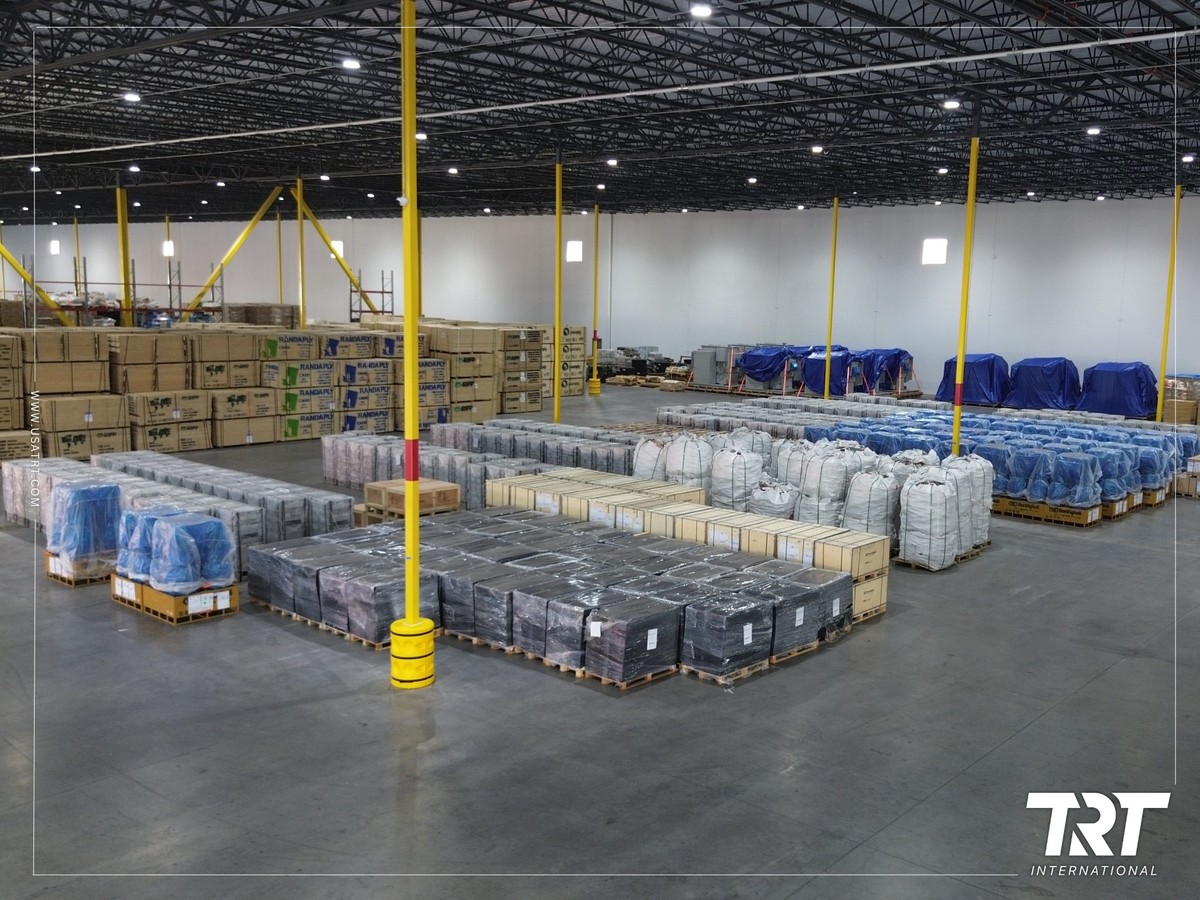
Project consolidation is the work of receiving many separate pieces of project cargo — from different suppliers, on different days, often in different containers — and building them into one coordinated outbound shipment. Done well, every piece arrives, is checked, staged, prepared, and loaded together. Done badly, the shipment splits: some pieces sail, some stay behind, and the project waits.
We run project consolidation inside the Port of Newark-Elizabeth and inside the Port of Savannah, and the failures we are called in to fix are rarely caused by the cargo itself. They are caused by coordination mistakes made weeks earlier — a piece list that was never finished, a supplier who shipped early into nowhere, a heavy piece that arrived after the flat racks were already built. This guide covers the mistakes that split shipments, why each one happens, and the routine we use to prevent them.
For the step-by-step process, see our project consolidation process guide.
What Project Consolidation Actually Has to Coordinate
A consolidated project shipment is not one load. It is a set of pieces that only makes sense together: a machine and its base frame, a tank and its fittings, crates of parts that are useless until the main unit arrives. Each piece can have a different origin, a different arrival date, a different size and weight, and a different handling requirement.
That means consolidation is really three jobs running at once. The first is receiving: getting every piece off its inbound container or truck, checked against the piece list, and recorded. The second is staging: holding the pieces — in warehouse space, in outdoor storage, or both — in an order that matches how they will be loaded out. The third is preparation and build: crating, wrapping, and lashing preparation done in place, then building the outbound load across standard containers, flat racks, and open tops as one plan.
When any one of those jobs loses track of a piece, the shipment splits. The mistakes below are the ways that happens.
Mistake 1: Starting Without a Complete Piece List
The single most common cause of a split shipment is a piece list that was treated as paperwork instead of as the plan. If the list is missing dimensions for two crates, has no weight for the heaviest piece, or does not say which supplier is shipping what, nobody can plan the staging space, the equipment, or the outbound build.
A working piece list names every piece, its supplier, its dimensions and weight, how it is packed, and when it is expected. With that list, we can reserve the right staging footprint, decide which pieces go indoors and which go to outdoor storage, and plan the outbound equipment before the first container arrives. Without it, every arrival is a surprise, and surprises at a port turn into storage days and missed sailings.
Mistake 2: Letting Suppliers Ship on Their Own Schedules
Project cargo often comes from several suppliers, and each one ships when its part is ready. If nobody coordinates those releases, pieces arrive in the wrong order: the fittings first, the main unit last, and the piece that has to be loaded first buried behind everything else.
Worse, an early shipment sent before the receiving plan exists can land at a terminal with no instructions, run out of free time, and start building demurrage and detention charges while people work out where it should go. Our drayage operation — 85+ Freightliner day-cab trucks and 300+ company chassis, including tri-axles, running in Port Newark-Elizabeth and the Port of Savannah — exists so inbound pieces move on one schedule into one staging plan, not on five suppliers’ separate schedules.
Mistake 3: Staging Pieces in Arrival Order Instead of Load Order
Where a piece sits while it waits decides how the outbound build goes. Pieces staged in the order they happened to arrive usually have to be moved again — sometimes several times — before loading. Every extra move of an oversized piece is another lift, another cost, and another chance of damage.
We stage in load order. The piece list and the outbound plan decide the layout: what loads first sits deepest, what loads last stays accessible, and pieces that need crating, heat shrink wrapping, or lashing preparation sit where that work can be done in place. In Newark we stage across 150,000 sq ft of warehouse space in the port; in Savannah our brand-new 316,800 SF warehouse on 30 acres does the same job. The space matters, but the layout plan matters more.
Mistake 4: Discovering Damage or Bad Packing at Loading Time
A consolidated shipment is only as strong as its worst-packed piece. A crate that was fine for a domestic truck leg may not survive an ocean voyage, and a piece that shifted inside its container on arrival will not get better by being loaded again as-is.
That is why receiving inspection is part of consolidation, not an extra. Every piece is checked as it comes off the inbound equipment, and problems are handled while there is still time: re-works, re-palletizing, export crating, or wrapping done in the warehouse, by the same team that will load the piece out. A problem found at receiving costs hours. The same problem found at loading costs the sailing.
Mistake 5: Planning the Outbound Build Too Late
Flat racks, open tops, and standard containers are not interchangeable, and they are not always available on the day you ask. If the outbound build is planned only after every piece has arrived, the project can end up fully staged and still stuck — waiting for equipment, or rebuilt at the last minute into whatever was available.
We plan the build from the piece list, early: which pieces travel in containers, which need flat racks and lashing, which are over-height and need open top loading. Pieces are then staged and prepared for that specific build. If a piece arrives over its stated dimensions — a common surprise — the plan is adjusted while there is still slack, not at the vessel cutoff.
Mistake 6: Losing Track of Pieces Between Handoffs
A project piece can change hands many times: supplier to trucker, trucker to terminal, terminal to warehouse, warehouse floor to outbound container. Each handoff is a place where a piece can be miscounted, mislabelled, or simply not recorded — and a missing crate is usually discovered at the worst possible moment, when the shipment is being built.
Milestone tracking is the fix. Every piece is recorded at each step — pickup, arrival, unload, storage position, preparation work, loading, and dispatch — so at any moment we can answer, piece by piece, where everything is and what is still outstanding. On a consolidated shipment, that outstanding-pieces answer is the one that decides whether the sailing is real.
Mistake 7: Treating Import Deconsolidation as an Afterthought
Consolidation runs in both directions. A project shipment arriving as one consolidated move still has to come apart at destination: containers stripped, pieces checked against the same piece list, and each piece routed to its final delivery — some to a job site, some to storage, some to another carrier.
If that breakdown is not planned before arrival, the consolidated shipment that saved money on the ocean leg gives it back in terminal charges and confusion at destination. We plan deconsolidation from the same piece list the shipment was built on, so every piece leaves the port with a destination and a truck assigned.
How We Prevent Split Shipments: The Routine
Our consolidation routine is deliberately simple. One piece list, owned by one team, from first arrival to final loading. Receiving and inspection on arrival, with re-work and packing problems fixed in place. Staging in load order across warehouse and outdoor storage. Preparation — crating, wrapping, lashing — done where the piece sits. An outbound build planned early against real equipment. And milestone tracking on every piece at every handoff.
It also helps that the same company runs the trucks, the warehouses, and the preparation work. TRT International has operated since 1994 — our tagline is “TRT International – Delivering Excellence since 1994” — and our headquarters is at 250 Port St, Newark, NJ 07114, with our Savannah address at 117 A Parkway Dr, Rincon, GA 31326. When the drayage driver, the warehouse crew, and the loading team are one operation, a piece does not fall between companies.
Shipper Checklist: Before You Consolidate a Project Shipment
- Send a complete piece list: every piece, supplier, dimensions, weight, packing, and expected arrival.
- Name one contact who can answer questions about every supplier’s shipment.
- Coordinate supplier releases against the receiving plan — do not let pieces ship into nowhere.
- Flag the heaviest and largest pieces early; they decide staging layout and outbound equipment.
- Allow time between the last arrival and the sailing for inspection, re-work, and preparation.
- Decide the destination breakdown in advance: where each piece goes after arrival.
- Ask, at any point, for a piece-by-piece status — and expect a specific answer, not a general one.
If you are planning a project shipment — or trying to rescue one that is already splitting — call TRT International at +1 973 344 7100 ext 221. Send us the piece list you have, even an incomplete one, and we will tell you what is missing and how the shipment should be built.
Frequently Asked Questions
Q1: What is project consolidation?
A1: Project consolidation is receiving many separate pieces of project cargo, often from different suppliers and on different arrival dates, checking and staging them together, and building them into one coordinated outbound shipment instead of shipping each piece separately.
Q2: What is the most common cause of a split project shipment?
A2: An incomplete piece list. If dimensions, weights, suppliers, or arrival dates are missing, staging space, preparation work, and outbound equipment cannot be planned properly, and pieces get left behind when the shipment is built.
Q3: Where does TRT consolidate project cargo?
A3: TRT consolidates project cargo inside the Port of Newark-Elizabeth and inside the Port of Savannah, using 150,000 sq ft of warehouse space in Newark and a brand-new 316,800 SF warehouse on 30 acres in Savannah, with warehouse and outdoor staging in both ports.
Q4: Can damaged or badly packed pieces be fixed during consolidation?
A4: Yes. Every piece is inspected at receiving, and problems such as shifted cargo or weak packing are handled in the warehouse with re-works, re-palletizing, export crating, or wrapping before the piece is loaded out.
Q5: How far in advance should consolidation be planned?
A5: Planning should start as soon as the piece list exists, before suppliers ship. Early planning lets supplier releases, drayage, staging layout, and outbound equipment be coordinated, and leaves time to fix packing problems found at receiving.
Q6: How are pieces tracked during consolidation?
A6: Each piece is recorded at every milestone — pickup, arrival, unload, storage position, preparation work, loading, and dispatch — so its status can be reported piece by piece at any time, including which pieces are still outstanding.
Q7: Does TRT also handle import deconsolidation?
A7: Yes. Arriving consolidated shipments are stripped, checked against the original piece list, and each piece is routed to its planned destination, with drayage and onward transport arranged from the port.