
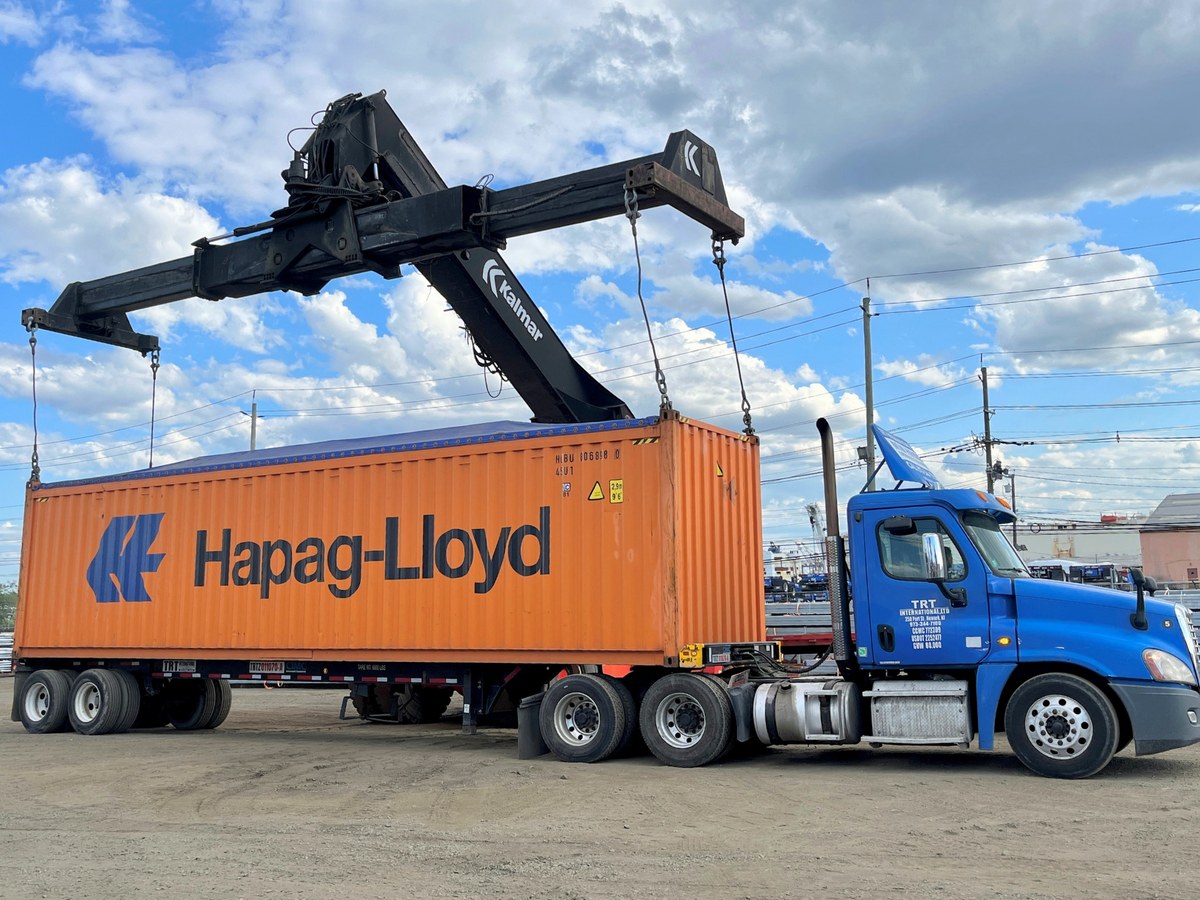
Bonded drayage is the short-haul trucking of a shipping container that moves under a customs bond. In plain terms, the cargo leaves the port before it has been formally entered for consumption and before duties are settled, and it travels under customs control to the destination the bond authorizes. We run bonded drayage in Port Newark-Elizabeth and in the Port of Savannah: our own company drivers collect the container at the terminal, move it under bond on our own chassis, and deliver it to a bonded warehouse, a container freight station, a foreign-trade zone, or the next leg of an in-bond movement. The truck ride itself is short. Getting the customs status, the paperwork, and the destination right is the whole job.
What “Under Bond” Actually Means
A bond is a guarantee to U.S. Customs and Border Protection that cargo moving inside the United States will be handled exactly as its documentation says it will: it will go to the authorized place, stay under customs control while it is there, and be entered, exported, or otherwise accounted for at the right point. When a container moves in bond, it has not cleared customs in the usual way. It is traveling under that guarantee instead.
That simple fact changes how we plan the move. An ordinary pickup can go wherever the customer needs it to go. A bonded pickup can only go where the bond allows, the container seal matters from gate-out to arrival, and the in-bond paperwork has to describe the move the truck is actually making. When a broker tells us a load is moving under bond, we treat every detail of the trip — terminal, chassis, destination, and timing — as part of a customs movement, not just a local delivery. Our local drayage service handles both bonded and standard work, and the dispatch conversation starts by confirming which one a container is.
When Cargo Must Move Under Bond
Shippers and brokers reach for a bonded move in a few recurring situations:
- Immediate Transportation (IT) entries. The cargo arrives at one port, but the formal entry will be filed at another port. The container travels in bond between the two, under customs control, with its seal intact.
- Bonded warehouse deliveries. The cargo is going into a bonded warehouse, where it stays under customs control until the entry is completed and the goods are released for domestic use or moved onward.
- Foreign-trade zone (FTZ) moves. The container is destined for a foreign-trade zone, so it moves from the terminal to the zone under bond rather than being entered at the port.
- Onward in-bond movement. The shipment is passing through the United States on its way to another destination, so the port-to-next-point leg runs under bond from start to finish.
In each case, the pattern is the same: the entry is not finished at the arrival terminal, so the trucking leg has to preserve the cargo’s in-bond status until it reaches the place where that status will be handled. Your customs broker confirms the bond arrangement and the authorized destination; our job is to execute the physical move exactly as documented.
Bonded Drayage vs. Standard Drayage
From the driver’s seat, bonded and standard drayage look similar. The same day-cab trucks pull the same containers out of the same terminals on the same kinds of chassis. The difference is the cargo’s customs status and everything that flows from it. Standard drayage usually starts after cargo has been entered and released, and the container can deliver straight to a customer’s warehouse or distribution center. Bonded drayage starts before entry is complete. The destination must be a place authorized to receive in-bond cargo, the paperwork traveling with the move is in-bond documentation rather than a simple delivery order, and the container cannot simply be diverted to a different address because a schedule changed. A change of plan on a bonded load is a customs question first and a trucking question second, which is why we confirm the destination and the broker’s instructions before a truck is dispatched — not while it is sitting at the gate.
How We Run Bonded Drayage in Newark and Savannah
Our headquarters is at 250 Port St, Newark, NJ 07114, and our warehouses are in Port Newark-Elizabeth. They total 150,000 square feet across a 120,000 square foot facility and a 30,000 square foot facility whose feature is its loading docks, so a bonded container coming off the terminal can move directly into port warehousing with the same company that hauled it. In the Port of Savannah, our main warehouse there is brand new: 316,800 square feet on 30 acres, built for the container volume that moves through that port. TRT has many warehouses; Newark and Savannah are the main ones, and bonded work concentrates where the containers actually land — inside the ports we serve.
Equipment is the other half of reliability on bonded moves, because an in-bond container should not sit waiting for a chassis. We run 85+ Freightliner day-cab trucks with company drivers only, and we own 300+ company chassis, including tri-axles for heavier containers, so the truck and the chassis that arrive at the terminal are ours. The same fleet that runs local bonded drayage also runs over-the-road transportation throughout the United States, Canada, and Mexico, with trailers including flatbeds, step decks, RGNs, and perimeter trailers for cargo that continues on specialized equipment after its bonded leg. Inside our warehouses, electric forklifts and other lower-emission equipment handle cargo during transloads and storage. One carrier, one chain of custody, from the terminal gate to the bonded destination.
Shipper Checklist: Have This Ready Before We Roll
A bonded move goes smoothly when the information arrives before the truck does. Send us the following, and confirm the bond details with your customs broker:
- Container number, bill of lading number, terminal, and vessel or voyage details, if you have them.
- The in-bond information from your broker, including the entry type (for example, an IT entry) and the authorized destination the bond names.
- Your customs broker’s name and contact details, so questions about status go to the right desk quickly.
- The exact delivery destination — bonded warehouse, container freight station, or foreign-trade zone — with its address, receiving hours, and any appointment rules.
- The container seal number, plus the cargo’s weight, piece count, and a plain description of what is inside.
- What happens on arrival: bonded storage, deconsolidation, a transload, or an onward move, and who receives the cargo there.
- The onward plan after the bond is handled — domestic delivery, over-the-road transportation, or export — so we can position equipment for the next leg.
- A contact who can answer questions while the truck is en route, including after hours if the move runs late in the day.
Two of these items cause most delays when they are missing: a destination that does not match the in-bond paperwork, and a seal number nobody recorded at the terminal. Both take minutes to confirm up front and are much harder to fix once a truck is rolling.
How Bonded Drayage Connects to Warehousing and Transloads
Bonded drayage rarely ends the story; it usually starts the warehouse chapter. A container that delivers under bond into a bonded warehouse stays under customs control while the entry is completed, and once the cargo is released, our warehousing service can deconsolidate it, transload it onto domestic trailers, and stage it for final delivery — all without the freight changing hands between companies. Cargo that arrived as a heavy or oversized container load can roll from its bonded leg straight into our over-the-road operation for the long haul. Because the drayage, the warehouse, and the onward transportation sit under one roof at TRT, the information travels with the freight: the seal recorded at the port is the seal our warehouse checks on arrival, and the delivery plan your broker approved is the plan every team works from.
Talk to TRT About a Bonded Move
If you have a container that needs to move under bond in Port Newark-Elizabeth or the Port of Savannah, call us at +1 973 344 7100 ext 221 with the checklist above in hand. Our headquarters is at 250 Port St, Newark, NJ 07114, and our Savannah public address is 117 A Parkway Dr, Rincon, GA 31326. TRT International – Delivering Excellence since 1994.
Frequently Asked Questions
What is bonded drayage?
Bonded drayage is the short-haul trucking of a container that moves under a customs bond. The cargo travels from the port to a bonded warehouse, a container freight station, a foreign-trade zone, or the next in-bond leg without being entered for consumption first, so it stays under customs control during the move.
When does a container have to move under bond?
A container moves under bond when its customs entry will be completed somewhere other than the arrival terminal, when it is going into a bonded warehouse or a foreign-trade zone, or when it is passing in bond toward another port or country. Your customs broker confirms the bond status and tells us the authorized destination before we dispatch a truck.
What is an IT entry?
IT stands for Immediate Transportation. It is an in-bond entry that lets imported cargo arriving at one port travel under customs control to another port, where the formal entry is filed. The container moves under bond for the journey, and the seal and paperwork must stay intact until it reaches that destination.
Can TRT handle bonded drayage in both Newark and Savannah?
Yes. We run bonded drayage in Port Newark-Elizabeth and in the Port of Savannah with our own company drivers, Freightliner day-cab trucks, and more than 300 company chassis. Our main warehouses are in those ports, so a bonded container can move from the terminal into warehousing, transloading, or an onward move with the same team.
What should I have ready before TRT picks up a bonded container?
Have the container and bill of lading numbers, the terminal and vessel details, the in-bond information from your broker, the seal number, the cargo weight and description, and the exact bonded destination with its hours. Tell us what happens next as well: bonded storage, a transload, or an onward move after the bond is handled.
Can bonded cargo be transloaded or stored after delivery?
Yes, when the destination authorizes it. A bonded container can deliver into a bonded warehouse, where the cargo stays under customs control, and it can then be transloaded or held for its next move. In Newark and Savannah, our warehousing teams work alongside our drayage team, with electric forklifts handling cargo inside the warehouse.