
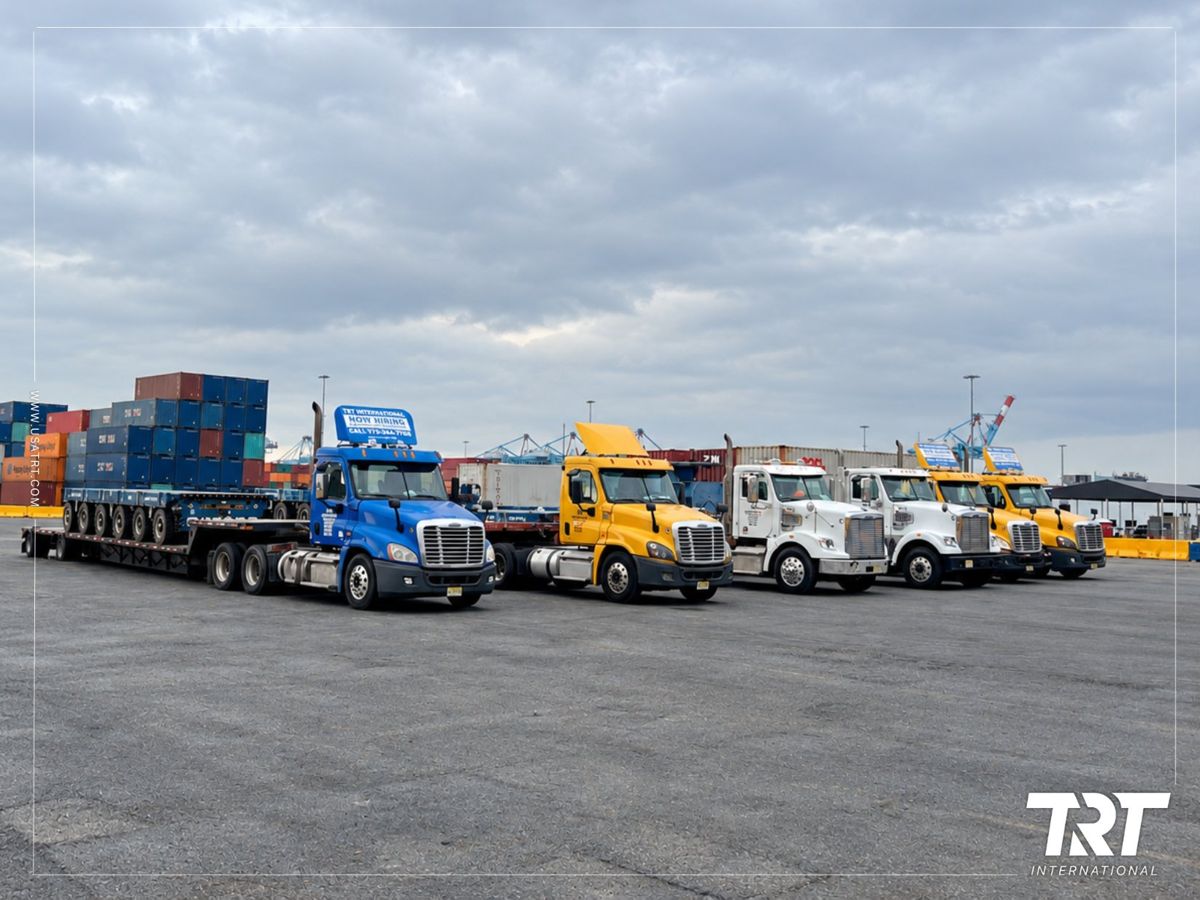
Outdoor storage costs are driven by five things: how much ground your cargo takes up, how long it stays, how it is handled in and out, what protection it needs while it sits, and what port work happens around it. There is no honest flat price for storing oversized project cargo outside, because a single steel structure on blocking, a row of loaded containers, and a shrink-wrapped machine waiting for a vessel all use the yard differently. This guide explains each cost driver in plain terms, so you can budget a stay accurately, compare quotes fairly, and avoid the charges that only appear when a plan was vague at the start.
We run outdoor storage inside Port Newark-Elizabeth and inside the Port of Savannah as part of TRT International, working from our headquarters at 250 Port St, Newark, NJ 07114 and our Savannah operation at 117 A Parkway Dr, Rincon, GA 31326. The cargo we store outside is the cargo we also haul, lift, wrap, crate and load: out of gauge pieces, project cargo arriving piece by piece, machinery, crated freight, boats, and loaded or empty containers. When the same operator stores your cargo and moves it, the cost conversation is simpler, because handling, protection and the onward move are planned together instead of being priced by strangers handing freight to each other.
Driver 1: Footprint — You Pay for the Ground the Cargo Actually Uses
The first driver is footprint. Outdoor storage is ground, and ground inside a working port is valuable. A compact crated machine uses a small, tidy rectangle. A long steel structure on a flat rack, a wide piece that cannot be stacked, or a set of project pieces that must stay together as one lot uses far more ground per ton than its weight suggests.
Three footprint details change the price. First, the true outside dimensions, including blocking, cradles, racks and the working clearance needed to reach the cargo safely with a forklift or crane. Second, whether pieces can be stacked or nested, which most oversized cargo cannot. Third, whether the cargo must stay in one marked lot, as project pieces usually should, or can be split across available spaces. When you ask for a quote, give exact dimensions for every piece and say clearly whether the set must stay together. A quote built on a guessed footprint is a quote that will be corrected later, and the correction rarely goes down.
Driver 2: Time — How Long the Cargo Stays, and How Certain That Is
The second driver is time. A short, defined stay while a vessel, permit or delivery window lines up is a different job from an open-ended stay that grows week by week. Yards plan around expected release dates: ground promised to the next arrival cannot also hold cargo whose departure keeps slipping.
Be honest about the schedule when you book. If the onward move depends on a vessel booking, a permit, a job site being ready, or other pieces still arriving, say so. A realistic longer stay quoted up front is almost always cheaper than a short stay that keeps extending, because extensions are handled as exceptions. Also tell the yard what triggers release: a booking confirmation, a delivery appointment, or the arrival of the last piece. The clearer the trigger, the cleaner the final invoice, because everyone priced the same stay.
Driver 3: Handling In and Out — Every Lift Is Work
The third driver is handling. Outdoor cargo does not walk into the yard. It arrives on a truck or in a container, and it is unloaded, positioned and later reloaded by equipment and people: heavy forklifts, reach stackers, cranes where the lift requires them, rigging crews, blocking and securing materials.
Handling cost follows the lift plan. A piece that unloads straight from a flatbed with one forklift is simple. A piece that must be lifted from a flat rack, set on blocking, shifted again when the lot is reorganized, and lifted a second time for loading carries more handling. Re-handling is the cost shippers most often create for themselves: changing the outbound plan, splitting a lot, or asking for one piece out of the middle of a set means extra lifts. Our own fleet helps here: with 85+ trucks and 300+ company chassis, including tri-axles, the move into the yard and the move out are usually our trucks, so the handling plan and the transport plan are written by the same team.
Driver 4: Protection — What the Cargo Needs While It Sits
The fourth driver is protection. Outdoor storage does not mean unprotected storage, but the level of protection is a choice with a price. Some cargo is built for weather: structural steel, for example, often needs little more than sound blocking and drainage. Other cargo needs real work before it can sit outside: heat shrink wrapping for machinery, covering for crated freight, sealing openings, protecting machined surfaces, and checking the covering after storms.
Protection decisions should be made before the cargo arrives, not after the first rain. Tell us what the cargo is, what surfaces or components are sensitive, and how long it is expected to sit. A short stay may need only basic covering; a long stay through a wet season justifies full shrink wrapping and scheduled checks. Paying for the right protection once is cheaper than repairing weather damage, and far cheaper than arguing about whose fault the damage was. This is also where outdoor and indoor storage meet: if a piece truly cannot tolerate weather even wrapped, the honest answer is warehouse space, and we will say so rather than sell you a yard spot that puts the cargo at risk.
Driver 5: Port Work Around the Stay — Drayage, Containers and Clocks
The fifth driver is the port work around the stay. Outdoor storage rarely stands alone. Containers must be picked up and returned, and demurrage and detention clocks do not pause because cargo is being stored. A load that comes out of a container, into the yard, and back into a different container involves drayage, transloading and container returns, each with its own cost.
This is where in-port storage earns its keep. Because our yards and warehouses sit inside Port Newark-Elizabeth and inside the Port of Savannah, the container, the yard and the warehouse are one short internal move apart. Our Newark warehouses total 150,000 sq ft, and our Savannah warehouse is a brand-new 316,800 SF facility on 30 acres; TRT has many warehouses, with Newark and Savannah as the main operations. Cargo can move from container to yard to warehouse floor and back without public-road hauls between strangers, which keeps both the handling bill and the container clock under control.
What a Fair Outdoor Storage Quote Should Show
A fair quote separates the drivers instead of hiding them in one number. Ask for the storage basis to be stated plainly: the footprint assumed, the period covered, and what happens if the stay extends. Ask for handling in and handling out as their own lines, with re-handling explained. Ask what protection is included and what is extra. Ask which port moves are included: container pickup, return of the empty, and any drayage between the terminal, the yard and the warehouse.
Red flags are familiar. A quote with no stated footprint or period is not a quote, it is an opening bid. A quote that assumes stacking for cargo that cannot be stacked will grow. A quote from an operator who does not control the trucks or the lifts will grow every time a third party is called in. And a quote that never asks what the cargo is, how sensitive it is, or when it leaves is a quote written without the information that decides the real price.
How to Keep Outdoor Storage Costs Down
Most savings come from information and timing, not from bargaining. Send exact dimensions and weights for every piece, with photos. State whether the set must stay together. Give a realistic stay with the release trigger named. Decide protection before arrival. Keep the outbound plan stable once cargo is positioned, so re-handling stays at zero. Consolidate arrivals where you can, so lifts are batched instead of repeated. And keep one point of contact on your side who can answer questions the same day; a yard that cannot confirm a detail will work around your cargo, and working around it costs money.
Outdoor Storage With TRT International
TRT International — Delivering Excellence since 1994. We store oversized and project cargo outdoors inside Port Newark-Elizabeth and inside the Port of Savannah, alongside our warehousing, drayage, transloading, wrapping and crating, flat rack lashing and loading services. One operator plans the footprint, the lifts, the protection and the onward move, and our tracking follows each piece from arrival to release. To price a stay, call +1 973 344 7100 ext 221 with your piece list, dimensions, expected dates and destination. We will tell you plainly what drives your price, and whether the yard or the warehouse is the right home for your cargo.
Frequently Asked Questions
What drives the cost of outdoor storage for oversized cargo?
Five drivers set the price: the footprint your cargo uses, how long it stays, the handling needed to unload, position and reload it, the protection it needs while it sits, and the port work around the stay such as drayage and container returns. Exact dimensions, a realistic schedule and a stable outbound plan keep all five under control.
Is outdoor storage priced by weight or by space?
For oversized and project cargo, space is usually the deciding factor. A long, wide piece that cannot be stacked uses far more ground than its weight suggests, and it also needs working clearance for safe lifting. Weight still matters for handling, because heavier pieces need bigger equipment and a proper lift plan.
How can I avoid extra handling charges during a stay?
Keep the plan stable. Re-handling happens when a lot is split, one piece is pulled from the middle of a set, or the outbound plan changes after cargo is positioned. Send the full piece list up front, say whether the set must stay together, and confirm the release trigger so cargo is positioned once, correctly.
What protection does cargo need while stored outdoors?
It depends on the cargo and the length of the stay. Structural steel may need only sound blocking, while machinery usually needs heat shrink wrapping, sealed openings and protected surfaces, with checks after storms. Decide protection before the cargo arrives; repairing weather damage costs far more than preventing it.
Can outdoor storage help with container demurrage and detention?
Yes, when it is planned with the container move. Taking cargo out of a container and into an in-port yard stops the loaded container clock and lets the empty go back on time. Because our yards sit inside Port Newark-Elizabeth and inside the Port of Savannah, that transfer is a short internal move handled by our own trucks and chassis.
When should cargo go in a warehouse instead of the yard?
When it cannot tolerate weather even when wrapped, when it is high-value and sensitive, or when it needs work under cover such as crating or detailed inspection. We will tell you plainly if the warehouse is the right choice; our Newark warehouses total 150,000 sq ft and our Savannah warehouse offers 316,800 SF, so both options sit with the same operator.
What information do you need to quote an outdoor storage stay?
A piece list with exact dimensions and weights, photos of the cargo, whether the set must stay together, the expected arrival and release dates with the release trigger, any protection requirements, and the onward destination. With that, we can price the footprint, time, handling, protection and port moves as clear separate lines.
Do you offer outdoor storage in both Newark and Savannah?
Yes. We store cargo outdoors inside Port Newark-Elizabeth, working from 250 Port St, Newark, NJ 07114, and inside the Port of Savannah at 117 A Parkway Dr, Rincon, GA 31326. In both ports the yard works together with our warehousing, drayage and loading services under one operator.
Ready to price a stay for your cargo? Call TRT International at +1 973 344 7100 ext 221 or contact us through trtlogistics.com. TRT International – Delivering Excellence since 1994.