
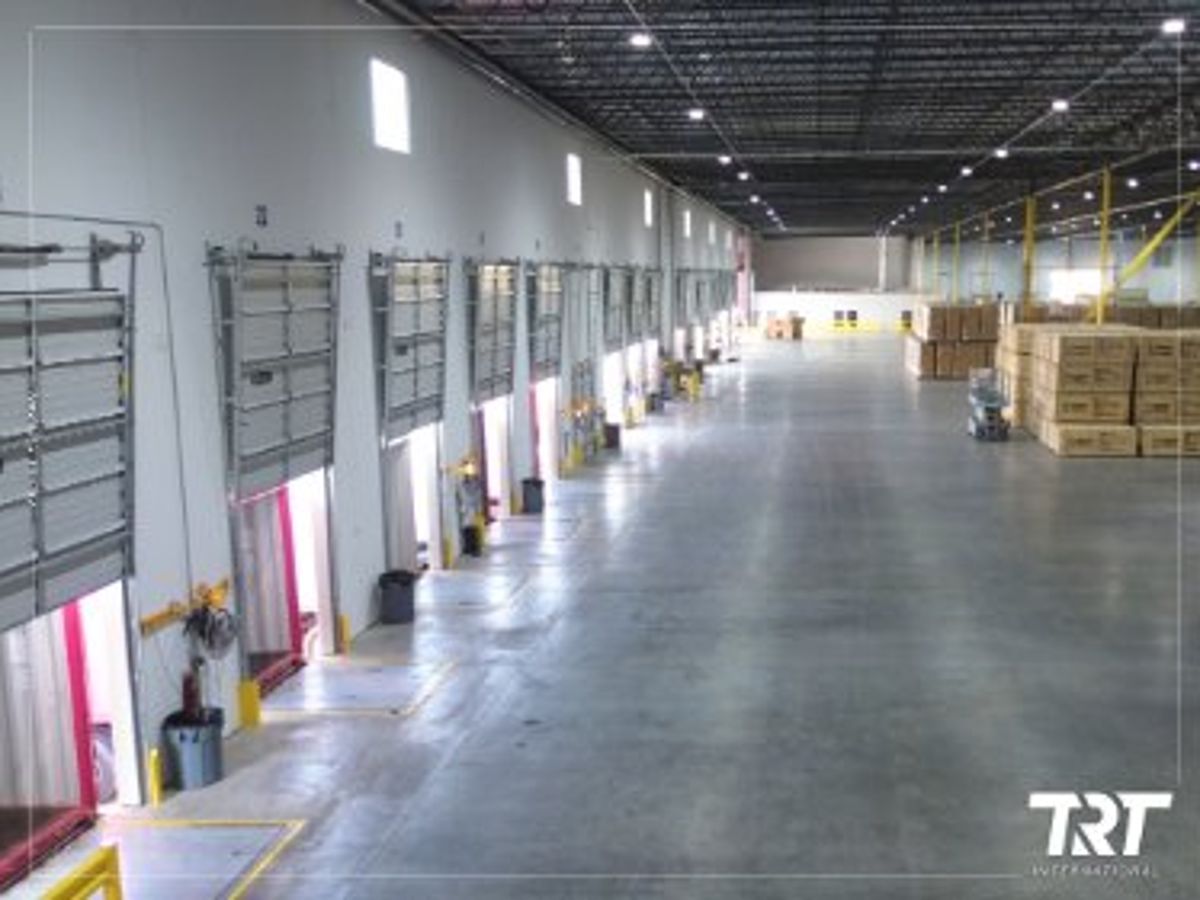
Container transloading is the transfer of freight out of a shipping container and onto a domestic trailer, a flatbed, or another container for its next leg, and a re-work is the fixing of a load that cannot travel on as it arrived — shifted, damaged, badly palletized, or loaded the wrong way for its destination. We provide container transloading and re-works in Port Newark-Elizabeth and in the Port of Savannah, inside our own warehouses, with the same team handling the drayage in, the transfer on the warehouse floor, and the trucking out. The container, the cargo, and the onward vehicle are coordinated by one company instead of three, which is where most transload problems start.
Transloading and Re-Works Are Two Jobs That Happen in the Same Place
A transload is a planned transfer. The shipment was always going to change equipment: an ocean container cannot deliver to a job site, a warehouse across the country, or a customer who needs the freight split three ways, so the cargo comes out of the box and is reloaded in the form its final leg requires. A re-work is an unplanned fix. The load arrived with a problem — cartons crushed in transit, pallets leaning, weight distributed so the trailer is not legal or safe, packaging torn, or freight loaded in an order that makes delivery impossible — and it has to be corrected before any truck can move it. Both jobs need the same things: a warehouse floor in the port, heavy handling equipment, a crew that works with oversized and awkward freight, and an outbound truck booked against the finished load. That is why our transloading service covers both under one roof.
Why Shippers Transload a Container
The reasons are practical. First, the ocean container has to go back: while freight sits in a container, the box itself is on the clock and tied up, so transloading frees the container for return to the terminal and lets the cargo move on its own schedule. Second, the destination changed or multiplied: one container becomes two or three domestic loads for different cities, or several containers are consolidated into fewer outbound trailers. Third, the freight does not fit the final leg: a piece that crossed the ocean in a box may need to leave on a flatbed, a step deck, or a flat rack because of its size once it is uncrated, or because the delivery site cannot receive a container at all. Fourth, the cargo needs work before it travels — crating, wrapping, sorting, or a re-work — and that work happens on the warehouse floor between the inbound container and the outbound truck. In each case the transload is the decision point where an import shipment becomes a domestic move.
Transloads in the Port: Newark and Savannah
Where the transfer happens decides how clean it is. Our transloading happens in the port itself. In Newark, our warehousing totals 150,000 square feet inside Port Newark-Elizabeth — a 120,000-square-foot warehouse plus a 30,000-square-foot site whose feature is its loading docks — and our headquarters is at 250 Port St, Newark, NJ 07114, in the same port complex. In Savannah, transloads run through a brand-new 316,800-square-foot warehouse on 30 acres in the Port of Savannah, with our Savannah public address at 117 A Parkway Dr, Rincon, GA 31326. Because the warehouses are in the port, our own drayage operation feeds them directly: company drivers in Freightliner day-cab trucks pull containers from the terminal on our fleet of more than 85 trucks and more than 300 company chassis, including tri-axles for heavy boxes. TRT has many warehouses across its network; Newark and Savannah are the main ones, and they are where most of our customers’ container freight enters and leaves the country. The Port Newark, NJ location page and the Savannah, GA location page show each operation.
How a Transload Works at TRT, Step by Step
First, our drayage team collects the container at Port Newark-Elizabeth or the Port of Savannah and brings it into our warehouse inside the same port, so the transfer starts right away instead of after a long inland haul with a sealed box nobody has inspected. Second, the container is unloaded at the dock: seals and piece counts are checked against the paperwork, condition is noted as the freight comes out, and anything damaged or shifted is flagged for a re-work before it is reloaded. Third, the cargo is sorted and staged — on the warehouse floor, in short-term storage, or in our secure outdoor yard — according to the outbound plan, while electric forklifts and other lower-emission equipment move the pieces. Fourth, the freight is prepared: it is palletized or re-palletized, wrapped or crated where it needs protection, and secured for the equipment it will ride on. Fifth, it is reloaded onto the right vehicle — a standard domestic trailer, a flatbed, a step deck, an RGN, or a perimeter trailer for tall and heavy pieces, or another container for an export move — and leaves under our over-the-road operation for delivery throughout the United States, Canada, and Mexico, under state-of-the-art tracking across the move. One team owns every hand-off, so when something is wrong with the load, it is found on our floor and fixed there, not discovered by a driver at a delivery appointment.
What a Re-Work Actually Covers
A re-work starts with a load that cannot legally or safely travel as it sits. The common cases are a load that shifted in transit and is leaning or pressing on the container doors, cartons or crates damaged so the freight cannot be stacked or strapped as loaded, pallets broken or built too heavy or too tall for the outbound trailer, weight concentrated so the trailer would be over on an axle, and mixed freight that has to be separated, sorted, and rebuilt into clean loads for different destinations. The fix is physical work: unload the freight, inspect and set aside anything damaged, rebuild pallets, redistribute weight, re-wrap and re-secure the load, and reload it so it rides safely and unloads in the right order at destination. Sometimes the re-work is the whole job — a distressed load that only needs to be made right and sent on. Sometimes it is one step inside a transload, found when the container doors open. Either way, it is quoted and handled as warehouse work by the crew that received the freight, not passed to a third party while the clock runs.
Transloading, Cross-Docking, or Warehousing: Which One Your Freight Needs
The three services sit side by side in our operation, and the difference is time and change. If freight arrives and leaves on the same schedule with no change to the load itself, that is cross-dock loading: straight through the building from inbound to outbound. If the freight changes equipment, form, or destination split — container to trailer, one box to three loads, palletized to flatbed — that is a transload, with or without a re-work. If the outbound plan is not ready, or the cargo needs to wait for a site, a permit, or the rest of a project to arrive, the freight goes into warehousing first, and the transload happens when the next leg is called. Most project cargo uses a mix of all three across one stay, and because the same team runs the warehouse and the trucks, the plan can change on the floor without the freight changing hands.
Cargo We Transload and Re-Work
Our transloading teams handle cargo well beyond standard palletized freight. Regular transload cargo includes solar panels, fiberglass rods, lumber, aluminum coils, laser cutting machines, and construction equipment — a mix of long, heavy, fragile, and out-of-gauge pieces that need more than a standard dock door. Heavy pieces are staged on open floor where they can be inspected and worked on, freight that is better held outdoors goes to secure outdoor storage, and cargo that needs protection before its next leg can be wrapped or crated by the same team that unloaded it. Standard container freight is transloaded the same way: counted, sorted, and reloaded against your instructions, with every piece accounted for as it comes out of the box so what gets reloaded is exactly what you sent.
A Shipper’s Checklist for Booking a Transload or Re-Work
These details let us quote and receive a transload without delays:
- Container and shipment details: container number, bill of lading, terminal, and the last free day or return requirements you are working against.
- Cargo description, weight, and dimensions for each piece, including anything out of gauge, fragile, or top-heavy.
- The outbound plan: one destination or several, the equipment the freight should leave on, and the delivery timing.
- Known problems with the load: shifted, damaged, overweight, or badly palletized freight, with photos if you have them, so the re-work crew and equipment are ready.
- Handling needed on the floor: sorting, palletizing, wrapping, crating, or securing work between the inbound container and the outbound truck.
- Customs status: entered and released, or moving under bond, as confirmed by your broker.
None of this needs to be perfect on the first call. It gives our warehouse and dispatch teams the same picture, which is what keeps a container from arriving before anyone knows what it becomes next.
Talk to TRT About a Transload or Re-Work
If you have a container arriving in Port Newark-Elizabeth or the Port of Savannah that needs to change equipment, be split, or be made right before it travels, call us at +1 973 344 7100 ext 221. Tell us what the freight is, how it arrives, and where it goes next, and we will plan the transfer in Newark or Savannah accordingly. TRT International – Delivering Excellence since 1994.
Frequently Asked Questions
What is container transloading?
Container transloading is the transfer of freight out of a shipping container and onto a domestic trailer, a flatbed, or another container for its next leg. At TRT, container transloading happens inside our own warehouses in Port Newark-Elizabeth and in the Port of Savannah, run by the same team that handles the drayage on both sides of the transfer.
What is a cargo re-work?
A cargo re-work is the fixing of a load that cannot travel as it arrived. The crew unloads the freight, inspects it, rebuilds broken or badly built pallets, redistributes weight, replaces damaged packaging where needed, and re-wraps and re-secures the load so it can ride safely and unload in the right order at destination.
Why transload instead of delivering the container directly?
Transloading frees the ocean container for return to the terminal, lets one container be split into domestic loads for different destinations, and lets freight leave on the equipment its final leg actually needs, such as a flatbed or step deck. It also puts the cargo on a warehouse floor where problems can be found and fixed before delivery.
Can TRT transload heavy and oversized cargo?
Yes. TRT transloads heavy and out-of-gauge freight as well as standard container cargo, including long, fragile, and oversized pieces such as solar panels, lumber, aluminum coils, and construction equipment. Heavy pieces are staged on open floor, handled with electric forklifts and heavy handling equipment, and reloaded onto flatbeds, step decks, RGNs, and perimeter trailers.
What is the difference between transloading and cross-docking?
In cross-docking, freight moves straight through the warehouse from inbound to outbound with no change to the load itself. In transloading, the freight changes equipment or form — out of a container and onto a different vehicle, split into several loads, or rebuilt through a re-work — and it may be staged or stored briefly before the outbound leg.
Where does TRT perform transloads and re-works?
TRT performs transloads and re-works in Port Newark-Elizabeth, where its main warehousing totals 150,000 square feet, and in the Port of Savannah, where its brand-new warehouse is 316,800 square feet on 30 acres. TRT has many warehouses, and Newark and Savannah are the main ones. Headquarters is at 250 Port St, Newark, NJ 07114, and the Savannah public address is 117 A Parkway Dr, Rincon, GA 31326.
How do I book a transload or re-work with TRT?
Call TRT at +1 973 344 7100 ext 221 with your container and shipment details, cargo description, weight and dimensions, any known problems with the load, and the outbound destination and timing. Our team will plan the drayage in, the transfer or re-work on the warehouse floor, and the onward trucking as one move.