
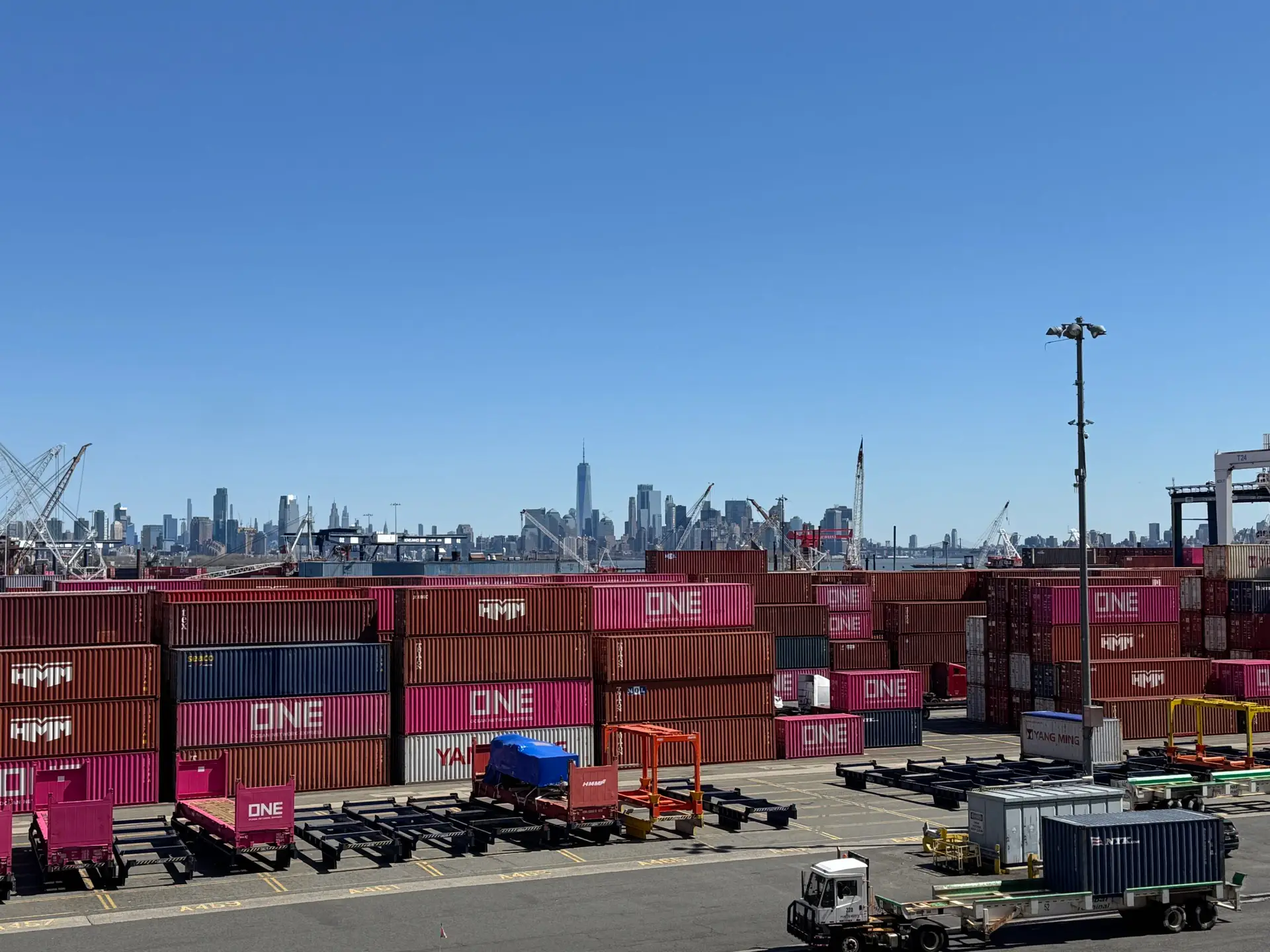
Introduction: Decoding Port Drayage
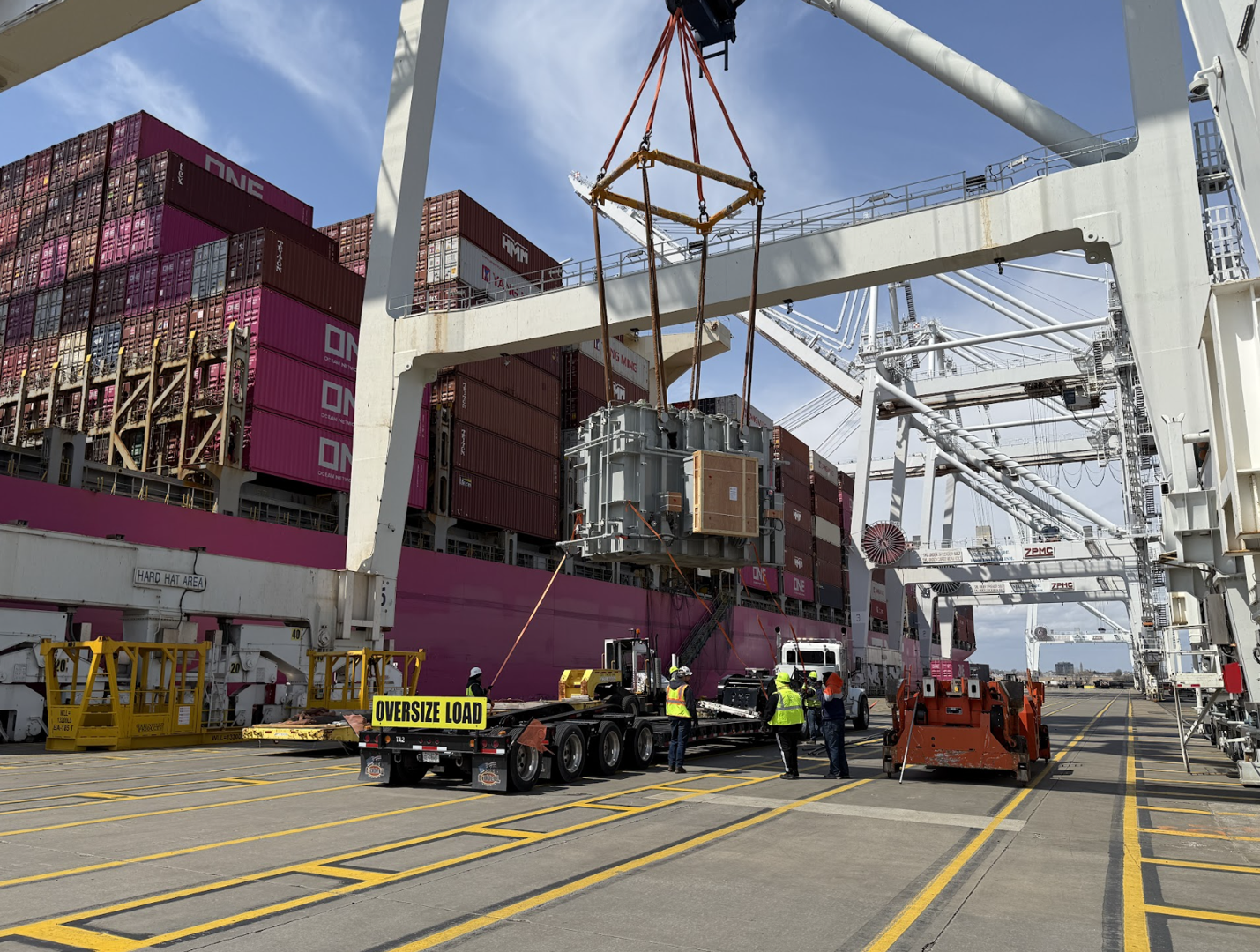
Port drayage services are specialized logistics operations that move shipping containers over short distances—typically from ports and rail terminals to nearby warehouses, distribution centers, or other transportation hubs. This critical "first and last mile" of the supply chain ensures your cargo transitions smoothly between ships, trains, and trucks, keeping goods flowing efficiently through global trade networks.
Quick Answer: What Are Port Drayage Services?
- Definition: Short-distance trucking of containerized cargo from ports to nearby destinations
- Purpose: Connect different transportation modes (sea, rail, road) in the supply chain
- Typical Distance: Usually within 50-100 miles of the port or rail terminal
- Common Routes: Port-to-warehouse, port-to-rail yard, or rail yard-to-distribution center
- Equipment Used: Specialized trucks with chassis designed to transport standardized shipping containers (TEUs)
The term "drayage" has historical roots, originally describing horse-drawn carts ("drays") that hauled goods short distances. Today's drayage trucks perform the same essential function with modern equipment.
Without efficient drayage, your containers sit idle at congested ports, racking up expensive demurrage and detention fees. For businesses with complex, oversized, or heavy international cargo, the right drayage partner is critical. Poor drayage coordination creates bottlenecks that delay supply chains, spoil goods, and increase costs.
At TRT Logistics, we've helped businesses steer the complexities of moving oversized and overweight shipments through major North American ports while keeping costs under control.
Why Efficient Drayage is Non-Negotiable for Modern Supply Chains
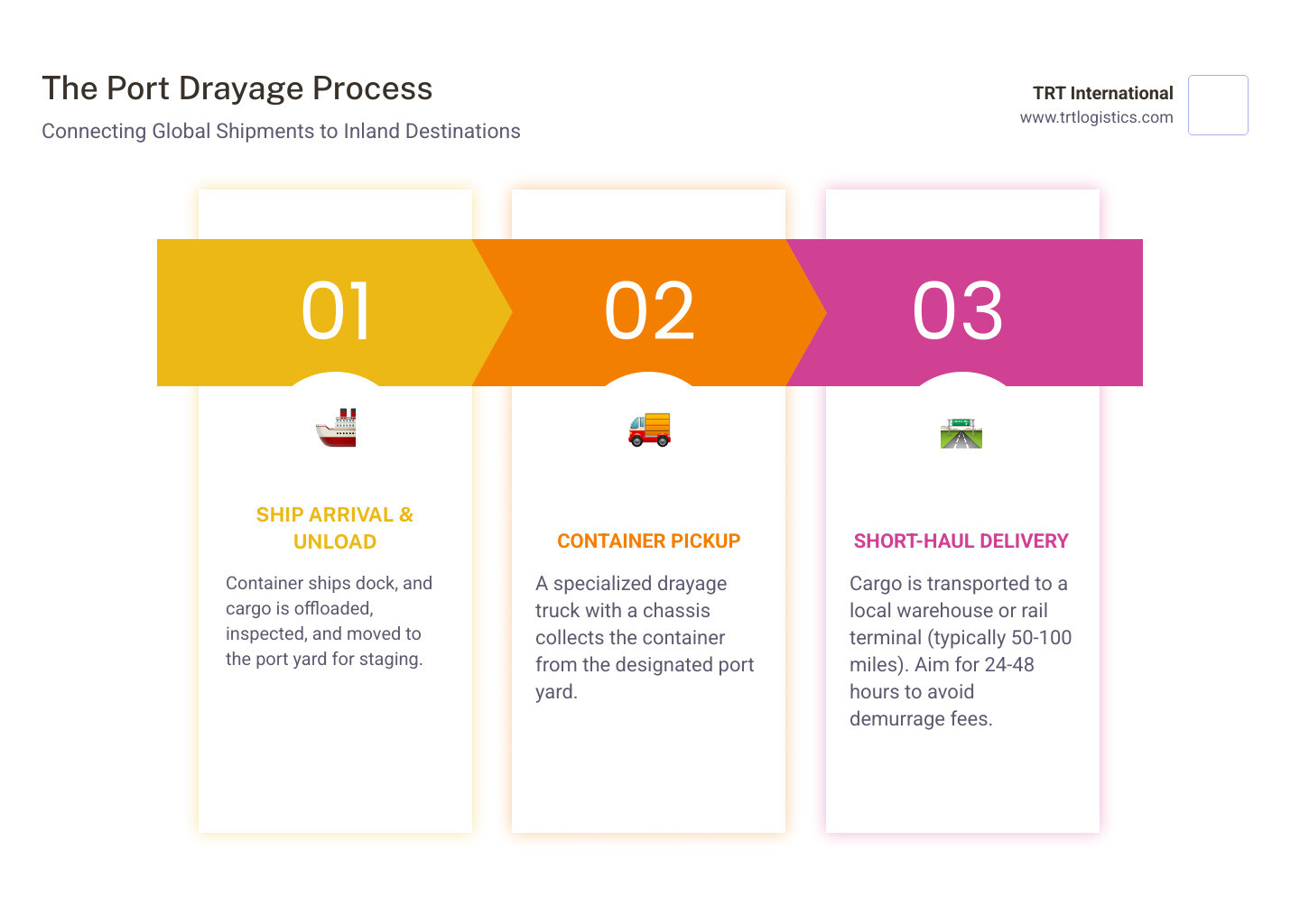
Drayage is the linchpin connecting global shipping to local distribution. When a container ship arrives at a port like Newark or Los Angeles, its journey isn't over. Port drayage services are the crucial intermediary, moving containers to their final inland destination and keeping the supply chain flowing.
We see drayage as more than just short-distance trucking; it's a vital component for ensuring international shipping efficiency. Without it, goods would pile up at the docks, crippling global trade. By swiftly moving containers from ports to warehouses or rail terminals, drayage prevents port congestion, allowing for quicker vessel turnaround times and smoother operations. It's the silent hero facilitating the seamless transition of cargo between sea, rail, and road, ensuring your products get where they need to be, when they need to be there.
The High Cost of Inefficiency: Demurrage, Detention, and Delays
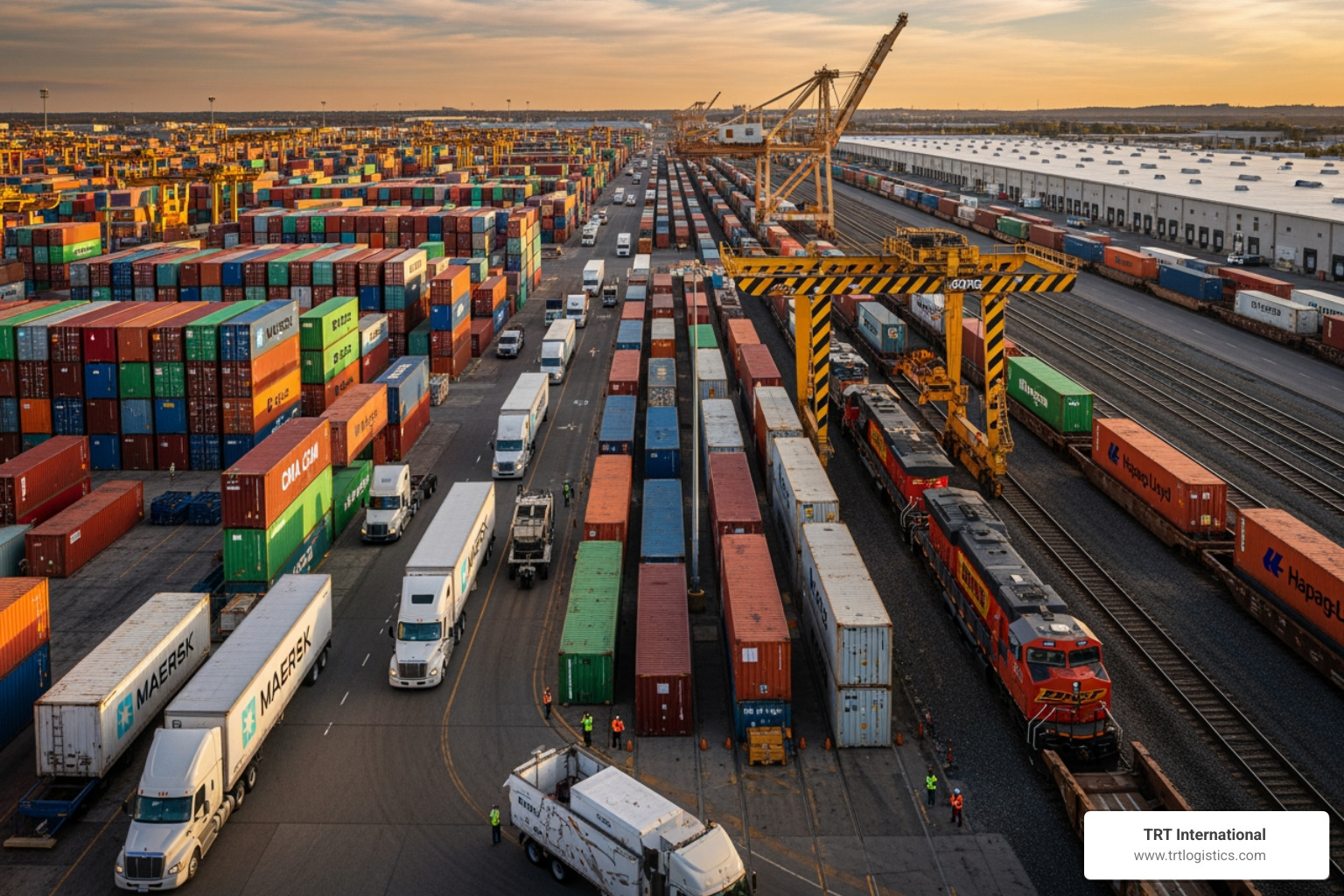
If drayage is the linchpin, then inefficiency is the rust that grinds the supply chain's gears. A lack of drayage resources or poor coordination can lead to a cascade of costly problems. We’ve seen how bottlenecks at busy ports can quickly escalate into significant financial burdens.
One of the most immediate consequences is demurrage and detention fees.
- Demurrage fees are charges by ocean carriers or port terminals for containers that remain at the port beyond a free storage period. These charges can accrue rapidly, often hundreds of dollars per day per container.
- Detention charges are fees incurred when a shipper holds an ocean carrier's equipment (like a chassis or container) outside the port beyond the allotted free time. This happens when a drayage truck can't return empty equipment on time.
Beyond these penalties, inefficient drayage causes greater losses. Delays can spoil perishable goods, disrupt production schedules, and damage customer relationships. These are real challenges that impact your bottom line. Robust drayage solutions are paramount, especially when integrated with efficient Warehousing and Distribution: Powering Global Trade for Complex Cargo strategies.
How Drayage Facilitates Intermodal Transport and Transloading
Port drayage services are indispensable for intermodal transportation—moving freight using multiple modes (ship, rail, truck) without handling the cargo itself when changing modes. Our role is to bridge the gaps between these legs. For instance, a container arriving at the Port of Los Angeles by ship might need to travel across the country by rail. Our drayage trucks facilitate that first step, moving the container from the vessel to the rail terminal. Similarly, once it reaches an inland rail ramp, another drayage service will deliver it to its final destination.
This seamless connection is possible due to standardized shipping containers, measured in Twenty-foot Equivalent Units (TEUs). These boxes allow for easy transfer between transport modes, making intermodal shipping highly efficient.
You might also hear the term "transloading." While drayage moves an entire container, transloading is the process of transferring cargo from one transport mode to another, often from an international container into a domestic truck. For example, a 40-foot ocean container might be drayed from the Port of Savannah to a warehouse, where its contents are "transloaded" into two 20-foot domestic trucks. These services often rely on each other, with drayage bringing the container to the transload facility. We offer comprehensive solutions that integrate these steps. Find out more on our Services page.
A Guide to the Different Types of Port Drayage Services
Just as there are many routes from point A to B, there are different types of port drayage services, each for specific logistical needs. Understanding these variations helps you tailor your shipping strategy and optimize costs. We pride ourselves on providing the right type of drayage for your specific cargo and timeline.
| Drayage Type | Purpose | Location | Typical Use Case |
|---|---|---|---|
| Pier Drayage | Transport cargo to/from a dock | Between port pier and nearby warehouse/terminal | Moving containers directly off a ship to an initial storage point, or from storage to a ship. |
| Intermodal Drayage | Connect different modes of transportation | Between rail terminals, maritime vessels, and truck yards | Transferring containers from a ship to a train, or from a train to a truck for long-haul or final mile delivery. |
| Shuttle Drayage | Move containers to temporary storage/manage overflow | Between port/terminal and overflow yard/storage facility | Relieving congestion at a busy port by moving excess containers to a temporary holding area. |
| Expedited Drayage | Time-sensitive transport | Direct, urgent routes from port to destination | Delivering perishable goods (like fresh produce or flowers) or critical parts with tight deadlines. |
Pier and Inter-Carrier Drayage
When a ship docks, pier drayage is often the first step. It's the short-haul transport of containers from the dock to a port yard or nearby warehouse. This is essential at major ports like New York and Los Angeles, where high container volumes demand quick movement off the pier.
Another crucial type is inter-carrier drayage, which moves containers between different carriers within a transportation hub. For example, a container might arrive at a rail ramp on one carrier's train and then be moved by drayage to another carrier's truck. This ensures connectivity within the complex network of maritime vessels, rail terminals, and truck yards. We ensure these transfers are handled smoothly, maintaining your shipment's integrity as it transitions between providers.
Shuttle and Expedited Drayage
When a port or terminal gets too crowded, shuttle drayage becomes invaluable. It involves moving excess containers to a temporary storage location, or "overflow yard," when a primary hub is full. This proactive measure prevents bottlenecks and ensures main terminal operations continue smoothly. It's a logistical pressure release valve for managing cargo flow through our busy port locations.
For cargo that absolutely cannot wait, there's expedited drayage. This service is all about speed and precision for highly time-sensitive shipments, like perishable goods or critical just-in-time manufacturing components. With expedited drayage, we prioritize these shipments, ensuring they move from the port to their destination as quickly as possible, minimizing transit times and mitigating risks of spoilage or production delays.
What Cargo Can Port Drayage Services Handle?
Port drayage services are versatile, handling a vast array of cargo by adapting equipment and expertise. This includes:
- Standard Containers: The ubiquitous 20-foot and 40-foot dry containers.
- High Cubes: Taller containers offering more capacity for lighter, bulkier goods.
- Open Tops: Containers with a removable roof for cargo that is too tall to load through doors.
- Flat Racks: Containers with no side walls, designed for oversized cargo loaded from the top or sides.
- Refrigerated (Reefer) Containers: Essential for temperature-sensitive goods, equipped with refrigeration units.
- Overweight and Oversized Cargo: Our specialty. We manage shipments exceeding standard limits, often requiring specialized chassis (like tri-axles) and permits. Our in-house expertise ensures these challenging loads are handled with precision.
- Hazardous Materials: Transporting dangerous goods requires strict adherence to regulations. Our experienced team ensures hazardous materials are drayed safely and compliantly.
From a simple box to a colossal piece of factory equipment, if it can be loaded, we can dray it. Our port zone offices in Newark, Savannah, Los Angeles, and New York are equipped to handle these diverse cargo types efficiently.
Finding Affordable Port Drayage Services: Costs and Market Trends
Navigating port drayage services means understanding the costs and how market trends can impact your budget. We believe in balancing affordability with reliability to keep your supply chain moving. It's not just about the lowest price; it's about the best value that prevents costly disruptions. Budgeting for drayage requires a keen eye on various factors, which we help our clients manage.

Key Factors That Influence Drayage Costs
The cost of port drayage services varies based on several factors, which we consider to provide transparent, competitive pricing:
- Distance from Port: The further the destination, the higher the fuel and labor costs. Our strategic presence in port zones like Los Angeles, Newark, and Savannah helps us offer competitive local rates.
- Cargo Type and Weight: Standard containers are less expensive to dray than specialized cargo. Overweight or oversized shipments, our specialty, require special equipment and permits, adding to the cost. Hazardous materials also incur additional fees.
- Service Level Required: Expedited drayage comes at a premium due to its time-sensitive nature. Standard drayage is generally less expensive.
- Port Location and Congestion: Busier or more complex ports can have longer wait times, which can translate into higher costs.
- Time of Day/Week: Services often cost more during peak hours, weekends, or holidays. We can leverage off-peak hours to help clients save money.
- Equipment Needs (Chassis): Whether a chassis is provided by the drayage company, ocean carrier, or needs to be rented can impact the cost. Our in-house management gives us better control over equipment.
We work with clients to analyze these factors and create a drayage plan that optimizes cost and efficiency, especially for complex cargo.
Understanding Common Drayage Charges
To budget effectively for port drayage services, it's important to understand the common charges you might see on an invoice. We believe in transparency, so here's a typical breakdown:
- Line Haul Rate: The base rate for transporting the container from point A to B.
- Fuel Surcharge (FSC): A variable charge to cover fluctuations in fuel prices.
- Chassis Usage Fee: A daily rental fee if the drayage company or a third party supplies the chassis.
- Drop Fee (or Live Load/Unload): A fee for dropping a container and picking one up later. If the driver waits (live load/unload), an hourly charge may apply instead.
- Congestion Fees: Imposed for excessive waiting times at congested ports or terminals.
- Pre-pull Fees (or Yard Pull Fees): Applies if a container is pulled from the port and stored in an off-site yard, usually to avoid demurrage.
- Demurrage and Detention: Charges for exceeding free time at the port or for holding carrier equipment. Efficient drayage is key to avoiding them.
- Special Handling Charges: Covers handling hazardous materials, overweight cargo, or specific lift requirements.
By understanding these charges, you can anticipate costs and work with us to find the most economical and efficient port drayage services solution. Our in-house management provides a clear cost overview so we can advise you accordingly.
The Future of the Drayage Market
The port drayage services market is not just holding steady; it's on an upward trajectory. According to Technavio research, the total drayage market size is expected to increase by over USD 3 billion, at a compound annual growth rate of 2.52% between 2024 and 2028. This projected growth underscores the increasing demand for efficient logistics solutions.
The relentless expansion of global trade and the booming e-commerce sector are significant contributors. As more goods are consumed worldwide, the need for seamless connections between international shipping and local delivery intensifies. This growing demand, coupled with the complexities of port operations in major hubs like New York, Los Angeles, Savannah, and Newark, means that reliable drayage will only become more critical. We anticipate continued innovation to meet these evolving demands and are committed to staying at the forefront of these advancements.
How to Choose the Right Drayage Partner
Choosing the right partner for your port drayage services is a critical decision that impacts your supply chain's efficiency and your bottom line. It's not just about finding someone with a truck; it's about finding a logistics partner who understands port intricacies, adapts to challenges, and provides consistent reliability. Outsourcing your drayage needs to a specialized company like ours means gaining expertise and resources that streamline your operations.
Key Features of a Top-Tier Provider
When evaluating partners for port drayage services, look for these key features of a top-tier provider:
- Guaranteed Capacity: In a fluctuating market, a provider who can consistently secure trucks and chassis is invaluable. An asset-based model often means more reliable capacity because the provider isn't solely reliant on third-party availability. We manage our processes in-house for full control over resources.
- Dedicated Chassis Pools: Access to dedicated chassis prevents delays while waiting for shared equipment, reducing demurrage and detention risks. We can explore this option for clients with consistent volume.
- Single Point of Contact: A single point of contact simplifies communication and streamlines problem-solving, avoiding the headache of juggling multiple contacts. Our multilingual agents further improve this, ensuring clear communication regardless of cargo origin.
- Asset-Based Providers: As an asset-based logistics company, we have greater control over our operations, equipment maintenance, and driver training. This translates to higher service quality and greater reliability.
- Experience with Major Ports: Experience navigating the specific regulations and operational quirks of major ports in Newark, Savannah, Los Angeles, and New York is non-negotiable. Our port zone offices give us a direct presence and deep understanding of these busy hubs, especially for the oversized and overweight cargo we specialize in.
The Role of Technology in Modern Drayage
Technology has revolutionized port drayage services, turning a once-manual, opaque process into a highly visible, efficient operation. We leverage cutting-edge solutions to provide you with unparalleled control and insight:
- Real-time Visibility: Our platforms connect data from port operators, Electronic Logging Devices (ELDs), and other systems to give you real-time updates on your container's status, from discharge to gate-out.
- GPS Tracking: Every truck in our fleet is equipped with GPS tracking, allowing us to monitor its location and provide accurate estimated times of arrival (ETAs).
- Electronic Logging Devices (ELDs): ELDs ensure compliance with federal driver hours of service regulations, promoting safety and providing accurate transit data.
- Transportation Management Systems (TMS): Our sophisticated TMS integrates all aspects of the drayage process, from dispatch to invoicing, ensuring seamless coordination.
- Proactive Issue Management: With real-time data, we can identify potential issues before they become major problems, communicating proactively and exploring alternative solutions.
This integration provides peace of mind, as you know exactly where your cargo is and that it's being managed efficiently.
Mitigating Common Risks in Drayage Operations
Port drayage services have inherent risks, as coordinating freight in busy ports is complex. We understand these challenges and have built our operations to mitigate them. Common risks include:
- Human Error: Miscommunication or incorrect paperwork can cause delays. Our in-house management model, with dedicated, trained operators and multilingual agents, minimizes these risks.
- Natural Disasters & Weather: Severe weather can shut down ports and roads. While we can't control the weather, our experience allows us to react swiftly and communicate transparently.
- Budgeting Issues: Unexpected fees like demurrage can derail a budget. Our transparent invoicing and proactive management help prevent these surprises.
- Port Congestion and Delays: Overcrowded terminals can lead to long wait times. Our port zone offices and deep understanding of local port intricacies help us steer these challenges.
- Equipment Breakdowns: Mechanical failures can cause delays. Our asset-based approach means we maintain our own fleet to high standards.
Mitigation starts with careful vetting. An experienced provider like us, with a proven track record and robust internal processes, is your best defense. We aim to make your transportation flawless and stress-free. Learn more about our trusted reputation on our About Us page.
Conclusion: Streamline Your Shipments with the Right Drayage Solution
Port drayage services are the critical link in global commerce, ensuring your international shipments flow smoothly from ship to shore and on to their final destination. Efficient drayage is non-negotiable for preventing costly fees and facilitating intermodal transport. We've covered the various types of drayage, the factors influencing costs, and the future of this essential logistics segment.
Choosing the right drayage partner is paramount to balancing cost-effectiveness with reliability. It requires a provider that offers a comprehensive solution backed by expertise, technology, and a commitment to mitigating risks. At TRT International, we pride ourselves on being that reliable partner. Our specialization in oversized and overweight cargo, combined with our unique in-house management of all processes, provides unparalleled full control and reliability. Our multilingual agents ensure clear communication, and our port zone offices in key locations like Newark, Savannah, Los Angeles, and New York mean we are always close to the action.
Don't let the complexities of port drayage become a bottleneck in your supply chain. Partner with an expert who can streamline your shipments, minimize risks, and optimize your budget. To get a quote and find how we can simplify and optimize your logistics, explore our Drayage Services Simplified.