
What Project Cargo Logistics Really Means
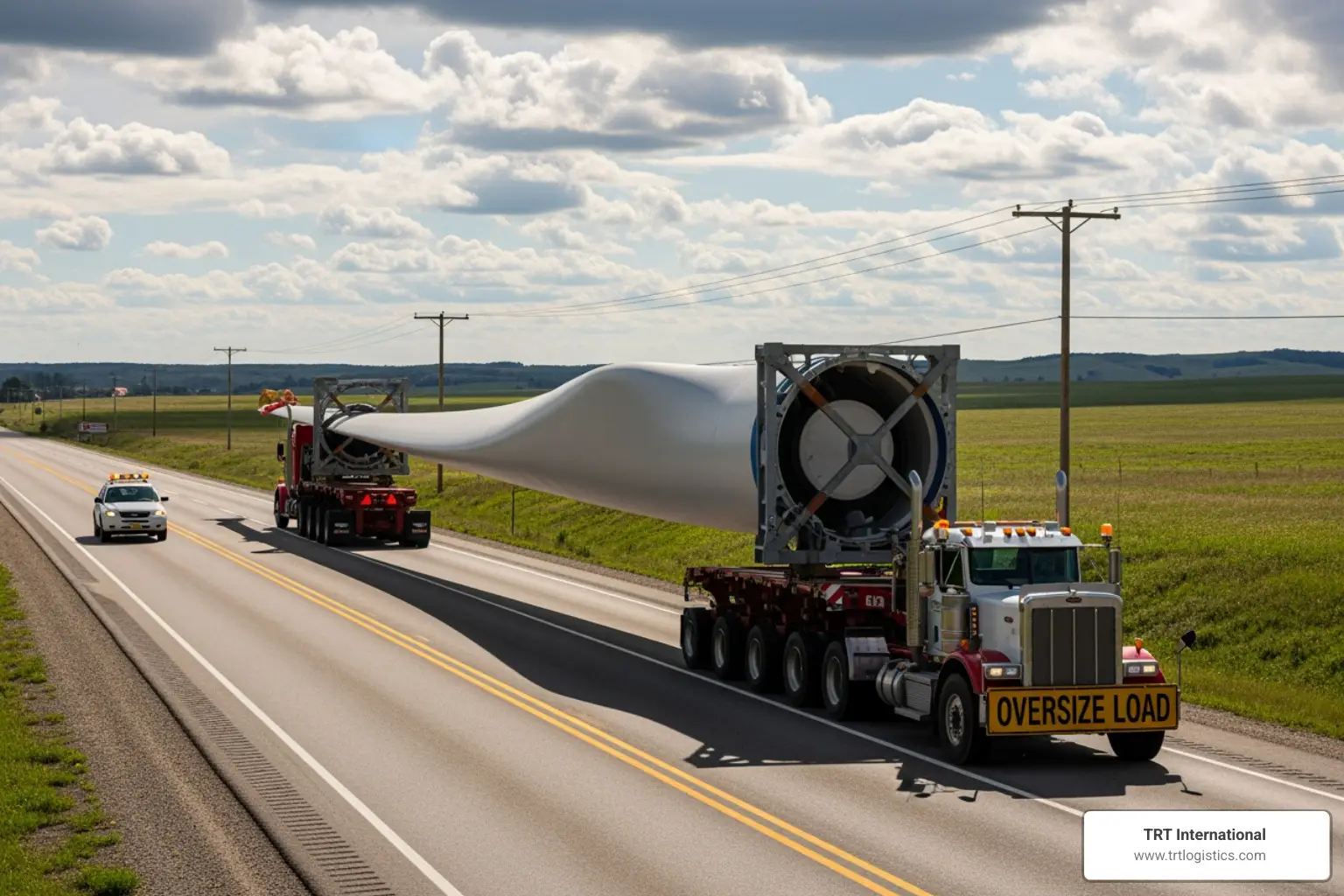
Project cargo logistics is the specialized transportation of oversized, overweight, high-value, or complex equipment that cannot fit into standard shipping containers or truck trailers. Unlike general freight, these shipments require customized planning, specialized equipment, and coordination across multiple transport modes to move items like wind turbine blades, refinery modules, or industrial machinery safely to their destination.
Key characteristics that define project cargo:
- Size: Items exceeding standard container dimensions (often 50-100+ meters in width or height)
- Weight: Cargo ranging from several tons to thousands of tons
- Complexity: Indivisible pieces requiring specialized handling and transport methods
- Value: High-value equipment critical to major infrastructure or industrial projects
- Time-sensitivity: Strict delivery deadlines where delays can cost thousands per day
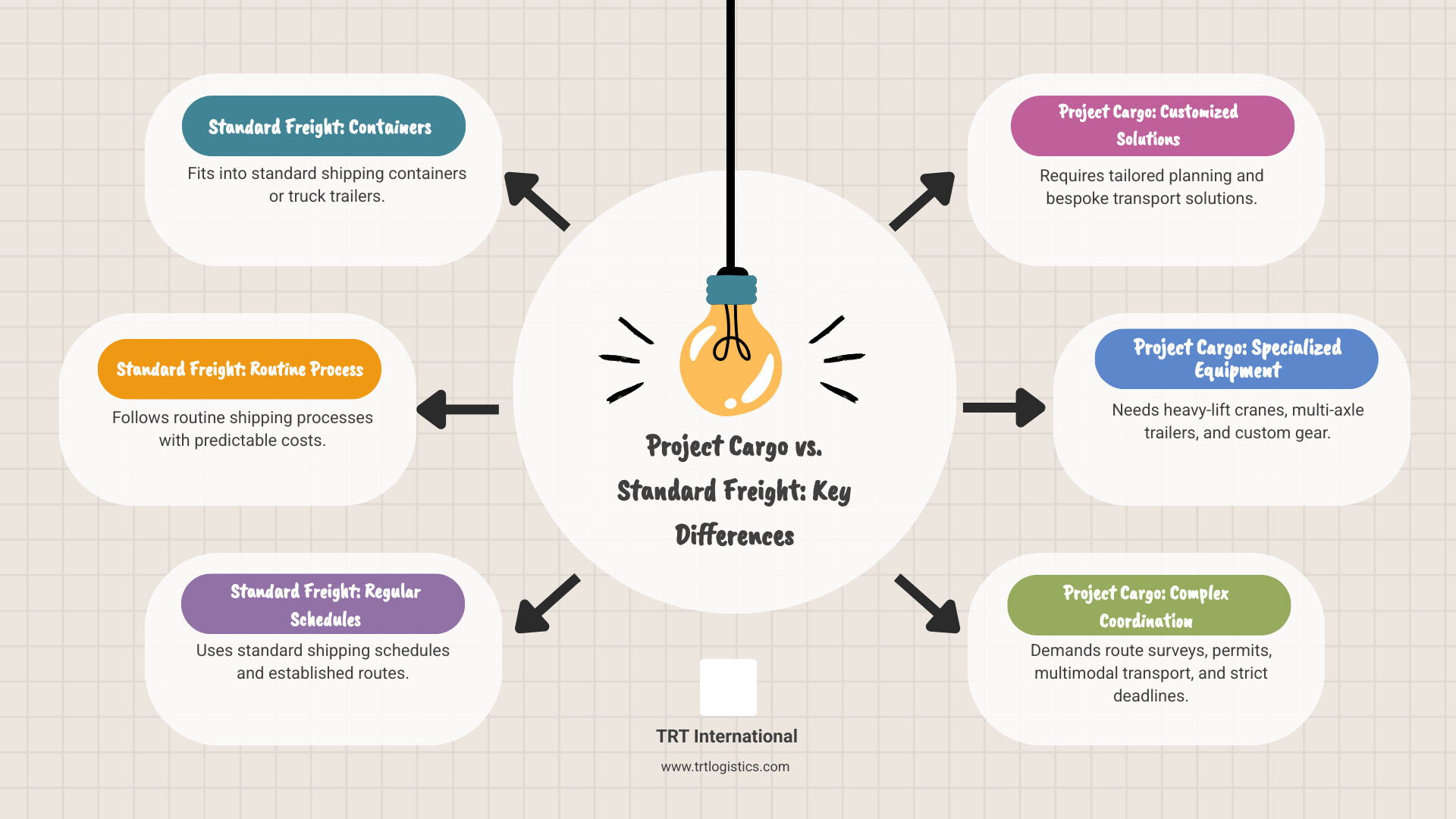
The main difference between project cargo and standard freight is simple: general cargo fits into containers and follows routine shipping processes, while project cargo demands custom solutions at every step. Each shipment is unique, requiring route surveys to identify obstacles like bridge heights and road widths, specialized permits from multiple authorities, and often modifications to infrastructure itself.
Industries like oil and gas, renewable energy, construction, mining, and aerospace depend heavily on project cargo logistics. These sectors regularly transport massive equipment—drilling rigs, power transformers, construction machinery, and aircraft components—that form the backbone of major industrial projects worldwide. The global project cargo logistics market reflects this demand, with projections reaching USD 672.32 billion by 2031, growing at 5.98% annually between 2024 and 2031.
I’m Robert Brown, and throughout my career in freight operations and transportation management at TRT Logistics, I’ve seen how proper project cargo logistics planning separates successful deliveries from costly delays. My experience optimizing complex freight movements has taught me that success in project cargo logistics depends on meticulous preparation, the right partnerships, and unwavering attention to detail.
Key Industries and Real-World Examples
The demand for project cargo logistics isn’t just a niche; it’s a foundational element for several critical industries driving global development and innovation. These sectors consistently require the movement of massive, specialized components that simply cannot be handled by conventional shipping methods.
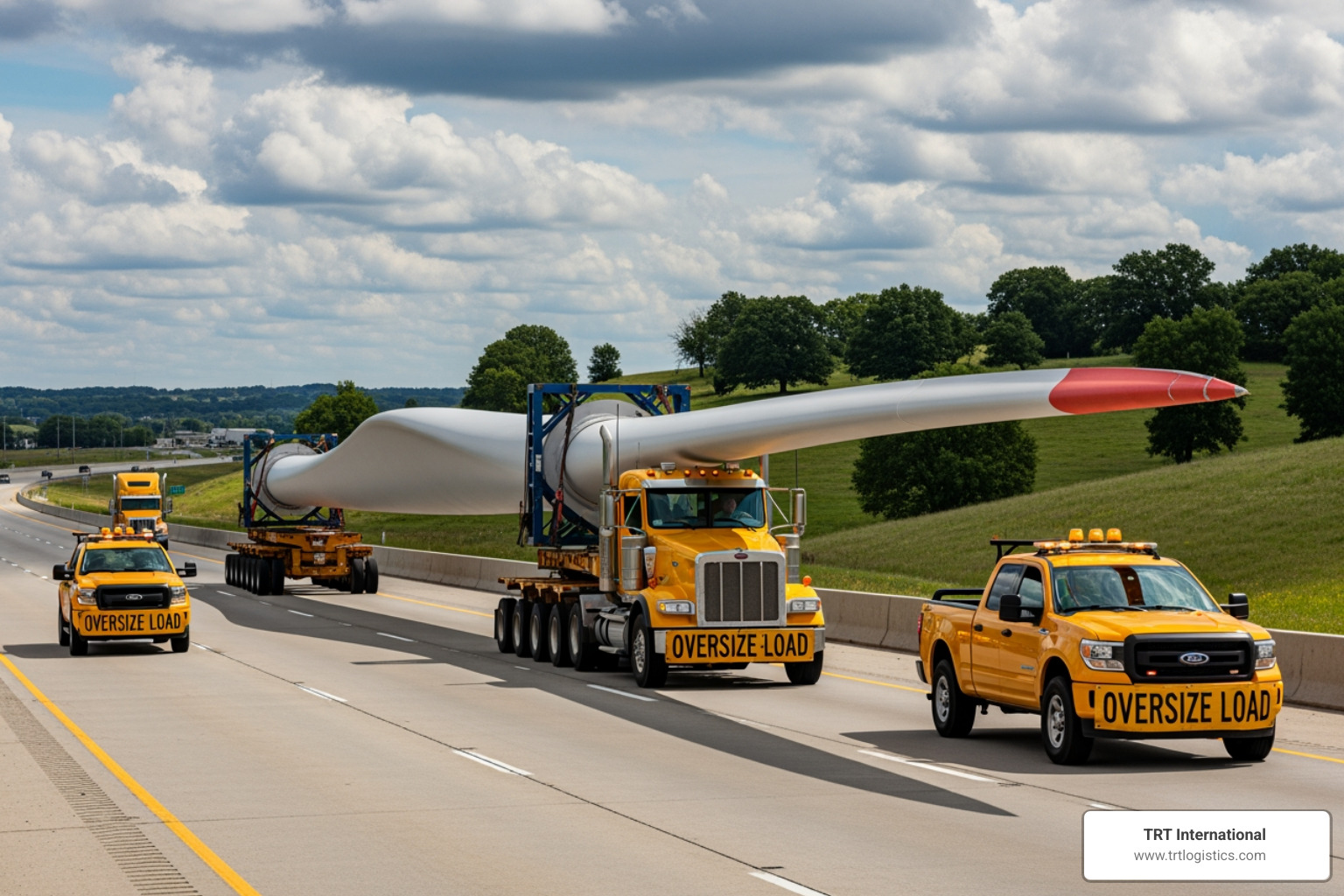
The Energy sector, particularly renewable energy, is a major player. Think of the colossal wind turbine blades, towers, and nacelles that must be transported to remote wind farm sites. These components are often hundreds of feet long and require specialized vehicles and careful route planning. Similarly, traditional power plants and oil & gas facilities frequently need to move huge generators, transformers, reactors, and drilling rigs.
The Construction industry relies heavily on project cargo logistics for everything from building new infrastructure to expanding existing facilities. Bridge sections, large modular refinery units, and massive construction machinery like excavators and cranes are common examples. Without specialized transport, these vital components would never reach their destinations.
Mining operations, often located in challenging terrains, frequently require the transportation of oversized mining equipment such as crushers, dump trucks, and conveyor system components. These items are not only heavy but also often need to be moved to and from sites with limited access.
The Aerospace industry, while perhaps less obvious, also uses project cargo logistics for moving large aircraft components, satellites, and specialized manufacturing equipment. For instance, we’ve had the privilege of assisting with the Efficient Transloading of Oversized Plane Wing, showcasing the precision and expertise required.
Finally, the Manufacturing sector, especially for heavy industrial machinery, often requires project cargo logistics to move large presses, industrial boilers, and other production line components.
Here’s a list of common project cargo items we frequently handle:
- Wind turbines (blades, towers, nacelles)
- Refinery modules and components
- Power plant generators and transformers
- Heavy machinery (excavators, cranes, industrial presses)
- Oversized Cargo & Heavy Haul Transport Solutions for various industrial applications
- Bridge sections and structural steel
- Drilling rigs and oil & gas exploration equipment
- Large industrial boilers
Specialized Equipment Required
Moving these giants isn’t a job for standard trucks and containers. It demands a fleet of specialized equipment, carefully chosen and operated by experts.
- Specialized Trailers: These are the workhorses of oversized road transport. They come in various configurations to accommodate extreme weights and dimensions.
- Perimeter Deck Trailers: Designed with a low deck and open center to carry extremely tall or wide loads, allowing cargo to sit within the trailer’s frame.
- Multi-axle modular trailers: These can be configured to distribute immense weight over many axles, crucial for heavy-lift cargo that can weigh hundreds or even thousands of tons.
- Lowboy and RGN (Removable Gooseneck) trailers: Ideal for tall equipment, allowing machinery to be driven directly onto the trailer.
- Heavy-Lift Cranes: Essential at ports, construction sites, and transloading points for lifting and positioning heavy and awkward components. Our Wrapping & Craning services ensure that even the most delicate items are handled with utmost care.
- Custom Crating: For high-value or uniquely shaped items, off-the-shelf packaging simply won’t do. Custom Crating Solutions protect cargo from origin to destination, designed to withstand the rigors of long-haul and multimodal transport.
- Self-propelled modular transporters (SPMTs): These are highly sophisticated, computer-controlled platforms that can move enormous, indivisible loads across short distances, often within a project site or port. They offer unparalleled maneuverability and precision.
The Growing Market for Project Cargo
The project cargo logistics market is experiencing significant expansion, driven by global economic trends and industrial development. The increasing complexity of infrastructure projects, the worldwide push for renewable energy, and the ongoing expansion in sectors like mining and manufacturing are fueling this growth.
As mentioned, the global project cargo logistics market is expected to grow to USD 672.32 billion by 2031, at a CAGR of 5.98% between 2024 and 2031. This isn’t just a number; it represents a burgeoning need for specialized expertise in moving the components that build our future. This sustained growth underscores the integral role project cargo logistics plays in global trade and infrastructure development. Events like TRT International at Breakbulk Americas 2025: Innovation & Connections highlight the continuous innovation and collaboration within this dynamic industry.
The Blueprint for Success: A Step-by-Step Guide to Project Cargo Management
At TRT International, we know that successful project cargo logistics isn’t about luck; it’s about a carefully crafted blueprint, executed with precision and unwavering dedication. It demands more than just moving goods; it’s about orchestrating a complex symphony of planning, coordination, and execution.

The journey of a massive piece of equipment from manufacturer to final installation is fraught with potential pitfalls. Our approach focuses on proactive management, ensuring that every detail is considered long before the cargo even leaves its origin. This involves comprehensive feasibility studies, detailed route surveys, and constant communication with all stakeholders.
Step 1: Advanced Planning and Feasibility
This is arguably the most critical phase, where we lay the groundwork for a smooth operation. It’s where we tackle the “what ifs” and eliminate surprises.
- Initial Assessment: We begin by thoroughly understanding the cargo itself – its exact dimensions, weight, center of gravity, lifting points, and any special handling requirements. We also dig into the project timeline, budget, and specific delivery needs.
- Route Surveys: For oversized and overweight cargo, the path isn’t always clear. We conduct detailed Heavy Goods Transport Services: Oversized Cargo Shipping from the USA route surveys, assessing every inch of the proposed journey from origin to destination. This includes checking bridge clearances, road widths, power line heights, turning radii, and potential obstructions in the states we operate in, such as New York, New Jersey, Georgia, and California. We identify any necessary infrastructure modifications or temporary road closures.
- Site Inspections: Before transport, we often conduct inspections at both the origin and destination sites to ensure they can accommodate the specialized equipment needed for loading, unloading, and staging. This includes verifying crane access, ground stability, and necessary permits for on-site operations.
- Engineering Calculations: For heavy-lift cargo, precise engineering calculations are vital. We determine load distribution, securement methods, and ensure that all lifting and transport equipment can safely handle the cargo’s specific characteristics. Using tools like Computer-Aided Design (CAD) helps us visualize and plan optimal stowage and handling procedures.
- Budgeting and Timeline Creation: With all the technical details in hand, we develop a comprehensive budget and timeline, incorporating all potential costs, lead times for permits, and contingency plans. Our goal is full cost transparency and adherence to schedules.
Step 2: Choosing the Right Transport Modes
Project cargo logistics often requires a multimodal approach, combining different transportation methods to achieve the most efficient and cost-effective solution. The choice depends on the cargo’s characteristics, urgency, distance, and destination.
| Mode of Transport | Cost | Speed | Capacity | Best For |
|---|---|---|---|---|
| Ocean Freight | Low | Slow | Very High | Large, heavy, non-urgent, international |
| Air Freight | High | Fast | Low | Urgent, high-value, sensitive |
| Road Transport | Medium | Medium | Medium-High | Door-to-door, inland, flexible |
| Rail Transport | Medium | Medium | High | Long-distance inland, heavy, bulky |
- Ocean Freight: The backbone for international project cargo logistics. We use specialized vessels, including:
- Breakbulk shipping: For oversized cargo that doesn’t fit into containers, loaded directly into the ship’s hold.
- RoRo (Roll-on/Roll-off): Ideal for wheeled or trailer-mounted equipment that can be driven onto and off the vessel.
- Heavy Lift Vessels: Specifically designed with powerful cranes to handle extremely heavy and large components. While traditional specialized breakbulk vessels are common, for some projects, we need to consider sourcing huge cargo ships over traditional specialized breakbulk vessels to accommodate the sheer scale of the cargo. Our expertise in Ocean Freight ensures we select the right vessel for your needs.
- Air Freight: For time-critical or extremely high-value shipments, Air Freight offers the fastest transit. While capacity is limited compared to ocean, specialized cargo aircraft can accommodate surprisingly large items.
- Road Transport: Crucial for the “first and last mile” of almost every project cargo logistics move. Our Oversize Transportation services employ heavy haul trucking with specialized trailers and often require police escorts and pilot vehicles to steer roads safely in our operating states.
- Rail Transport: An excellent option for long-distance inland moves of heavy and bulky items, especially when road access is challenging or when efficiency for large volumes is key. It can often be combined with road transport for door-to-door delivery.
The art lies in orchestrating these modes seamlessly, ensuring smooth transitions and synchronized schedules.
Step 3: Documentation and Compliance
In project cargo logistics, paperwork is far more than just a formality; it’s a critical component that can make or break a shipment. The complexity of the cargo is mirrored by the complexity of the required documentation and compliance.
- Permits: For oversized and overweight loads, obtaining the necessary permits from state and local authorities is non-negotiable. These permits dictate approved routes, travel times, and escort requirements. Delays in acquiring these can significantly impact project timelines and budgets.
- Customs Clearance: For international shipments, navigating customs is a labyrinthine process. We handle all aspects of customs clearance, ensuring all duties, taxes, and regulations are met for entry into the United States. This includes preparing and submitting accurate declarations. Our Bonded Warehouse services also provide secure storage for goods awaiting customs clearance, streamlining the process.
- Bills of Lading (BOL): The contract between the shipper and the carrier, detailing the type, quantity, and destination of the goods. For project cargo, this document will be highly detailed, specifying specialized handling instructions.
- Packing Lists: Provides a detailed inventory of the contents of each package or component, crucial for customs and inventory management.
- Certificates of Origin: Verifies the country where the goods were manufactured, often required for customs duties and trade agreements.
- Tax Compliance: Adhering to all applicable tax laws, both domestic and international, is essential to avoid penalties and delays.
- International Regulations: We stay abreast of all international transportation standards, safety regulations, and environmental compliance requirements that apply to project cargo logistics. This includes phytosanitary compliance for certain materials, which might require specific services like machine washing.
Accurate, complete, and timely documentation is paramount. It reduces the risk of delays, fines, and ensures smooth clearance at every stage of the journey.
Navigating the Complexities of Project Cargo Logistics
Moving a massive piece of machinery isn’t just about finding a big truck or a specialized ship; it’s about overcoming a series of intricate challenges that demand deep expertise and creative problem-solving. This is where the true mettle of a project cargo logistics provider is tested.
From navigating physical obstacles to untangling bureaucratic red tape, each project presents its own unique set of problems. Our comprehensive Logistics Solutions are designed to address these complexities head-on.
The Core Challenges of Project Cargo Logistics
- Infrastructure Limitations: This is perhaps the most immediate challenge. Roads, bridges, tunnels, and even port facilities are often not designed for the extreme dimensions and weights of project cargo.
- Bridge Heights and Capacities: A bridge too low or too weak can force lengthy detours.
- Road Widths and Turning Radii: Narrow roads or sharp turns can make it impossible for oversized vehicles to pass.
- Port Capacity: Not all ports can handle heavy lift operations or have the necessary specialized equipment. We focus on major US ports like Newark, Savannah, and Los Angeles, which are equipped for such demands.
- Overhead Obstructions: Power lines, traffic lights, and signs often need temporary removal or lifting.
- Regulatory Problems: The regulatory landscape for oversized and overweight transport is fragmented and often complex, varying significantly between states and countries.
- Permit Delays: Obtaining the multitude of permits required can be a time-consuming process.
- Cross-border Compliance: Moving cargo across state lines or international borders within our operating regions (e.g., between New York and New Jersey) introduces additional layers of documentation and compliance.
- Stakeholder Coordination: A project cargo logistics move is a team sport involving many players: the shipper, carriers, various government agencies (DOT, police), port authorities, crane operators, and often even utility companies. Coordinating all these entities requires exceptional communication skills and a firm hand.
- Weather Disruptions: Mother Nature can be an unpredictable adversary. High winds, heavy snow, or even extreme heat can halt oversized transport, leading to delays and increased costs. Our Smooth Oversized Delivery projects always build in contingency for such events.
Risk Management and Safety Best Practices
Given the high value and complexity of project cargo, risk management and safety are paramount. A single incident can lead to significant financial losses, project delays, and even safety hazards.
- Contingency Planning: We develop robust contingency plans for every project. This includes identifying alternative routes, having backup equipment readily available, and establishing clear emergency response protocols. Unexpected delays, whether due to weather or mechanical issues, are planned for with buffer times.
- Cargo Insurance: Comprehensive “all-risk” cargo insurance is essential to protect against potential damage or loss. We guide our clients in securing adequate coverage that reflects the high value of their assets.
- Load Securing (Lashing & Bracing): This is a specialized skill. Cargo must be carefully secured to prevent shifting during transit. This involves careful calculations of G-forces and the use of appropriate lashing materials, chocks, and bracing. Our teams are experts in ensuring cargo is stable on all transport modes.
- Personnel Safety: The safety of our crews, partners, and the public is non-negotiable. Strict safety protocols, proper training, and adherence to all OSHA regulations are implemented at every stage.
- Pre-transport Inspections: Before any movement, the cargo, transport equipment, and securing methods undergo thorough inspections to ensure everything is in perfect order.
- Real-time Tracking: Maintaining full visibility of the cargo’s location and status is crucial. We provide real-time updates and, where possible, photos to our clients, offering peace of mind for even the most Delicate Shipments.
Understanding the Cost Factors
The costs associated with project cargo logistics are significantly higher and more nuanced than for general freight. Understanding these factors is key to effective budgeting and avoiding unexpected expenses.
- Cargo Dimensions and Weight: This is the primary driver. Larger and heavier items require more specialized equipment, more axles, more powerful cranes, and often more extensive route modifications, all of which add to the cost.
- Transportation Mode: As discussed, air freight is typically the most expensive but fastest, while ocean freight offers the lowest cost for bulk. The chosen combination of multimodal transport heavily influences the overall expense.
- Distance: Longer distances naturally incur higher fuel costs, labor hours, and potential for more regulatory problems across different jurisdictions.
- Urgency: Time-sensitive projects may necessitate faster (and more expensive) transport modes or expedited permit processing. Delays, as noted, can cost thousands per day in project downtime.
- Permits and Escorts: The cost of obtaining permits from multiple authorities, as well as hiring police escorts and pilot vehicles, can be substantial.
- Specialized Equipment Rental: The rental or utilization of multi-axle trailers, heavy-lift cranes, and other bespoke equipment comes at a premium.
- Insurance: Due to the high value and risk, comprehensive insurance policies for project cargo can be a significant cost.
- Labor Costs: The highly skilled personnel required for planning, engineering, loading, securing, and supervising project cargo command specialized wages.
Effective planning and coordination can significantly reduce these total expenses by optimizing routes, minimizing delays, and ensuring efficient use of resources.
The Conductor: Why a Specialized Project Cargo Forwarder is Essential
Given the immense complexity, high stakes, and specialized requirements of project cargo logistics, engaging a dedicated project cargo forwarder isn’t just a good idea—it’s essential. They act as the “conductor” of this intricate orchestra, ensuring every instrument plays in harmony.
A specialized forwarder brings a level of expertise that general logistics providers simply cannot match. They possess a deep understanding of the unique challenges, regulatory nuances, and specialized equipment required for oversized and heavy-lift shipments. Our team at TRT International embodies this expertise.
- Expertise and Experience: We have years of experience navigating the intricate world of project cargo logistics, handling everything from delicate, high-value items to massive industrial components. This experience translates into foresight, allowing us to anticipate problems before they arise.
- Global Network (with local strength): While project cargo may move across the globe, the execution often depends on local knowledge and connections. We leverage our network and port zone offices in key US locations like Newark, Savannah, Los Angeles, and New York to ensure local compliance and efficient operations.
- Vendor Management: A project cargo move involves numerous vendors: carriers, crane operators, customs brokers, surveyors, and more. A specialized forwarder manages all these relationships, streamlining communication and accountability.
- Single Point of Contact: Instead of juggling multiple contacts, clients benefit from a single point of contact who oversees the entire project, providing clear, consistent updates and ensuring seamless coordination.
- Problem-Solving and Adaptability: When the unexpected happens—and in project cargo, it often does—a skilled forwarder can quickly devise and implement solutions, minimizing delays and costs. This proactive problem-solving ability is invaluable.
- In-House Management for Full Control: At TRT International, our unique selling proposition is managing all processes in-house. This means we maintain full control and reliability over every aspect of your project cargo logistics, from initial planning to final delivery. Our multilingual agents ensure clear communication, bridging any language barriers. Our commitment to in-house management, as detailed in our About Us section, ensures that your critical shipments are handled with unparalleled dedication and oversight.
Choosing the right partner is paramount. As we discuss in How to Choose the Right Logistics Partner for Your Business, expertise, reliability, and communication are non-negotiable.
Conclusion: Mastering the Movement of Massive Cargo
Project cargo logistics is an intricate dance of planning, precision, and partnership. It’s a field where the margins for error are slim, and the consequences of missteps can be substantial. We’ve explored how it differs fundamentally from general freight, the industries that depend on it, the specialized equipment it demands, and the rigorous steps required for successful management.
From the meticulous route surveys and engineering calculations of the planning phase to the complex documentation and multimodal coordination during execution, every aspect requires expert oversight. The challenges—infrastructure limitations, regulatory problems, and stakeholder coordination—are formidable, underscoring the critical importance of robust risk management and safety protocols.
At TRT International, we pride ourselves on mastering the movement of massive cargo. Our in-house management model gives us full control over the entire project cargo logistics process, ensuring reliability and seamless execution for our clients. With our deep expertise, dedicated teams, and strategic port zone offices in Newark, Savannah, Los Angeles, and New York, we are equipped to handle the most demanding projects.
For comprehensive management of your next major shipment, explore our Specialized Services. Let us be your trusted partner in turning complex logistics challenges into successful deliveries.