
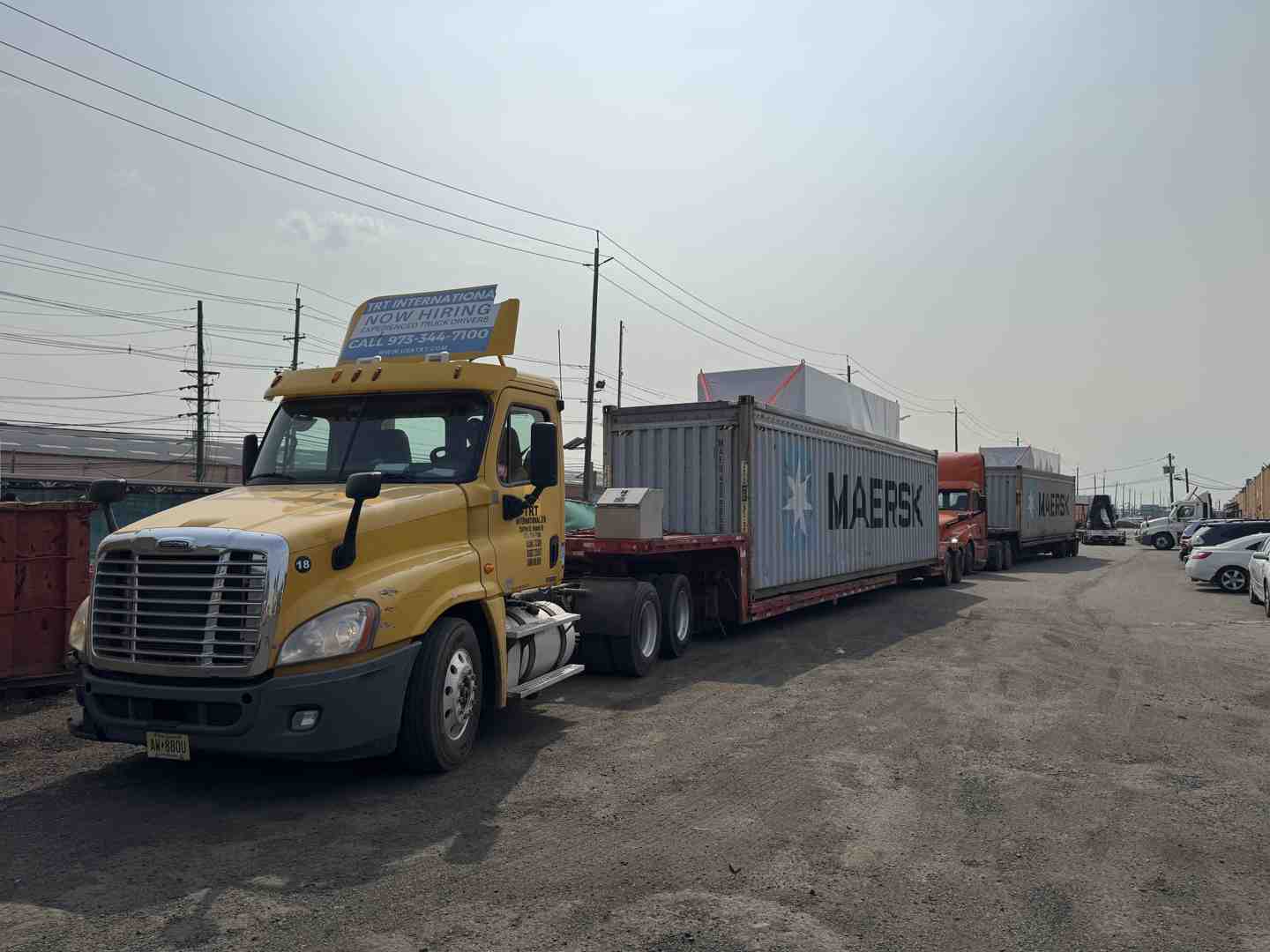
Why Shipping Large Containers is the Backbone of Global Trade
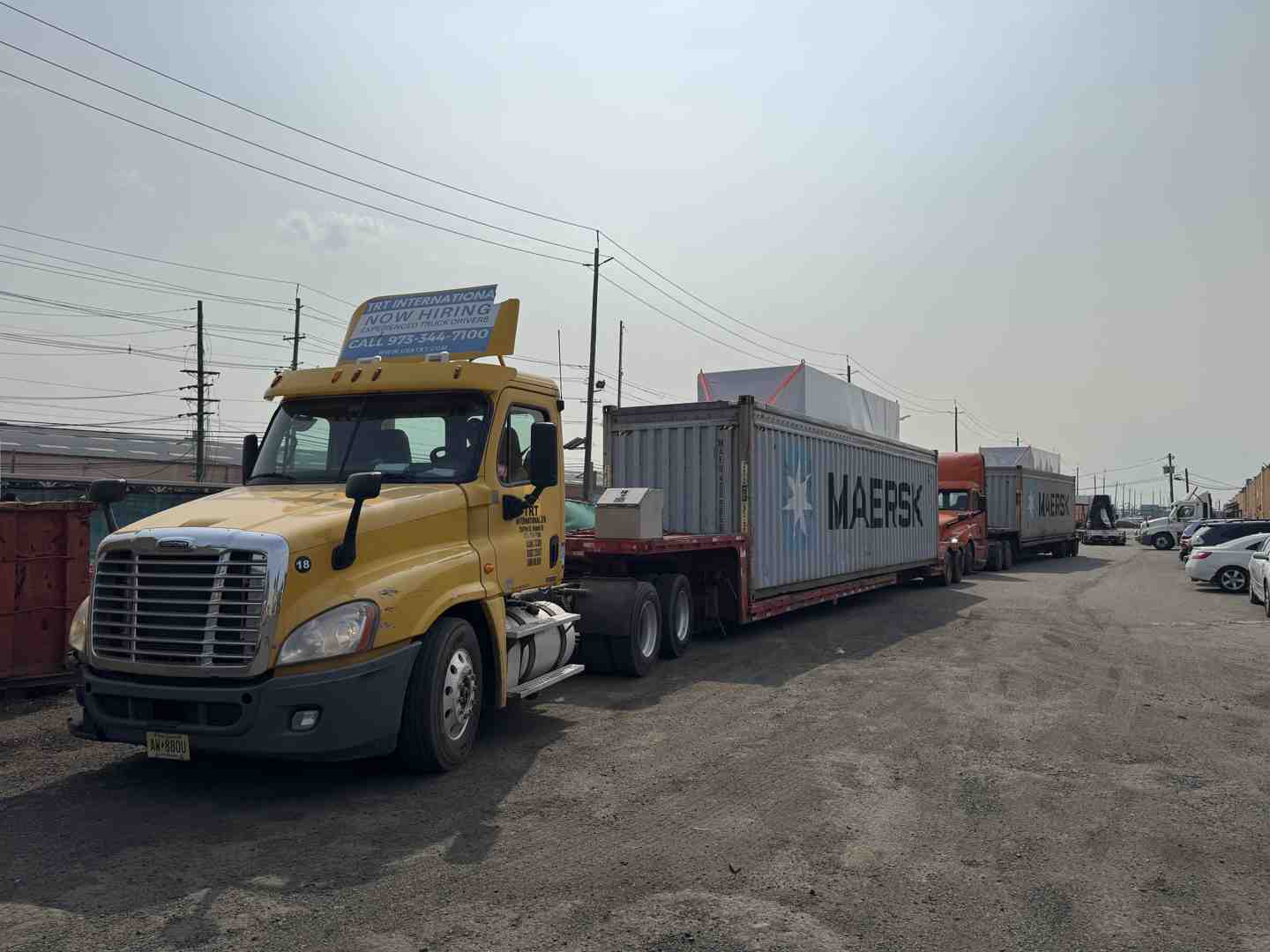
Shipping large containers is how approximately 90% of the world's cargo moves across oceans. Whether you need to transport heavy machinery, oversized equipment, or bulk goods internationally, understanding your container options and the shipping process is essential for a smooth, cost-effective delivery.
Quick Answer: How to Ship Large Containers
- Choose your container type - Standard dry (20ft or 40ft), refrigerated, flat rack, or open-top based on your cargo.
- Select shipping method - Full Container Load (FCL) for dedicated space or Less than Container Load (LCL) for smaller shipments.
- Prepare documentation - Bill of Lading, Commercial Invoice, Packing List, and customs paperwork.
- Arrange logistics - Coordinate drayage, port handling, and final delivery.
- Clear customs - Work with brokers to ensure compliance at destination ports.
- Plan your site - Ensure 70ft clearance for 20ft containers or 110ft for 40ft containers.
The modern shipping container, a corrugated steel box designed for crane movement and stacking, was an innovation that revolutionized global trade. Its introduction in the mid-1950s, pioneered by Malcom McLean, paved the way for the massive containerships we see today, some carrying over 20,000 twenty-foot equivalent units (TEUs).
Why Container Standardization Matters
Early on, varying container sizes created logistical nightmares. The International Organization for Standardization (ISO) established clear sizing requirements, creating what are now known as ISO containers. This standardization enabled seamless intermodal transport—moving containers efficiently from ships to trains to trucks without repacking cargo.
Choosing Your Container: Sizes and Types Explained
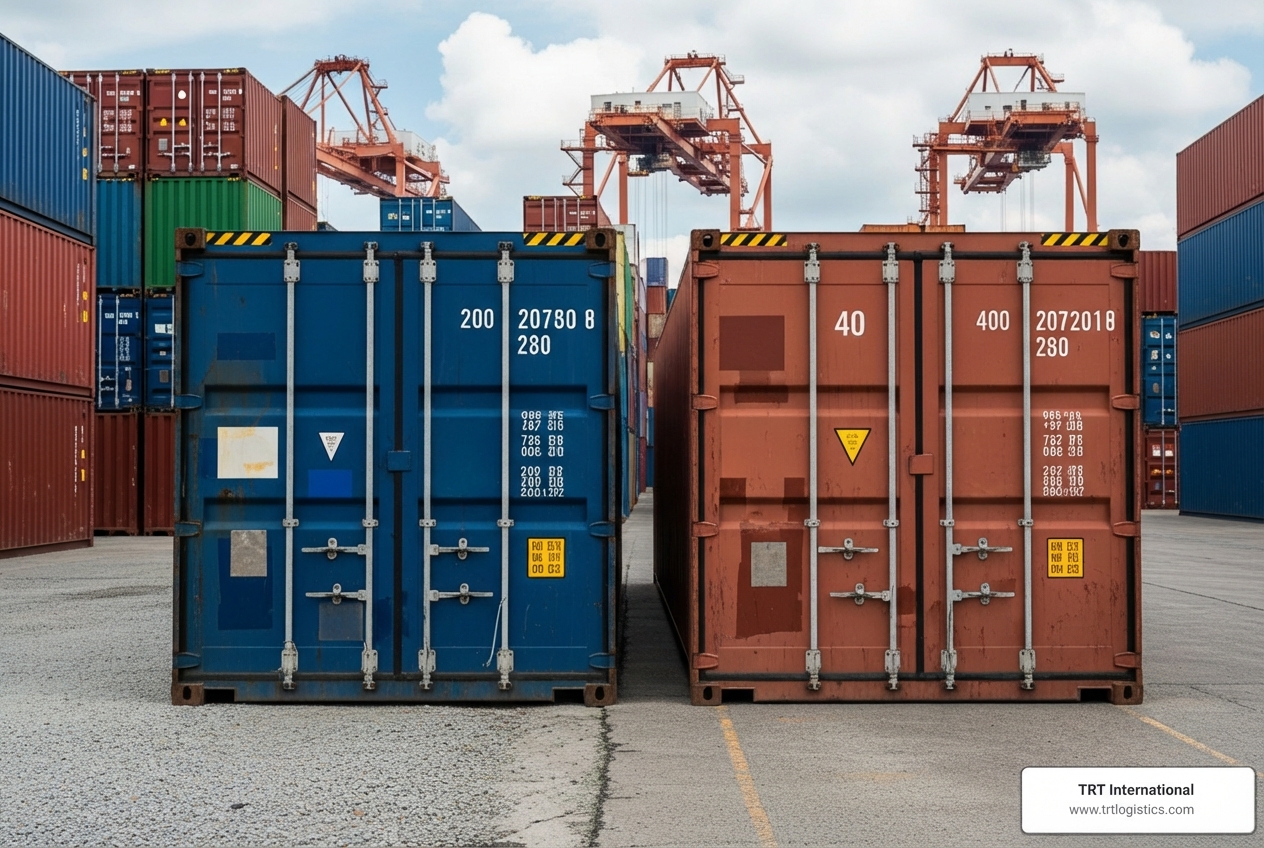
When shipping large containers, selecting the right type is a crucial first step. It's not just about finding a big box; it's about matching the container's specifications to your cargo's unique needs. The vast majority of sea freight travels in standard dry containers (DC), but a world of specialized options exists for everything from perishables to oversized machinery.
For a more in-depth look, explore our comprehensive ocean freight services at https://trtlogistics.com/services/ocean-freight/.
Standard Dimensions: 20ft vs. 40ft Containers
The 20-foot (TEU) and 40-foot (FEU) dry containers are the workhorses of the global supply chain. While a 40ft container is double the length of a 20ft, it typically costs only 20-25% more, offering significant value if you have the volume.
Let's break down their key specifications:
| Feature | 20ft Container (TEU) | 40ft Container (FEU) |
|---|---|---|
| Approx. Length | 19.4 ft (5.9 m) | 39.5 ft (12.0 m) |
| Approx. Width | 7.7 ft (2.3 m) | 7.7 ft (2.3 m) |
| Approx. Height | 7.9 ft (2.4 m) | 7.9 ft (2.4 m) |
| Cubic Capacity | 1,172 cu ft (33.2 m³) | 2,389 cu ft (67.7 m³) |
| Payload Capacity | 55,126.9 lbs (25,000 kg) | 61,200 lbs (27,600 kg) |
| Pallet Capacity | 9-10 standard pallets | 20-21 standard pallets |
| Common Uses | Heavy cargo like minerals, metal, machinery, sugar, paper, and steel coils. | Voluminous cargo such as furniture, steel pipes, paper scrap, or cotton. |
| Cost Efficiency | Standard base rate | Approximately 20-25% more than a 20ft container for double the space. |
Beyond these, High Cube (HC) containers offer an extra foot in height (9.5 ft), providing more vertical space for lighter, voluminous cargo. The extra height does not increase the weight capacity.
Beyond the Standard Box: Specialized Containers for Unique Cargo
When a standard dry container isn't suitable, specialized containers are used for cargo with specific requirements.
_compressed.JPG?alt=media&token=224ec28c-8158-46b9-b7ed-99b25f11eb9b "flat rack container with oversized machinery - shipping large containers")
- Refrigerated (Reefer) Containers: These are mobile refrigerators for perishables like produce or frozen foods. They maintain a controlled temperature throughout the journey. Advanced Controlled Atmosphere (CA) containers can even slow the ripening process.
- Open-Top Containers: Built without a fixed roof, these are ideal for over-height cargo like large machinery or pipes that must be loaded by crane. A tarpaulin cover protects the contents.
- Flat Rack Containers: With end walls but no side walls or roof, flat racks are designed for oversized, heavy, or irregularly shaped goods like yachts, large vehicles, and construction materials.
- Platform Containers: A minimalist option with just a sturdy base, these are used for extremely heavy and oversized cargo requiring maximum loading flexibility.
- Tank Containers: These are cylindrical tanks within a standard container frame, designed for transporting liquids, from chemicals to food-grade products.
At TRT International, we specialize in managing complex logistics, especially for oversized and overweight cargo. Our expertise in utilizing these specialized containers ensures your unique shipments arrive safely. See our capabilities in action at https://trtlogistics.com/portfolio/handling-oog-equipment-with-ease/.
The Essential Guide to the Ocean Freight Process
Navigating ocean freight can seem complex, but understanding the core process makes it manageable. While it's the slowest shipping method, it is also the most affordable for shipping large containers. Our team at TRT International orchestrates these intricate journeys. Learn more at https://trtlogistics.com/services/ocean-freight/.
FCL vs. LCL: Which Shipping Method is Right for You?
One of your first decisions is choosing between Full Container Load (FCL) and Less than Container Load (LCL).
Full Container Load (FCL): Your goods occupy an entire container. FCL is cost-effective for large shipments, offers greater security as the container is sealed, and generally has faster transit times because it doesn't require consolidation. We offer comprehensive FCL services at https://trtlogistics.com/services/ocean-freight/ custom to your needs.
Less than Container Load (LCL): Your goods share container space with other shipments. LCL is ideal for smaller volumes, as you only pay for the space you use. The trade-off is typically a longer transit time due to the logistics of consolidating and deconsolidating cargo. For flexible shipments, explore our LCL solutions at https://trtlogistics.com/services/ocean-freight/.
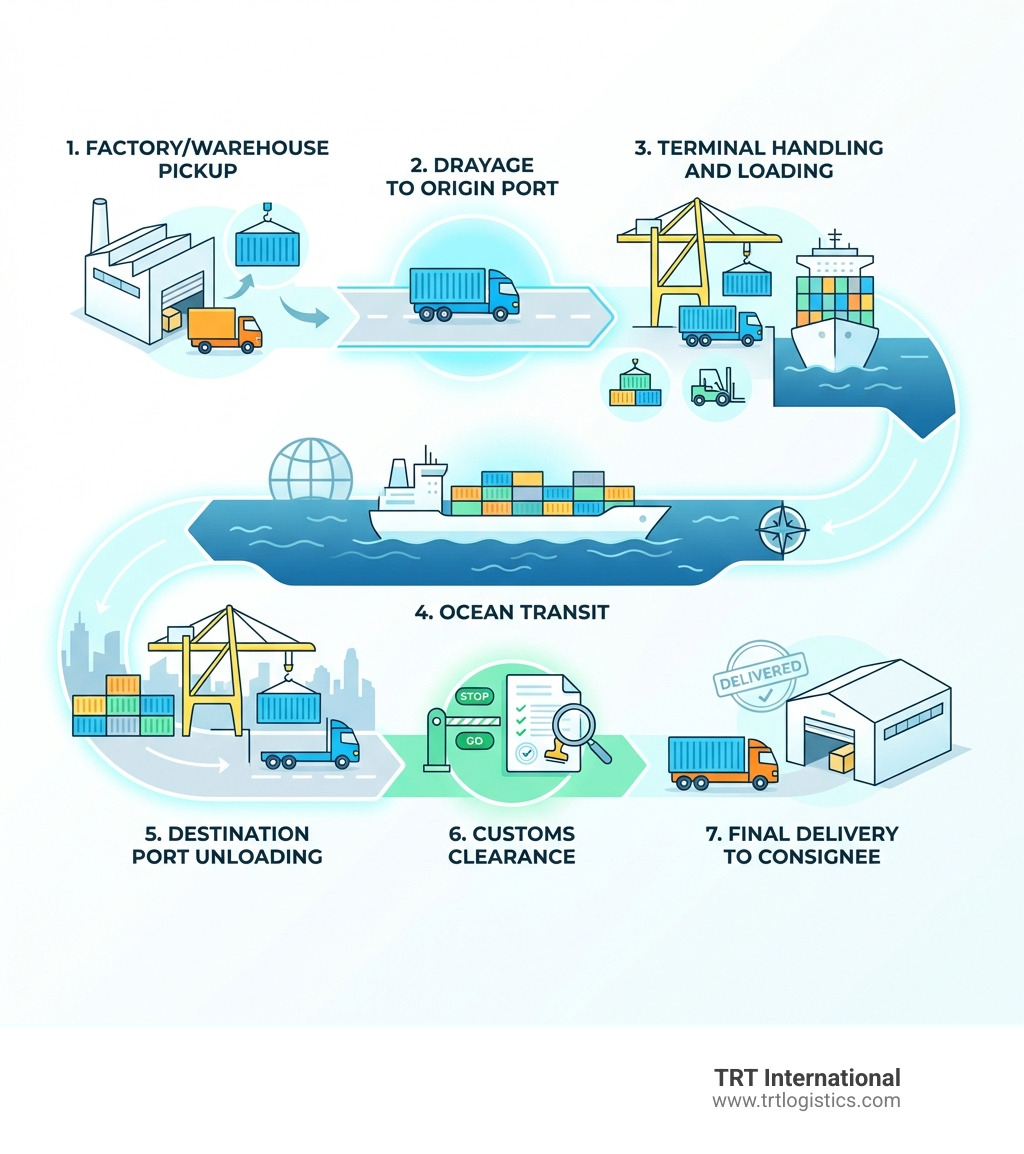
Key Steps for Shipping Large Containers
The journey of shipping large containers is a carefully coordinated process. Here are the essential steps we guide our clients through:
- Getting a Quote: Provide details about your cargo, origin, and destination to receive a cost estimate.
- Booking: We book space on a vessel and reserve your container.
- Cargo Pickup & Drayage: An empty container is delivered for loading, then transported by truck to the origin port. This first-mile journey is known as drayage. Our drayage services ensure efficiency at https://trtlogistics.com/services/drayage-services-simplified/.
- Port & Terminal Handling: Your container is inspected, stacked, and loaded onto the vessel.
- Ocean Transit: The container begins its voyage. We provide tracking and updates.
- Customs Clearance: Upon arrival, your shipment must clear customs, which involves submitting documentation and paying duties. This can take up to three days.
- Final Delivery: Once cleared, the container is trucked from the destination port to the final consignee.
Preparing Your Site for a Smooth Delivery
Proper site preparation is vital for a safe and efficient container delivery.
- Site Access & Clearance: Ensure there is ample room for a large truck to maneuver. A 20ft container requires about 70 feet of straight-line clearance for offloading, while a 40ft container needs at least 110 feet.
- Ground Conditions: The delivery area must be level, solid, and compact. Soft ground or steep inclines can make delivery unsafe or impossible.
- Overhead Obstacles: Check for power lines, tree branches, or building overhangs that could obstruct placement.
- Delivery Methods: The most common method is a tilt-deck trailer, where the container slides off the back. For sites with a crane or forklift, a flatbed delivery is used. For tight spaces, a side-loader truck can place the container parallel to the truck.
Who Handles Your Shipment? Key Service Providers
Shipping large containers involves a team of professionals:
- Shipper/Consignee: The owner of the goods and the recipient, respectively.
- Freight Forwarder: As your freight forwarder, we act as your agent, coordinating the entire shipping process from booking to final delivery.
- VOCC (Vessel-Operating Common Carrier): The shipping lines (e.g., Maersk, MSC) that own and operate the container ships.
- NVOCC (Non-Vessel Operating Common Carrier): An NVOCC buys space from VOCCs and sells it to shippers, often consolidating LCL shipments. They issue their own bill of lading.
- Customs Broker: A licensed professional who handles customs documentation and procedures to ensure compliance.
At TRT International, learn more about our team and capabilities at https://trtlogistics.com/about-us/.
Decoding the Costs of Shipping Large Containers
Understanding the cost of shipping large containers is key to budgeting effectively. The final price is a compilation of base freight rates, various surcharges, and fees influenced by your chosen Incoterms (International Commercial Terms), which define the financial responsibilities between the buyer and seller.
What Factors Influence Your Final Bill?
Several dynamic factors contribute to the overall expense:
- Container Size & Type: A 40ft container costs more than a 20ft, though it's more cost-efficient per cubic foot. Specialized containers like reefers also carry higher costs.
- Weight & Volume: For LCL, these factors directly determine your cost. For FCL, they influence the container type needed.
- Shipping Route & Distance: Longer or less common trade lanes incur higher costs.
- Seasonality (Peak Season Surcharge - PSS): Rates increase during peak seasons (e.g., pre-holiday rushes) due to high demand.
- Fuel Costs (BAF - Bunker Adjustment Factor): A surcharge that accounts for fluctuating marine fuel prices.
- Terminal Handling Charges (THC): Fees charged by ports for handling your container at origin and destination.
- Incoterms: Your chosen term (e.g., FOB, CIF, DDP) dictates who pays for which part of the journey, from pickup and customs to final delivery.
When comparing quotes, ensure you're looking at the full picture, including all surcharges. For a detailed breakdown, check out our insights at https://trtlogistics.com/services/ocean-freight/.
Understanding Ocean Freight Rate Fluctuations
Ocean freight rates are famously dynamic, influenced by a complex interplay of global factors.
- Supply and Demand: The core economic principle. High demand for limited vessel space drives rates up.
- Global Events: Geopolitical events, such as the Red Sea diversions, force longer routes, increasing transit times and fuel costs, which raises rates. Port strikes or natural disasters also cause disruptions.
- Port Congestion: Overcrowded ports lead to vessel delays, and these costs are often passed on to shippers.
- Carrier Capacity Management: Shipping lines may cancel voyages ("blank sailings") during low demand to reduce available space and stabilize rates.
Staying informed is vital for planning. For the latest trends, consult our ocean freight services page at https://trtlogistics.com/services/ocean-freight/.
The Impact of Global Trade Policies and Tariffs
Global trade policies and tariffs directly impact the cost of shipping large containers.
- Customs Duties and Taxes: Governments impose these on imported goods. Rates vary by commodity, origin, and destination. Misclassifying goods can lead to costly delays.
- Trade Agreements: Free trade agreements (FTAs) can reduce or eliminate duties, while trade disputes can lead to retaliatory tariffs that make certain routes more expensive.
- Import/Export Restrictions: Countries may impose quotas, bans, or licensing requirements on certain goods, and non-compliance can result in fines or seizure.
Our team at TRT International is adept at navigating these complexities, ensuring compliance and optimizing costs for your shipments, especially for heavy goods transport services and oversized cargo shipping from the USA at https://trtlogistics.com/heavy-goods-transport-services-oversized-cargo-shipping-from-the-usa/.
Frequently Asked Questions about Shipping Large Containers
We understand that shipping large containers can raise many questions. Here, we address some of the most common queries. For a more extensive list, please visit https://trtlogistics.com/faq/.
How long does it take to ship a container overseas?
The transit time for shipping large containers varies significantly. Ocean freight is the slowest mode of transport, and total time depends on:
- Route: A journey from Asia to the US West Coast is shorter than to the East Coast. Trans-Atlantic routes have different timeframes.
- Door-to-Door vs. Port-to-Port: The total time includes origin drayage, terminal handling, customs clearance (which can take up to three days alone), and final delivery, not just the time on the water.
- Vessel Schedule and Congestion: Vessel speed, layovers, and port congestion can all extend transit times, especially during peak seasons or due to global events.
We provide estimated transit times and keep you informed of any potential delays.
What documents are needed for international container shipping?
Proper documentation is critical to avoid delays and fines. It's like a passport for your cargo. Key documents include:
- Bill of Lading (B/L): The contract of carriage, receipt of goods, and document of title.
- Commercial Invoice: A record of the transaction, including goods description, price, and Incoterms.
- Packing List: A detailed inventory of the container's contents.
- Certificate of Origin: Certifies the country of manufacture, which is crucial for customs.
- Shipper's Letter of Instruction (SLI): Instructions from the shipper to the freight forwarder.
- Safety Approval Plate (CSC Plate): A mandatory plate ensuring the container meets international safety standards.
For more comprehensive information, please refer to our ocean freight services page at https://trtlogistics.com/services/ocean-freight/.
What is the difference between a freight forwarder and a carrier (VOCC)?
Understanding this distinction is key to choosing the right shipping partner.
- Freight Forwarder (like TRT International): We are your logistics agent. We don't own the ships but arrange and manage the entire shipping process on your behalf—negotiating rates, handling documents, and coordinating the door-to-door journey.
- Carrier (VOCC): These are the shipping lines that own and operate the vessels that transport your containers. Their business is moving cargo from port to port.
- NVOCC (Non-Vessel Operating Common Carrier): An NVOCC acts as a carrier but doesn't own vessels. They buy space in bulk from VOCCs and resell it, often specializing in LCL consolidation.
In short, a VOCC moves the goods, while a freight forwarder coordinates the entire move.
Conclusion: Your Partner for Complex and Oversized Shipments
We've journeyed through the intricate world of shipping large containers, from understanding different container types and their dimensions to navigating the multi-faceted ocean freight process, decoding complex cost structures, and addressing frequently asked questions. It's clear that successful international shipping isn't just about moving a box; it's about meticulous planning, precise execution, and an in-depth understanding of global logistics.
At TRT International, we pride ourselves on being more than just a service provider; we are your dedicated partner. Our unique strength lies in our specialization in oversized and overweight cargo, coupled with our commitment to managing all processes in-house. This gives us full control and reliability over your shipment, ensuring that even the most challenging cargo is handled with utmost care and efficiency. Our multilingual agents are always ready to communicate effectively, breaking down barriers in global trade, and our strategic port zone office in locations like Newark, Savannah, Los Angeles, and New York gives us a direct advantage in expediting port operations.
When you're dealing with shipments that are too big, too heavy, or too complex for standard solutions, don't box yourself in. Partner with experts who have the knowledge, resources, and dedication to deliver. Let us simplify the complexity and provide you with a smooth, reliable shipping experience.
Contact our experts for your oversized transportation needs at https://trtlogistics.com/services/oversize-transportation/ today, and let's discuss how we can tailor a solution specifically for you.