
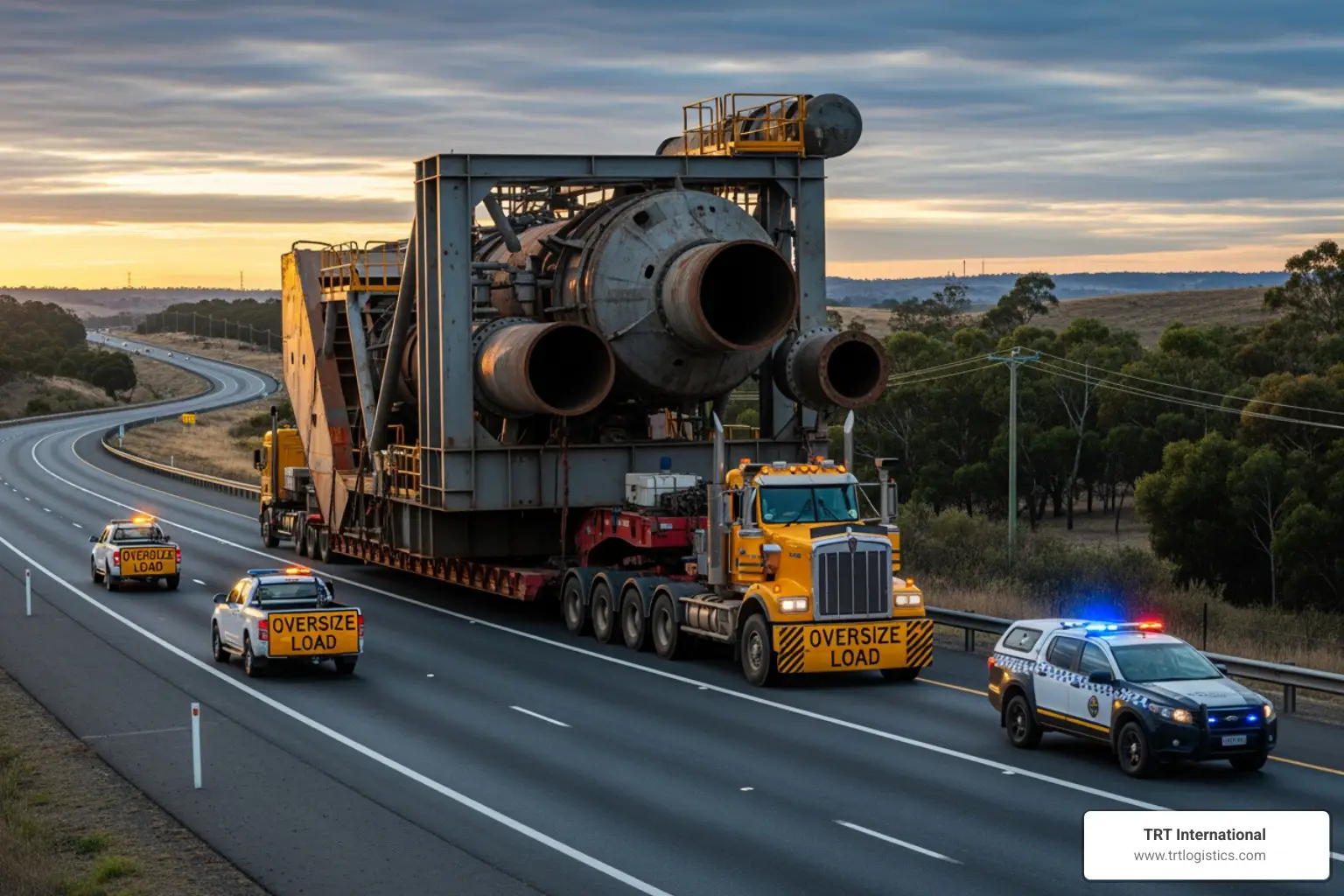
Understanding Oversized Cargo Shipping: What You Need to Know
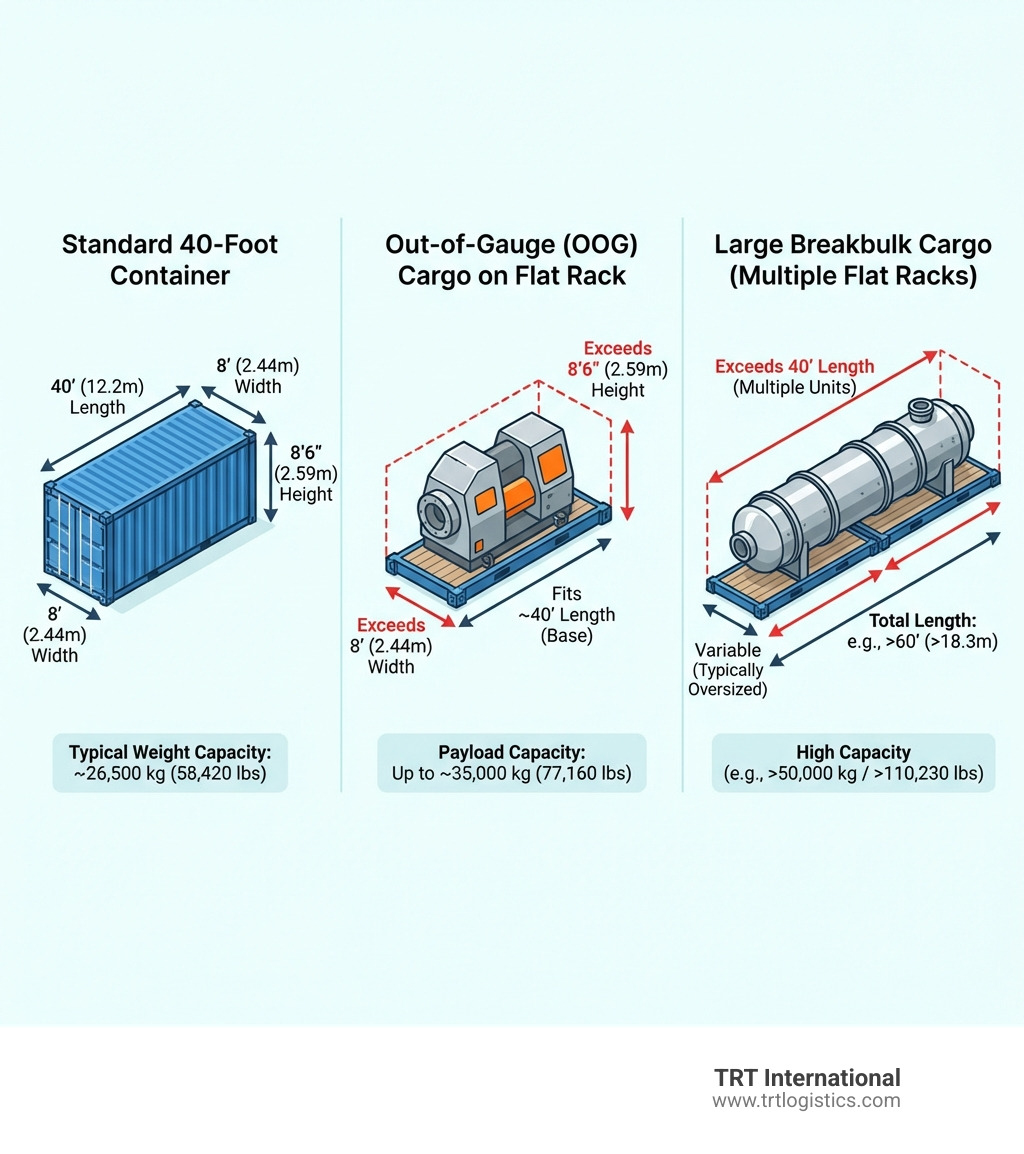
Oversized cargo shipping is the specialized transport of goods that exceed the dimensions or weight limits of standard shipping containers (typically 40′ x 8′ x 8’6″). This freight, also known as out-of-gauge (OOG) or breakbulk cargo, requires custom planning, specialized equipment, and expert handling to move safely.
Common oversized goods include construction machinery, wind turbine blades, industrial equipment, and large vehicles. The process is far more complex than standard shipping, demanding careful route planning, specialized loading equipment, proper securing, multiple permits, and coordination across ports and carriers. Because oversized cargo occupies space that could hold multiple standard containers, this “lost slot” factor drives up costs, but the true challenge lies in the complex logistics. A shipment might require custom cradles, specialized trailers, pilot vehicles, and police escorts to steer height-restricted bridges or width-limited roads.
Defining the “Oversized”: When Does Cargo Break the Mold?
Oversized cargo shipping deals with freight that doesn’t fit into standard containers due to its dimensions or weight. This non-containerized freight, also known as “Out of Gauge” (OOG) or “Abnormally shaped Indivisible Loads” (AILs), demands a different logistical approach. The core principle is simple: if it’s too big or heavy for standard methods, it’s oversized. You can learn more about this in guides to Out of Gauge shipments.
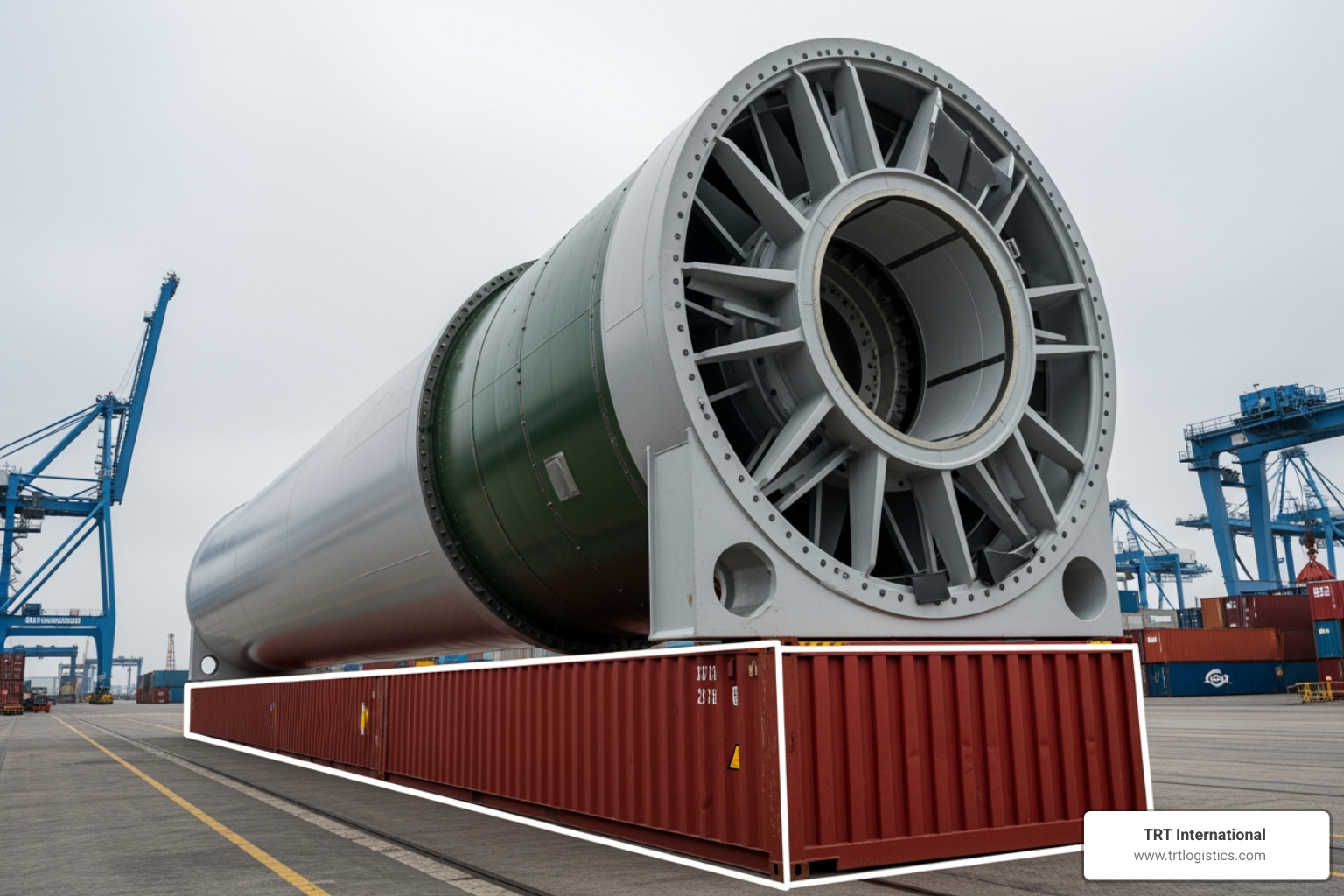
What Defines Oversized Cargo in Shipping?
Cargo is generally considered oversized if it meets any of the following criteria:
- Exceeds Dimensions: The cargo is too long for a 40-foot container or is wider than 2.59 meters (8.6 feet) or taller than 2.44 meters (8 feet), as noted by the International Maritime Organization (IMO).
- Is a Heavyweight Item: Even if it fits, the cargo’s weight may exceed the payload capacity of a standard container or even a specialized flat rack (which handle 22-25 tons). Such items are classified as heavyweight and require special handling.
- Is Unusually Shaped: Items with irregular shapes or protrusions that prevent standard containerization are also considered oversized.
Essentially, any freight that exceeds the dimensions or weight limitations of a container or flatrack is oversized. This also includes self-propelled vehicles (other than personal cars) and towable cargo like large RVs or boats.
Typical Goods Classified as Oversized
The world of oversized cargo shipping is diverse, covering goods vital to construction, energy, and manufacturing. Common examples include:
- Construction Machinery: Excavators, bulldozers, cranes.
- Energy Components: Wind turbine blades and tower sections.
- Aircraft Parts: Wings, fuselages, and other large components, which require precision handling as seen in projects like the Efficient Transloading of Oversized Plane Wing.
- Industrial Equipment: Generator sets, factory machinery, and transformers.
- Large Vehicles: Buses, semi-trucks, motorhomes, and agricultural vehicles.
- Boats and Yachts: Marine vessels of all sizes.
- Modular & Structural Items: Prefabricated buildings, large tanks, and long pipes or beams.
These items inherently demand meticulous planning and expert handling to ensure a safe journey.
The Right Tools for the Job: Methods and Equipment for Heavy Hauls
Moving oversized cargo requires a carefully selected arsenal of specialized equipment and transport methods. At TRT International, we offer Specialized Services that provide a custom solution for every complex shipment, from slightly out-of-gauge items to massive breakbulk cargo.
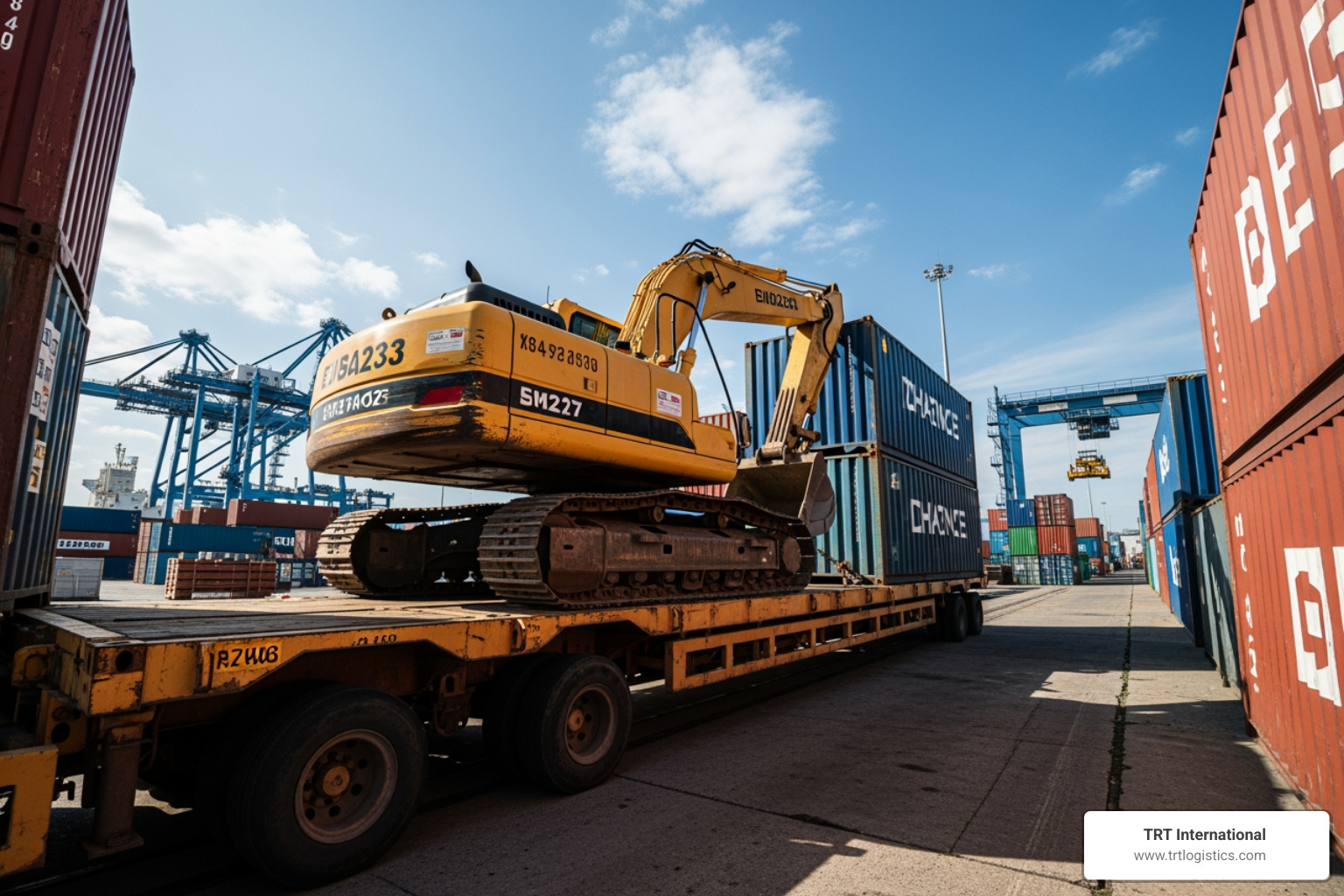
Primary Shipping Methods
For oversized cargo shipping by sea, we use several specialized methods:
- Roll-On/Roll-Off (RoRo): Ideal for self-propelled or wheeled cargo like vehicles and construction machinery. Cargo is driven directly onto RoRo vessels, which is cost-effective and offers protection below deck.
- Lift-On/Lift-Off (LoLo): Uses cranes to lift non-wheeled or static cargo, such as crated machinery or boats, onto the vessel.
- Flat Rack Shipping: These are containers without a roof or sides, perfect for over-width or over-height cargo. The cargo is secured to the flat rack, which is then handled like a standard container.
- Open-Top Containers: Standard containers with no roof, allowing tall cargo to be loaded from above by a crane. A tarpaulin cover provides protection.
- Breakbulk Shipping: The method for the largest items that won’t fit on any container. Cargo is loaded directly into the ship’s hold or onto its deck. As your Partner for All Your Breakbulk needs, we can handle single shipments up to 500 tons.
Out of Gauge (OOG) vs. Breakbulk Cargo
Understanding the difference between OOG and Breakbulk is key to choosing the right solution for oversized cargo shipping.
| Feature | Out of Gauge (OOG) Cargo | Breakbulk Cargo |
|---|---|---|
| Definition | Exceeds standard container dimensions but can be loaded onto specialized containers like flat racks or open tops. | Too large or heavy for any container type; handled as individual pieces. |
| Equipment Used | Flat rack or open-top containers. | Specialized lifting gear; loaded directly onto the vessel. |
| Stowage | Can often be stowed below deck. | Almost always stowed on deck or in large, dedicated holds. |
| Handling | Handled as a container unit once secured. | Handled as non-unitized pieces, requiring extensive labor. |
| Cost Implications | Higher than standard rates due to “lost slots” and special equipment. | Generally the most expensive due to extensive planning and manual handling. |
| Best For | Moderately oversized machinery or vehicles. We handle OOG Equipment with Ease. | Exceptionally large items like turbines, industrial modules, or large boats. |
| Example | A bulldozer on a flat rack. | A 500-ton industrial press loaded directly onto the ship’s deck. |
OOG solutions use specialized containers, while breakbulk is a fully customized operation.
Specialized Land Transport Equipment
Moving oversized cargo by land requires a fleet of specialized equipment and meticulous planning:
- Specialized Trailers: We use lowboy trailers for tall cargo, extendable flatbeds for long items, and modular trailers for extremely heavy and oversized loads.
- Pilot Vehicles and Escorts: Mandatory for over-width or over-length loads, these vehicles ensure a clear, safe path. Police escorts may be required for extremely large moves on major highways in states like New York, California, or Georgia.
- Permits and Compliance: Moving oversized cargo by land is heavily regulated. Our team manages the complex process of acquiring state and local permits, ensuring full compliance for transport to and from our port zones in Newark, Savannah, Los Angeles, and New York. For intermodal transport, we work with carriers compliant with the Uniform Intermodal Interchange Agreement to ensure smooth transitions.
Blueprint for a Flawless Move: Planning and Executing Your Oversized Cargo Shipping
Moving oversized cargo is a logistical ballet demanding meticulous project management. At TRT International, we create a bespoke blueprint for every shipment to ensure a Smooth Oversized Delivery.
Key Steps in the Planning Process
The success of any oversized cargo shipping operation hinges on proactive planning. Our process includes:
- Initial Consultation: We discuss your cargo’s dimensions, weight, and special handling needs to scope the project.
- Cargo Analysis: Our experts analyze the cargo’s physical attributes, including its center of gravity and lifting points, to determine handling and securing requirements.
- Route Survey: We survey land and sea routes to check for obstructions like low bridges or power lines and to assess port capabilities. This is critical for transport to and from our port zones in Newark, Savannah, Los Angeles, and New York.
- Equipment Selection: Based on the analysis, we select the right equipment, from flat racks and lowboy trailers to modular trailers for the heaviest loads.
- Permit Acquisition: Our team handles all complex state and local permit applications for inland transport, including arranging for pilot vehicles and police escorts.
- Carrier and Vessel Selection: We leverage our carrier network to book the most suitable vessel based on its capabilities, schedule, and transit time.
- Port Coordination: We coordinate with port authorities and stevedores at origin and destination to manage crane availability, loading procedures, and storage.
Critical Challenges and Considerations
Oversized cargo shipping presents unique challenges. We offer robust Oversized Cargo & Heavy Haul Transport Solutions by proactively managing these critical factors:
- Port and Infrastructure Limits: Not all ports or roads can handle oversized cargo. We verify that ports have the right cranes and that inland routes are clear of obstacles like low bridges or narrow roads.
- Resource Availability: Heavy-lift cranes and other specialized equipment must be booked in advance to ensure availability.
- Weather Conditions: Bad weather can cause delays and safety risks. We monitor forecasts and build contingency time into our plans.
- Customs and Documentation: Complex customs procedures require accurate and complete documentation to avoid delays. Our in-house team manages all necessary paperwork.
- Securing and Lashing: Proper lashing is critical for safety. It involves precise engineering calculations to ensure cargo stability during transit.
- Regulatory Compliance: Adhering to all international (IMO, SOLAS) and national transport laws is non-negotiable to prevent penalties and safety hazards.
Navigating the Financial and Regulatory Maze
Oversized cargo shipping involves navigating a complex financial and regulatory landscape. Understanding costs and adhering to strict standards are paramount. We offer comprehensive solutions to manage every aspect.
How is the Cost of Oversized Cargo Shipping Determined?
The cost of oversized cargo shipping is highly variable, which is why we provide custom quotes for our Heavy Goods Transport Services. Key factors influencing the price include:
- Cargo Dimensions and Weight: The single most significant factor, determining the equipment and space needed.
- Space Occupied (“Lost Slots”): Oversized cargo takes up space that could hold multiple standard containers, and this is factored into the price.
- Specialized Equipment: Costs for flat racks, lowboy trailers, heavy-lift cranes, etc.
- Labor and Handling: Fees for skilled personnel for loading, securing, and unloading.
- Permits and Escorts: Mandatory fees for state/local permits and pilot vehicles for inland transport.
- Insurance Premiums: Higher premiums due to the increased value and risk.
- Route Complexity and Port Charges: Costs associated with challenging routes and specific port fees for oversized cargo.
The Role of Regulatory Bodies
Adherence to regulatory guidelines is critical for safety and compliance in oversized cargo shipping. Key organizations include:
- International Maritime Organization (IMO): Sets global standards for shipping safety. Its regulations, like the SOLAS Convention and the CSS Code (Code of Safe Practice for Cargo Stowage and Securing), provide crucial rules for securing heavy and oversized loads.
- International Air Transport Association (IATA): For air freight, IATA’s role in cargo standards defines limitations based on aircraft dimensions and weight capacity.
- National Road Transport Laws: In the U.S., each state has its own laws for oversized loads, dictating permit requirements, travel times, and the need for escorts. Our teams in Newark, Savannah, Los Angeles, and New York ensure full compliance with these local rules.
Safety and Compliance Best Practices
Safety is the foundation of successful oversized cargo shipping. Our commitment to best practices, in line with industry leaders like the Georgia Ports Authority, ensures every shipment is handled with the utmost care.
Our core safety practices include:
- Proper Lashing and Securing: Using engineering-approved plans to secure cargo against the forces of transit.
- Weight Distribution: Calculating the center of gravity to ensure the load is stable and evenly distributed.
- Adherence to IMO CSS Code: Strictly following international standards for stowing and securing heavy cargo.
- Professional On-site Supervision: Our project managers oversee all loading, securing, and unloading operations.
- Thorough Inspections and Documentation: We conduct pre-shipment inspections and maintain detailed records for transparency.
- Contingency Planning: We develop backup plans for potential issues like weather delays or equipment malfunctions.
Frequently Asked Questions about Oversized Cargo Shipping
Oversized cargo shipping can seem daunting. Here are answers to some common questions.
How far in advance should I plan an oversized shipment?
We recommend starting the planning process 4 to 8 weeks before your desired shipping date. This extended lead time is necessary for conducting feasibility studies, securing specialized vessel space and equipment, and obtaining the required inland transport permits, which can take several weeks.
The earlier you involve us, the smoother the process will be.
What is the difference between RoRo and LoLo?
RoRo and LoLo are two primary methods for loading and unloading ships in oversized cargo shipping.
-
RoRo (Roll-on/Roll-off): Best for wheeled cargo like vehicles and machinery. The cargo is driven directly onto the vessel via ramps. This method is efficient, cost-effective, and offers protection as cargo is stowed below deck.
-
LoLo (Lift-on/Lift-off): Used for non-wheeled, static cargo like crated equipment or boats. Cranes are used to lift the cargo onto and off the ship. This method is versatile but can be slower and more dependent on weather conditions.
In short: if it rolls, think RoRo. If it needs to be lifted, think LoLo.
Is my oversized cargo insured during transit?
While carriers have standard limited liability, this often covers only a fraction of your cargo’s true value. For oversized cargo shipping, we strongly recommend securing separate, comprehensive cargo insurance.
An “all-risk” cargo insurance policy provides full financial protection against loss or damage during transit. Relying solely on a carrier’s limited liability is a significant risk, especially for high-value items like industrial machinery or yachts. We can guide you through the insurance options to ensure your valuable assets are fully protected.
Partnering for Success in Oversized Transport
As we’ve explored, oversized cargo shipping is a field of logistics defined by complexity, precision, and a constant need for innovation. It’s not merely about moving an item from point A to point B; it’s about engineering a bespoke solution for each unique challenge. The successful navigation of dimensional limits, weight restrictions, regulatory mazes, and logistical problems demands an extraordinary level of expertise and dedication.
At TRT International, we thrive on these challenges. Our unique selling proposition (USP) lies in our ability to manage all processes in-house, giving us full control and ensuring reliability from start to finish. Our multilingual agents ensure clear communication across international borders, and our strategic port zone offices in Newark, Savannah, Los Angeles, and New York provide us with direct oversight and operational efficiency at critical junctures.
By managing every step from planning and permits to execution and delivery, a dedicated logistics partner ensures your valuable assets arrive safely and on schedule. For comprehensive support with your next big move, explore our Oversize Transportation services. We’re ready to turn your biggest shipping challenges into seamless successes.